hstry

Caesar on why he would cross to Britain

55 BCE, Gaul. His own words, writing of himself as 'Caesar'.

Where and when

55 BCEGaul

2,080 years ago

Explore
Julius Caesar, 100 – 44 BCE3000 BCE2900 BCE2800 BCE2700 BCE2600 BCE2500 BCE2400 BCE2300 BCE2200 BCE2100 BCE2000 BCE1900 BCE1800 BCE1700 BCE1600 BCE1500 BCE1400 BCE1300 BCE1200 BCE1100 BCE1000 BCE900 BCE800 BCE700 BCE600 BCE500 BCE400 BCE300 BCE200 BCE100 BCE1 CE100 CE200 CE300 CE400 CE500 CE600 CE700 CE800 CE900 CE1000 CE1100 CE1200 CE1300 CE1400 CE1500 CE1600 CE1700 CE1800 CE1900 CE2000 CEGreat Pyramid of Giza built, c. 2600 BCERome founded (traditional date), 753 BCELast western Roman emperor deposed, 476 CEGutenberg's printing press, c. 1440 CEColumbus reaches the Americas, 1492 CEFirst people on the Moon, 1969 CEToday, 2026

Swipe the line. Bars: entries. Dots: events.

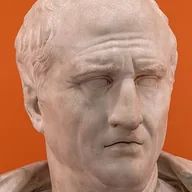
Julius Caesar

, GaulHis own words, writing of himself as 'Caesar'

In plain words, ours

Even if there was too little of the season left for a war, just landing on the island would teach me about its people, harbours and landing places.

…even if the time of year should be insufficient for carrying on the war, yet he thought it would be of great service to him if he only entered the island, and saw into the character of the people, and got knowledge of their localities, harbors, and landing-places, all which were for the most part unknown to the Gauls.

Caesar, The Gallic War 4.20Translated by W. A. McDevitte and W. S. Bohn (1869)Read the full passage (Caesar, The Gallic War 4.20, opens scaife.perseus.org)

What was going on, our summary

In 55 BCE, with only a short part of summer left, Caesar has just come back to Gaul after eighteen days across the Rhine. Writing of himself, he says he decided to cross to Britain because it had sent help to his enemies in almost every war with the Gauls.

Checked claim by claim against: Caesar crosses the sea to Britain, Caesar begins the conquest of Gaul, the passage around the quote.

Why it matters

No information about harbours or landing-places was available to the Romans before these expeditions, and it is likely the intelligence gathered was later used by Claudius in planning his landings.

Based on Wikipedia: Julius Caesar's invasions of Britain

No information about harbours or other landing-places was available to the Romans before Caesar's expeditions, so Caesar was able to make discoveries of benefit to Roman military and trading interests.

However, it is likely that the intelligence gathered in 55 and 54 BC would have been retained in the now-lost state records in Rome, and been used by Claudius in the planning of his landings.

Wikipedia, Julius Caesar's invasions of Britain (opens en.wikipedia.org), as of 2026-09-22. Text CC BY-SA 4.0. Our line is checked against these sentences only.

Related moments

In time order, with this one in its place. Each says why it is here.

  1. 58–50 BCEDuring it Caesar begins the conquest of Gaul The event behind itAlso in GaulAlso about war and empire
  2. 58 BCE3 years earlier Caesar maps Gaul and its peoples More from Julius Caesar
  3. 58–57 BCEabout 3 years earlier Cicero in exile, as Plutarch tells it Same years
  4. 55–54 BCEBegins this year Caesar crosses the sea to Britain The event behind itAlso about war and empire
  5. 55 BCEThis momentCaesar on why he would cross to Britain
  6. 55 BCESame year Caesar's eagle-bearer leaps in Britain Same passageMore from Julius Caesar
  7. 54 BCE1 year later Caesar on Britons dyed with woad More from Julius Caesar
  8. 52 BCE3 years later Vercingetorix surrenders to Caesar at Alesia Same years

Just before and after

The text around the quote, word for word from the same translation.

Show the passageHide the passage

When Caesar discovered this, having already accomplished all these things on account of which he had resolved to lead his army over, namely, to strike fear into the Germans, take vengeance on the Sigambri, and free the Ubii from the invasion of the Suevi, having spent altogether eighteen days beyond the Rhine , and thinking he had advanced far enough to serve both honor and interest, he returned into Gaul, and cut down the bridge. During the short part of summer which remained, Caesar, although in these countries, as all Gaul lies toward the north, the winters are early, nevertheless resolved to proceed into Britain, because he discovered that in almost all the wars with the Gauls succors had been furnished to our enemy from that country; and

The quote: even if the time of year should be insufficient for carrying on the war, yet he thought it would be of great service to him if he only entered the island, and saw into the character of the people, and got knowledge of their localities, harbors, and landing-places, all which were for the most part unknown to the Gauls.

For neither does any one except merchants generally go thither, nor even to them was any portion of it known, except the sea-coast and those parts which are opposite to Gaul. Therefore, after having called up to him the merchants from all parts, he could learn neither what was the size of the island, nor what or how numerous were the nations which inhabited it, nor what system of war they followed, nor what customs they used, nor what harbors were convenient for a great number of large ships.

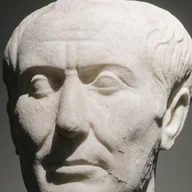
Caesar, The Gallic War 4.19–20Translated by W. A. McDevitte and W. S. Bohn (1869)Read the full passage (opens scaife.perseus.org)

When, and whose words

Date
55 BCE. His first crossing to Britain, late summer 55 BCE; written up c. 52–51 BCE.
Whose words
His own words, writing of himself as 'Caesar'.
How this post was checked
  • The plain-words line was read against the quote alone by a second, independent pass, which found it adds no claim the quote does not make (2026-10-03).
  • Each claim in the summary was checked by an independent pass against only the material it cites.
  • The quote itself is checked by the build: word for word, once, at the cited section of the stored translation.

See it among its momentsMore from Julius CaesarSee it in the feed