hstry

The Spartans' epitaph at Thermopylae

c. 430–425 BCE, Thermopylae. The Spartans' epitaph at Thermopylae, as Herodotus records it.

Where and when

c. 430–425 BCEThermopylae

about 2,452 years ago

Explore
Herodotus, c. 484 – c. 425 BCE3000 BCE2900 BCE2800 BCE2700 BCE2600 BCE2500 BCE2400 BCE2300 BCE2200 BCE2100 BCE2000 BCE1900 BCE1800 BCE1700 BCE1600 BCE1500 BCE1400 BCE1300 BCE1200 BCE1100 BCE1000 BCE900 BCE800 BCE700 BCE600 BCE500 BCE400 BCE300 BCE200 BCE100 BCE1 CE100 CE200 CE300 CE400 CE500 CE600 CE700 CE800 CE900 CE1000 CE1100 CE1200 CE1300 CE1400 CE1500 CE1600 CE1700 CE1800 CE1900 CE2000 CEGreat Pyramid of Giza built, c. 2600 BCERome founded (traditional date), 753 BCELast western Roman emperor deposed, 476 CEGutenberg's printing press, c. 1440 CEColumbus reaches the Americas, 1492 CEFirst people on the Moon, 1969 CEToday, 2026sometime in these 5 years

Swipe the line. Bars: entries. Dots: events.

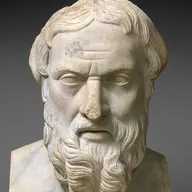
Herodotus

, ThermopylaeThe Spartans' epitaph at Thermopylae, as Herodotus records it

In plain words, ours

The Spartans' own epitaph: Stranger, go tell the Spartans that we lie here, obedient to their orders.

That inscription is for them all, but the Spartans have their own: Foreigner, go tell the Spartans that we lie here obedient to their commands.

Herodotus, Histories 7.228.2Translated by A. D. Godley (1920)Read the full passage (Herodotus, Histories 7.228.2, opens scaife.perseus.org)

What was going on, our summary

Herodotus is describing the graves at Thermopylae, where the Greeks who fought the Medes were buried where they fell. Several inscriptions were set over them: one for all of them, and another for the seer Megistias.

Checked claim by claim against: the passage around the quote.

Related moments

In time order, with this one in its place. Each says why it is here.

  1. 430 BCEabout 3 years earlier Plague breaks out in Athens Same years
  2. 431/430 BCEabout 3 years earlier Athens holds a public funeral for its first war dead Same years
  3. set in 431/430 BCEabout 3 years earlier Pericles honors the war dead Also about death
  4. 429 BCEabout 2 years earlier Pericles dies Also about death
  5. 427 BCEAbout the same year Athens votes to kill Mytilene's men, then relents Also about war and empire
  6. c. 430–425 BCEThis momentThe Spartans' epitaph at Thermopylae
  7. c. 430–425 BCEDuring it Herodotus says custom is lord of all More from Herodotus
  8. c. 430–425 BCEDuring it Herodotus on every nation's own customs More from Herodotus
  9. c. 430–425 BCEDuring it Herodotus on why he wrote his Histories More from Herodotus
  10. c. 430–425 BCEDuring it Herodotus on the last stand at Thermopylae Same passage
  11. 427 BCE, written laterAbout the same year Thucydides on revolution in the cities Also about war and empire
  12. 425 BCEabout 2 years later Spartans surrender on Sphacteria Same years

Just before and after

The text around the quote, word for word from the same translation.

Show the passageHide the passage

He was not at all disturbed by this and made light of the multitude of the Medes, saying that their Trachinian foreigner brought them good news. If the Medes hid the sun, they could fight them in the shade instead of in the sun. This saying and others like it, they claim, Dieneces the Lacedaemonian left behind as a memorial. Next after him two Lacedaemonian brothers, Alpheus and Maron, sons of Orsiphantus, are said to have been most courageous. The Thespian who gained most renown was one whose name was Dithyrambus son of Harmatides. There is an inscription written over these men, who were buried where they fell, and over those who died before the others went away, dismissed by Leonidas. It reads as follows: Here four thousand from the Peloponnese once fought three million.

The quote: That inscription is for them all, but the Spartans have their own: Foreigner, go tell the Spartans that we lie here obedient to their commands.

That one is to the Lacedaemonians, this one to the seer: This is a monument to the renowned Megistias, Slain by the Medes who crossed the Spercheius river. The seer knew well his coming doom, But endured not to abandon the leaders of Sparta. Except for the seer's inscription, the Amphictyons are the ones who honored them by erecting inscriptions and pillars. That of the seer Megistias was inscribed by Simonides son of Leoprepes because of his tie of guest-friendship with the man.

Herodotus, Histories 7.226.2–7.228.4Translated by A. D. Godley (1920)Read the full passage (opens scaife.perseus.org)

When, and whose words

Date
c. 430–425 BCE. When the Histories were being completed (c. 430–425 BCE); he records an inscription set up for the dead of 480 BCE.
Whose words
The Spartans' epitaph at Thermopylae, as Herodotus records it. Who was Herodotus?
How this post was checked
  • The plain-words line was read against the quote alone by a second, independent pass, which found it adds no claim the quote does not make (2026-10-03).
  • Each claim in the summary was checked by an independent pass against only the material it cites.
  • The quote itself is checked by the build: word for word, once, at the cited section of the stored translation.

See it among its momentsMore from HerodotusSee it in the feed