hstry

Xerxes weeps over his army

c. 430–425 BCE, Abydos. Xerxes speaking, as Herodotus tells it.

Where and when

c. 430–425 BCEAbydos

about 2,452 years ago

Explore
Herodotus, c. 484 – c. 425 BCE3000 BCE2900 BCE2800 BCE2700 BCE2600 BCE2500 BCE2400 BCE2300 BCE2200 BCE2100 BCE2000 BCE1900 BCE1800 BCE1700 BCE1600 BCE1500 BCE1400 BCE1300 BCE1200 BCE1100 BCE1000 BCE900 BCE800 BCE700 BCE600 BCE500 BCE400 BCE300 BCE200 BCE100 BCE1 CE100 CE200 CE300 CE400 CE500 CE600 CE700 CE800 CE900 CE1000 CE1100 CE1200 CE1300 CE1400 CE1500 CE1600 CE1700 CE1800 CE1900 CE2000 CEGreat Pyramid of Giza built, c. 2600 BCERome founded (traditional date), 753 BCELast western Roman emperor deposed, 476 CEGutenberg's printing press, c. 1440 CEColumbus reaches the Americas, 1492 CEFirst people on the Moon, 1969 CEToday, 2026sometime in these 5 years

Swipe the line. Bars: entries. Dots: events.

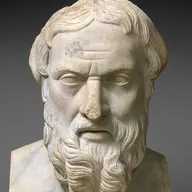
Herodotus

, AbydosXerxes speaking, as Herodotus tells it

In plain words, ours

Xerxes said he felt pity: life is so short that of all these men, not one will be alive in a hundred years.

Xerxes said, “I was moved to compassion when I considered the shortness of all human life, since of all this multitude of men not one will be alive a hundred years from now.”

Herodotus, Histories 7.46.2Translated by A. D. Godley (1920)Read the full passage (Herodotus, Histories 7.46.2, opens scaife.perseus.org)

What was going on, our summary

As Herodotus tells it, Xerxes sat above the shore at Abydos watching his army and fleet fill the Hellespont. He called himself blessed, then wept, and his uncle Artabanus questioned him about it.

Checked claim by claim against: the passage around the quote.

Related moments

In time order, with this one in its place. Each says why it is here.

  1. 430 BCEabout 3 years earlier Plague breaks out in Athens Same years
  2. 431/430 BCEabout 3 years earlier Athens holds a public funeral for its first war dead Same years
  3. set in 431/430 BCEabout 3 years earlier Pericles honors the war dead Also about death
  4. 429 BCEabout 2 years earlier Pericles dies Also about death
  5. 427 BCEAbout the same year Athens votes to kill Mytilene's men, then relents Same years
  6. c. 430–425 BCEThis momentXerxes weeps over his army
  7. c. 430–425 BCEDuring it Herodotus says custom is lord of all More from Herodotus
  8. c. 430–425 BCEDuring it Herodotus on every nation's own customs More from Herodotus
  9. c. 430–425 BCEDuring it Herodotus on why he wrote his Histories More from Herodotus
  10. 425 BCEabout 2 years later Spartans surrender on Sphacteria Same years

Just before and after

The text around the quote, word for word from the same translation.

Show the passageHide the passage

A lofty seat of white stone had been set up for him on a hill there for this very purpose, built by the people of Abydos at the king's command. There he sat and looked down on the seashore, viewing his army and his fleet; as he viewed them he desired to see the ships contend in a race. They did so, and the Phoenicians of Sidon won; Xerxes was pleased with the race and with his expedition. When he saw the whole Hellespont covered with ships, and all the shores and plains of Abydos full of men, Xerxes first declared himself blessed, and then wept. His uncle Artabanus perceived this, he who in the beginning had spoken his mind freely and advised Xerxes not to march against Hellas. Marking how Xerxes wept, he questioned him and said, “O king, what a distance there is between what you are doing now and a little while ago! After declaring yourself blessed you weep.”

The quote: Xerxes said, “I was moved to compassion when I considered the shortness of all human life, since of all this multitude of men not one will be alive a hundred years from now.”

Artabanus answered, “In one life we have deeper sorrows to bear than that. Short as our lives are, there is no human being either here or elsewhere so fortunate that it will not occur to him, often and not just once, to wish himself dead rather than alive. Misfortunes fall upon us and sicknesses trouble us, so that they make life, though short, seem long.

Herodotus, Histories 7.44.1–7.46.3Translated by A. D. Godley (1920)Read the full passage (opens scaife.perseus.org)

When, and whose words

Date
c. 430–425 BCE. When the Histories were being completed (c. 430–425 BCE); the scene is set as Xerxes' army crosses into Europe, 480 BCE.
Whose words
Xerxes speaking, as Herodotus tells it. Who was Herodotus?
How this post was checked
  • The plain-words line was read against the quote alone by a second, independent pass, which found it adds no claim the quote does not make (2026-10-03).
  • Each claim in the summary was checked by an independent pass against only the material it cites.
  • The quote itself is checked by the build: word for word, once, at the cited section of the stored translation.

See it among its momentsMore from HerodotusSee it in the feed