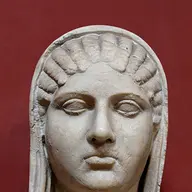
What was going on: In Plato's Menexenus, which many read as satire, Socrates gives a speech he credits to Aspasia, honoring Athenians who have fallen. It praises the land and the ancestors, and calls Athens' government an aristocracy backed by the people.
A country shapes its people: a good one raises good people, a bad one raises bad people.
For a polity is a thing which nurtures men, good men when it is noble, bad men when it is base.
As Plato tells it, through Socrates; many read the Menexenus as satire. Plato, Menexenus 238c, translated by R. G. Bury (1929)
What was going on: In Plato's Menexenus, which many read as satire, Socrates recites a speech for Athens' fallen soldiers that he credits to Aspasia. At this point the speech praises the city's form of government, which it says some call democracy but is really rule by the best with the people's approval.
The people run most things and give power to whoever seems best. Being poor, weak or of unknown family neither bars you nor lifts you.
And while the most part of civic affairs are in the control of the populace, they hand over the posts of government and the power to those who from time to time are deemed to be the best men; and no man is debarred by his weakness or poverty or by the obscurity of his parentage, or promoted because of the opposite qualities, as is the case in other States. On the contrary, the one principle of selection is this: the man that is deemed to be wise or good rules and governs.
As Plato tells it, through Socrates; many read the Menexenus as satire. Plato, Menexenus 238d, translated by R. G. Bury (1929)
What was going on: In Plato's Menexenus, which many read as satire, Socrates recites a speech given as Aspasia's. In it, men who chose to die bravely rather than live in shame are imagined speaking to their own children.
Money brings a coward no honour. Looks and strength only make a coward easier to notice.
For neither does wealth bring honor to its possessor if combined with cowardice—for such an one is rich for another rather than for himself,—nor do beauty and strength appear comely, but rather uncomely, when they are attached to one that is cowardly and base, since they make their possessor more conspicuous and show up his cowardice;
As Plato tells it, through Socrates; many read the Menexenus as satire. Plato, Menexenus 246e, translated by R. G. Bury (1929)
What was going on: In Plato's Menexenus, which many read as satire, Socrates repeats a speech credited to Aspasia. In it, men who must die speak to their fathers, asking them not to grieve too much.
Someone who relies on himself will not be seen overjoyed or overcome by grief.
…because he puts his trust in himself, he will neither be seen rejoicing nor yet grieving overmuch.
As Plato tells it, through Socrates; many read the Menexenus as satire. Plato, Menexenus 248a, translated by R. G. Bury (1929)
What was going on: In Plato's Menexenus, which many read as satire, Socrates and Menexenus are talking about the funeral speech Athens will soon need. Socrates has just named Aspasia as his teacher of speaking, and Menexenus then begs him to repeat her speech.
Why it matters: Much of the interest in the Menexenus comes from its being one of the few surviving sources on how Athenians gave funeral speeches, even though it parodies the form.
Aspasia rehearsed a funeral speech for me yesterday. I imagine she pieced parts of it together from the one she wrote for Pericles.
…but I was listening only yesterday to Aspasia going through a funeral speech for these very people. For she had heard the report you mention, that the Athenians are going to select the speaker; and thereupon she rehearsed to me the speech in the form it should take, extemporizing in part, while other parts of it she had previously prepared, as I imagine, at the time when she was composing the funeral oration which Pericles delivered; and from this she patched together sundry fragments.
As Plato tells it; many read the Menexenus as satire. Plato, Menexenus 236b, translated by R. G. Bury (1929)
What was going on: Xenophon, writing after Socrates' trial, is explaining how Socrates faced his conviction and death. Just before, he tells of Socrates predicting that the son of a man named Anytus would go bad.
Why it matters: Xenophon's Apology is one of the two surviving primary sources on the trial, besides Plato's; unlike Plato, it explains Socrates' readiness to die as better than facing the pains of old age.
By praising himself in court, Socrates made the jury angrier and his conviction surer. Still, I think he got a fate the gods love: he skipped the hardest part of life.
And as for Socrates, by exalting himself before the court, he brought ill-will upon himself and made his conviction by the jury more certain. Now to me he seems to have met a fate that the gods love; for he escaped the hardest part of life and met the easiest sort of death.
Xenophon's own words, in his account of the trial. Xenophon, Apology 32, translated by O. J. Todd (1923)
What was going on: Xenophon, writing about Socrates' trial, says Socrates exalted himself before the court, which made his conviction surer, and then met death cheerfully. Socrates was condemned and put to death in Athens in 399 BCE.
Why it matters:Plato's account of the trial and death inspired writers, artists and philosophers to return to it. Some saw the execution as showing the defects of democracy; others as a justifiable defence of a newly restored democracy.
When I think about how wise and good he was, I can't forget him, and I can't remember him without praising him.
And so, in contemplating the man’s wisdom and nobility of character, I find it beyond my power to forget him or, in remembering him, to refrain from praising him.
Xenophon's own words, in his account of the trial. Xenophon, Apology 34, translated by O. J. Todd (1923)
, Athens
Aristotle, aged about seventeen, joins Plato's Academy
A young man from Stagira comes to Athens to study with Plato, and stays about twenty years.
He attached himself to Plato and resided with him twenty years, having become his pupil at the age of seventeen.
What was going on: Xenophon opens his defense of Socrates, written years after the trial of 399 BCE in which a jury condemned Socrates to death. He starts with the charge about the gods, noting that Socrates sacrificed openly.
Why it matters: These are the opening words of the Memorabilia, the longest and most famous of Xenophon's writings on Socrates; besides Plato and Aristophanes, he is the only contemporary whose writings on Socrates survive.
I keep wondering how the accusers convinced Athens to put Socrates to death. The charge: rejecting the city's gods, bringing in new ones, and corrupting the young.
I have often wondered by what arguments those who drew up the indictment against Socrates could persuade the Athenians that his life was forfeit to the state. The indictment against him was to this effect: Socrates is guilty of rejecting the gods acknowledged by the state and of bringing in strange deities: he is also guilty of corrupting the youth.
Xenophon's own words, opening his defence of Socrates. Xenophon, Memorabilia 1.1.1, translated by E. C. Marchant (1923)
What was going on: Xenophon, writing years after Socrates was put to death, is describing how Socrates lived. He has just explained Socrates' view of which questions to take to the gods and which to work out by learning.
Why it matters:Plato's account of the trial and death inspired writers, artists and philosophers to return to it. Some saw the execution as showing the defects of democracy; others as a justifiable defence of a newly restored democracy.
Socrates lived in public: gyms in the morning, the market before noon, then wherever the crowds were. Usually talking, and anyone could listen.
Moreover, Socrates lived ever in the open; for early in the morning he went to the public promenades and training-grounds; in the forenoon he was seen in the market; and the rest of the day he passed just where most people were to be met: he was generally talking, and anyone might listen.
Xenophon's own words, remembering Socrates. Xenophon, Memorabilia 1.1.10, translated by E. C. Marchant (1923)
What was going on: Xenophon, remembering Socrates, describes how frugally he lived and how closely he heeded signs from the gods. He adds that Socrates easily avoided overeating at dinners, and joked that Circe turned men into swine with a feast of tempting dishes.
Socrates ate just enough to enjoy it. Hunger was his best sauce, and any drink tasted good because he only drank when thirsty.
He ate just sufficient food to make eating a pleasure, and he was so ready for his food that he found appetite the best sauce: and any kind of drink he found pleasant, because he drank only when he was thirsty.
Xenophon's own words, remembering Socrates. Xenophon, Memorabilia 1.3.5, translated by E. C. Marchant (1923)
What was going on: These are Xenophon's closing words in his book about Socrates, written years after Socrates was put to death in 399 BCE. Xenophon has just summed him up as religious, just, self-controlled and wise, and says those who knew him still miss him.
Why it matters:Plato's account of the trial and death inspired writers, artists and philosophers to return to it. Some saw the execution as showing the defects of democracy; others as a justifiable defence of a newly restored democracy.
To me he was everything a truly good and happy man should be. If you doubt it, compare other people with him, then decide.
To me then he seemed to be all that a truly good and happy man must be. But if there is any doubter, let him set the character of other men beside these things; then let him judge.
Xenophon's own words, closing the Memorabilia. Xenophon, Memorabilia 4.8.11, translated by E. C. Marchant (1923)
What was going on: Xenophon, writing years after Socrates was condemned to death in 399 BCE, is remembering how he died. He argues Socrates was already old and won glory by how calmly and bravely he faced his sentence.
Why it matters:Plato's account of the trial and death inspired writers, artists and philosophers to return to it. Some saw the execution as showing the defects of democracy; others as a justifiable defence of a newly restored democracy.
It's agreed there is no record of anyone facing death more nobly. He had to live thirty days after the verdict, because the law allowed no public execution until the sacred mission came back from Delos.
In fact it is admitted that there is no record of death more nobly borne. For he was forced to live for thirty days after the verdict was given, because it was the month of the Dêlia, and the law did not allow any public execution to take place until the sacred embassy had returned from Delos.
Xenophon's own words, remembering Socrates. Xenophon, Memorabilia 4.8.2, translated by E. C. Marchant (1923)
What was going on: In Plato's Laws, a character called the Athenian Stranger is talking with Clinias and Megillus. He has just described pleasure and pain as two foolish advisers inside each of us, and now offers an image to explain them.
Imagine each of us is a clever puppet made by the gods, maybe as a toy, maybe for something serious. We have no idea which.
Let us suppose that each of us living creatures is an ingenious puppet of the gods, whether contrived by way of a toy of theirs or for some serious purpose—for as to that we know nothing;
The Athenian Stranger speaking, in Plato's Laws. Plato, Laws 644d, translated by R. G. Bury (1926)
What was going on: In Plato's Laws, an Athenian Stranger is talking with Clinias about a new city they are planning, with settlers about to arrive. He argues that office should go not to the rich, strong or well-born, but to whoever best obeys the laws.
Where the law bows to those in power, I see ruin coming. Where officials serve the law, I see a state that will be saved and blessed.
For wherever in a State the law is subservient and impotent, over that State I see ruin impending; but wherever the law is lord over the magistrates, and the magistrates are servants to the law, there I descry salvation and all the blessings that the gods bestow on States.
The Athenian Stranger speaking, in Plato's Laws. Plato, Laws 715d, translated by R. G. Bury (1926)
What was going on: In Plato's Laws, an Athenian visitor is explaining how citizens should be raised to live well under the laws. Having covered how a person should treat parents, friends and the state, he turns to the kind of character that leads to a noble life.
For gods and people alike, truth is the first of all good things. If you want a happy life, start living by it from childhood.
Of all the goods, for gods and men alike, truth stands first. Thereof let every man partake from his earliest days, if he purposes to become blessed and happy, that so he may live his life as a true man so long as possible.
The Athenian Stranger speaking, in Plato's Laws. Plato, Laws 730b–c, translated by R. G. Bury (1926)
What was going on: As Xenophon tells it, Ischomachus is talking to his wife about keeping their house in order. He has just praised how beautiful boots, cloaks and dishes look when each kind is set out in rows.
Why it matters: The Oeconomicus is one of the earliest works on economics in its original sense of household management, and some see it as the source of the word economy.
No serious person will laugh when I say even pots and pans look beautiful lined up neatly, however much a joker might.
Yes, no serious man will smile when I claim that there is beauty in the order even of pots and pans set out in neat array, however much it may move the laughter of a wit.
Ischomachus speaking to his wife, as Xenophon tells it. Xenophon, Oeconomicus 8.19, translated by E. C. Marchant (1923)
What was going on: In a letter said to be Plato's (his authorship is disputed), the writer turns to his own youth. Next he tells of a revolution that put Thirty men in charge with no one to answer to.
Why it matters: Plato's youthful hope of a public life is known from the Seventh Letter, the longest of his letters and considered the most important, though its authenticity has been disputed.
When I was young I felt what many others feel: I thought that as soon as I was my own master, I'd go straight into public life.
In the days of my youth my experience was the same as that of many others. I thought that as soon as I should become my own master I would immediately enter into public life.
Seventh Letter; authorship disputed. Plato, Letters 7.324b–c, translated by R. G. Bury (1929)
What was going on: In a letter credited to Plato, though its authorship is disputed, the writer recalls his youth, when the Thirty took power in Athens. Some of them were people he knew and they invited him to join, so he watched what they did, including trying to force Socrates to help seize a citizen for execution.
Why it matters:Socrates stayed in Athens under the Thirty; the public came to associate him with them, which may have contributed to his eventual death sentence.
In no time these men made people miss the old government, and worst of all was how they treated my old friend Socrates, whom I would readily call the most just man alive.
And indeed I saw how these men within a short time caused men to look back on the former government as a golden age; and above all how they treated my aged friend Socrates, whom I would hardly scruple to call the most just of men then living,
Seventh Letter; authorship disputed. Plato, Letters 7.324d–e, translated by R. G. Bury (1929)
What was going on: In a letter said to be Plato's, though its authorship is disputed, the writer looks back on Athens after the Thirty fell and exiles returned. Men in power then took his friend Socrates to court for impiety, and he was condemned and killed.
Why it matters: The prosecution of Socrates put an end to Plato's plans for a political career.
Then, by bad luck, some powerful men took our friend Socrates to court on an unholy charge, the one he deserved least of anyone.
But, as ill-luck would have it, certain men of authority summoned our comrade Socrates before the law-courts, laying a charge against him which was most unholy, and which Socrates of all men least deserved;
Seventh Letter; authorship disputed. Plato, Letters 7.325b, translated by R. G. Bury (1929)
What was going on: In a letter said to be Plato's (scholars dispute who wrote it), the writer looks back on his early wish to enter politics in Athens. He describes laws and customs being corrupted fast, and trusted friends being hard to find.
At first I badly wanted to go into politics. But watching everything lurch in every direction, I ended up dizzy.
Consequently, although at first I was filled with an ardent desire to engage in public affairs, when I considered all this and saw how things were shifting about anyhow in all directions, I finally became dizzy;
Seventh Letter; authorship disputed. Plato, Letters 7.325d–e, translated by R. G. Bury (1929)
What was going on: In the same disputed letter, the writer says he once longed for a public career but grew dizzy watching things shift in every direction, and came to see every state as badly governed. He says he held this view when he first arrived in Italy and Sicily.
People's troubles won't end until true philosophers take power, or until, by some gift of the gods, the people in power truly become philosophers.
Wherefore the classes of mankind (I said) will have no cessation from evils until either the class of those who are right and true philosophers attains political supremacy, or else the class of those who hold power in the States becomes, by some dispensation of Heaven, really philosophic.
Seventh Letter; authorship disputed. Plato, Letters 7.326a–b, translated by R. G. Bury (1929)
What was going on: In a letter credited to Plato, though its authorship is disputed, the writer says others have written about the subjects he studies most seriously, and that he is told a man he once taught has too. He says such writers cannot understand those subjects at all.
Why it matters: Here the Seventh Letter, which many scholars reject as Plato's, voices his so-called unwritten doctrine, that nothing of importance should be committed to writing.
I have never written a book on this and never will. It can't be put in words; after long work on it, it lights up in the mind all at once, like a spark.
There does not exist, nor will there ever exist, any treatise of mine dealing therewith. For it does not at all admit of verbal expression like other studies, but, as a result of continued application to the subject itself and communion therewith, it is brought to birth in the soul on a sudden, as light that is kindled by a leaping spark, and thereafter it nourishes itself.
Seventh Letter; authorship disputed. Plato, Letters 7.341c–d, translated by R. G. Bury (1929)
What was going on: In a letter said to be Plato's, though many doubt he wrote it, the writer warns that written teachings always get out, so it is safer to learn by heart. Right after, he asks the reader to read the letter over and then burn it.
Why it matters: The Second Letter is the source of this oft-cited remark about Plato's writings, though R. G. Bury argues the letter is almost certainly not by Plato.
I have never written anything on these subjects, and there is no book by Plato. The works under my name belong to a Socrates made handsome and young.
For this reason I myself have never yet written anything on these subjects, and no treatise by Plato exists or will exist, but those which now bear his name belong to a Socrates become fair and young.
Second Letter; authorship disputed, widely thought not by Plato. Plato, Letters 2.314c, translated by R. G. Bury (1929)
What was going on:Diogenes Laertius, writing centuries later, collects stories of Diogenes the Cynic mocking people in Athens. In this one, Diogenes answers Plato's definition by bringing a plucked fowl into the lecture room.
Plato defined a human as an animal with two legs and no feathers, and people applauded.
Plato had defined Man as an animal, biped and featherless, and was applauded.
As Diogenes Laertius tells it, centuries later. Diogenes Laertius, Lives of Eminent Philosophers 6.40, translated by R. D. Hicks (1925)
What was going on: Diogenes Laertius, writing centuries later, collects sayings and jokes of Diogenes the Cynic. Here, Plato had defined man as a two-legged animal without feathers and was applauded for it.
He plucked a chicken, brought it to the lecture and said: here's Plato's human. After that, with broad nails was added to the definition.
Diogenes plucked a fowl and brought it into the lecture-room with the words, Here is Plato’s man. In consequence of which there was added to the definition, having broad nails.
As Diogenes Laertius tells it, centuries later. Diogenes Laertius, Lives of Eminent Philosophers 6.40, translated by R. D. Hicks (1925)
What was going on: Diogenes Laertius, writing centuries later, collects stories of Diogenes the Cynic needling Plato, from mocking his trip to Sicily to a joke about shared figs. In this one, Plato's guests have come from Dionysius, and Plato replies that Diogenes shows pride of another sort.
Plato had friends over who came from Dionysius. Diogenes walked all over his carpets: I'm trampling on Plato's vanity.
And one day when Plato had invited to his house friends coming from Dionysius, Diogenes trampled upon his carpets and said, I trample upon Plato’s vainglory.
As Diogenes Laertius tells it, centuries later. Diogenes Laertius, Lives of Eminent Philosophers 6.26, translated by R. D. Hicks (1925)
What was going on:Diogenes Laertius, writing centuries later, collects stories of Diogenes the Cynic mocking Plato. In this one, Plato had invited friends who came from Dionysius, and Diogenes walked over his carpets, saying he was trampling on Plato's vanity.
You show off a lot of pride, Diogenes, by acting like you have none.
Plato’s reply was, How much pride you expose to view, Diogenes, by seeming not to be proud.
As Diogenes Laertius tells it, centuries later. Diogenes Laertius, Lives of Eminent Philosophers 6.26, translated by R. D. Hicks (1925)
What was going on: As Plutarch tells it, centuries later, the boy Alexander once hosted envoys from the Persian king while his father Philip was away, quizzing them about roads and the Persian army. Plutarch says he wanted excellence and fame, not wealth or pleasure.
Why it matters: Alexander's relationship with his father forged his competitive side; he worried Philip would leave him no great or brilliant achievement to show the world.
Every time his father took a city or won a battle, he told his friends: Dad will do everything first and leave nothing great for me.
…as often as tidings were brought that Philip had either taken a famous city or been victorious in some celebrated battle, Alexander was not very glad to hear them, but would say to his comrades: Boys, my father will anticipate everything; and for me he will leave no great or brilliant achievement to be displayed to the world with your aid.
As Plutarch tells it, centuries later. Plutarch, Life of Alexander 5.2, translated by Bernadotte Perrin (1919)