hstry

Plato's Seventh Letter on philosophers ruling

c. 353 BCE, Athens. Seventh Letter; authorship disputed.

Where and when

c. 353 BCEAthens

about 2,378 years ago

Explore
Plato, c. 428 – 348 BCE3000 BCE2900 BCE2800 BCE2700 BCE2600 BCE2500 BCE2400 BCE2300 BCE2200 BCE2100 BCE2000 BCE1900 BCE1800 BCE1700 BCE1600 BCE1500 BCE1400 BCE1300 BCE1200 BCE1100 BCE1000 BCE900 BCE800 BCE700 BCE600 BCE500 BCE400 BCE300 BCE200 BCE100 BCE1 CE100 CE200 CE300 CE400 CE500 CE600 CE700 CE800 CE900 CE1000 CE1100 CE1200 CE1300 CE1400 CE1500 CE1600 CE1700 CE1800 CE1900 CE2000 CEGreat Pyramid of Giza built, c. 2600 BCERome founded (traditional date), 753 BCELast western Roman emperor deposed, 476 CEGutenberg's printing press, c. 1440 CEColumbus reaches the Americas, 1492 CEFirst people on the Moon, 1969 CEToday, 2026

Swipe the line. Bars: entries. Dots: events.

Plato

, AthensSeventh Letter; authorship disputed

In plain words, ours

People's troubles won't end until true philosophers take power, or until, by some gift of the gods, the people in power truly become philosophers.

Wherefore the classes of mankind (I said) will have no cessation from evils until either the class of those who are right and true philosophers attains political supremacy, or else the class of those who hold power in the States becomes, by some dispensation of Heaven, really philosophic.

Plato, Letters 7.326a–bTranslated by R. G. Bury (1929)Read the full passage (Plato, Letters 7.326a–b, opens scaife.perseus.org)

What was going on, our summary

In the same disputed letter, the writer says he once longed for a public career but grew dizzy watching things shift in every direction, and came to see every state as badly governed. He says he held this view when he first arrived in Italy and Sicily.

Checked claim by claim against: the passage around the quote.

Related moments

In time order, with this one in its place. Each says why it is here.

  1. c. 386 BCEabout 33 years earlier Aspasia's speech on how a state shapes men Also about democracy and government
  2. by c. 354 BCE1 year earlier Ischomachus on pots and pans Also in Athens
  3. c. 353 BCEThis momentPlato's Seventh Letter on philosophers ruling
  4. c. 353 BCEAbout the same year Plato's Seventh Letter on Socrates in court More from Plato
  5. c. 353 BCEAbout the same year Plato's Seventh Letter on the Thirty Same passageMore from Plato
  6. c. 353 BCEAbout the same year Plato's Seventh Letter on entering public life Same passageMore from Plato
  7. by 348 BCEabout 5 years later Diogenes and the plucked chicken Also in Athens
  8. by 348 BCEabout 5 years later Diogenes tramples Plato's carpets Also in Athens
  9. c. 335–322 BCEabout 25 years later Aristotle on the wisdom of the many Also about democracy and government

Just before and after

The text around the quote, word for word from the same translation.

Show the passageHide the passage

Consequently, although at first I was filled with an ardent desire to engage in public affairs, when I considered all this and saw how things were shifting about anyhow in all directions, I finally became dizzy; and although I continued to consider by what means some betterment could be brought about not only in these matters but also in the government as a whole, yet as regards political action I kept constantly waiting for an opportune moment; until, finally, looking at all the States which now exist, I perceived that one and all they are badly governed; for the state of their laws is such as to be almost incurable without some marvellous overhauling and good-luck to boot. So in my praise of the right philosophy I was compelled to declare that by it one is enabled to discern all forms of justice both political and individual.

The quote: Wherefore the classes of mankind (I said) will have no cessation from evils until either the class of those who are right and true philosophers attains political supremacy, or else the class of those who hold power in the States becomes, by some dispensation of Heaven, really philosophic.

This was the view I held when I came to Italy and Sicily, at the time of my first arrival. And when I came I was in no wise pleased at all with the blissful life, as it is there termed, replete as it is with Italian and Syracusan banquetings ; for thus one’s existence is spent in gorging food twice a day and never sleeping alone at night, and all the practices which accompany this mode of living.

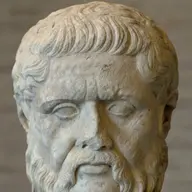
Plato, Letters 7.325d–326cTranslated by R. G. Bury (1929)Read the full passage (opens scaife.perseus.org)

When, and whose words

Date
c. 353 BCE. The Seventh Letter is conventionally dated c. 353 BCE, after Dion's death (354 BCE); it says this was his view before his first trip to Sicily.
Whose words
Seventh Letter; authorship disputed. Who was Plato?
How this post was checked
  • The plain-words line was read against the quote alone by a second, independent pass, which found it adds no claim the quote does not make (2026-10-03).
  • Each claim in the summary was checked by an independent pass against only the material it cites.
  • The quote itself is checked by the build: word for word, once, at the cited section of the stored translation.

See it among its momentsMore from PlatoSee it in the feed