hstry

The peasant on noble birth and poverty

c. 420–413 BCE, Athens (Theatre of Dionysus). The Peasant speaking, in Euripides’ play.

Where and when

c. 420–413 BCEAthens (Theatre of Dionysus)

about 2,442 years ago

Explore
Euripides, c. 480 – c. 406 BCE3000 BCE2900 BCE2800 BCE2700 BCE2600 BCE2500 BCE2400 BCE2300 BCE2200 BCE2100 BCE2000 BCE1900 BCE1800 BCE1700 BCE1600 BCE1500 BCE1400 BCE1300 BCE1200 BCE1100 BCE1000 BCE900 BCE800 BCE700 BCE600 BCE500 BCE400 BCE300 BCE200 BCE100 BCE1 CE100 CE200 CE300 CE400 CE500 CE600 CE700 CE800 CE900 CE1000 CE1100 CE1200 CE1300 CE1400 CE1500 CE1600 CE1700 CE1800 CE1900 CE2000 CEGreat Pyramid of Giza built, c. 2600 BCERome founded (traditional date), 753 BCELast western Roman emperor deposed, 476 CEGutenberg's printing press, c. 1440 CEColumbus reaches the Americas, 1492 CEFirst people on the Moon, 1969 CEToday, 2026sometime in these 7 years

Swipe the line. Bars: entries. Dots: events.

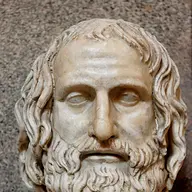
Euripides

, Athens (Theatre of Dionysus)The Peasant speaking, in Euripides’ play

In plain words, ours

My family had good blood but no money, and lack of money ruins good birth.

My family was noble in race but poor in money—which is the ruin of good birth.

Euripides, Electra line 35Translated by E. P. Coleridge (1891)Read the full passage (Euripides, Electra line 35, opens scaife.perseus.org)

What was going on, our summary

In Euripides' play, a peasant explains why Aegisthus married Electra off to him. Aegisthus feared she might bear a noble son who would avenge Agamemnon, so he gave her to a powerless man. The peasant says he has never touched her, as he is not her equal in rank.

Checked claim by claim against: the passage around the quote.

Related moments

In time order, with this one in its place. Each says why it is here.

  1. c. 429 BCEabout 12 years earlier Iocasta on living at random Also about wealth, poverty and luck
  2. c. 430–425 BCEabout 10 years earlier Solon tells Croesus man is chance Also about wealth, poverty and luck
  3. c. 430–405 BCEDuring it Socrates would rather suffer wrong than do it Also in Athens
  4. c. 420–413 BCEThis momentThe peasant on noble birth and poverty
  5. c. 420–413 BCEDuring it A peasant in Euripides on wealth More from Euripides
  6. c. 420–413 BCEDuring it Orestes on judging a man's worth More from Euripides
  7. c. 420–413 BCEDuring it Orestes on judging a man's worth More from Euripides
  8. 416 BCE1 year later Athens takes Melos and kills its men Same years
  9. set in 416 BCE1 year later Socrates on Love as the best helper Also in Athens
  10. 415 BCEabout 1.8999999999999773 years later Statues of Hermes are smashed across Athens Also in Athens
  11. 415 BCEabout 2 years later The great fleet sails for Sicily Same years
  12. c. 431–400 BCEDuring it Thucydides on how he wrote the speeches Same years

Just before and after

The text around the quote, word for word from the same translation.

Show the passageHide the passage

Peasant: But Aegisthus feared she might bear to some chieftain a son who would avenge Agamemnon, and so he kept her at home and did not betroth her to any bridegroom. When even this filled him with great fear, that she might secretly bear children to some noble lord, Aegisthus planned to kill her, but her mother, although cruel at heart, rescued her from his hand. For she had a pretext for having slain her husband, but she feared that she would be despised for the murder of her children. So then, for these reasons, Aegisthus devised such a scheme: he promised gold to anyone who should kill Agamemnon’s son, who had left the country as an exile, while Electra he gave in marriage to me. My ancestors were Mycenaeans; in that respect at least I am not to blame.

The quote: Peasant: My family was noble in race but poor in money—which is the ruin of good birth.

Peasant: He gave her to a powerless man so that his fear might lose its power. For if some man of high position got her, he would have roused the sleeping blood of Agamemnon and judgment would have come at some time to Aegisthus. But I have never (Cypris knows this too) dishonored her in bed; she is still a virgin indeed. I am ashamed to have the daughter of a wealthy man and violate her, when I was not born of equal rank. And I groan for the wretched Orestes, called my kinsman, if he shall ever return to Argos and see the unfortunate marriage of his sister.

Euripides, Electra lines 20–45Translated by E. P. Coleridge (1891)Read the full passage (opens scaife.perseus.org)

When, and whose words

Date
c. 420–413 BCE. The first staging of Euripides’ Electra is not recorded; estimates on style and allusions fall between about 420 and 413 BCE.
Whose words
The Peasant speaking, in Euripides’ play.
How this post was checked
  • The plain-words line was read against the quote alone by a second, independent pass, which found it adds no claim the quote does not make (2026-10-03).
  • Each claim in the summary was checked by an independent pass against only the material it cites.
  • The quote itself is checked by the build: word for word, once, at the cited section of the stored translation.

See it among its momentsMore from EuripidesSee it in the feed