hstry

Aristophanes' Socrates walks on air

423 BCE, Athens (Theatre of Dionysus). Aristophanes’ Socrates, in the Clouds.

Where and when

423 BCEAthens (Theatre of Dionysus)

2,448 years ago

Explore
Aristophanes, c. 446 – c. 386 BCE3000 BCE2900 BCE2800 BCE2700 BCE2600 BCE2500 BCE2400 BCE2300 BCE2200 BCE2100 BCE2000 BCE1900 BCE1800 BCE1700 BCE1600 BCE1500 BCE1400 BCE1300 BCE1200 BCE1100 BCE1000 BCE900 BCE800 BCE700 BCE600 BCE500 BCE400 BCE300 BCE200 BCE100 BCE1 CE100 CE200 CE300 CE400 CE500 CE600 CE700 CE800 CE900 CE1000 CE1100 CE1200 CE1300 CE1400 CE1500 CE1600 CE1700 CE1800 CE1900 CE2000 CEGreat Pyramid of Giza built, c. 2600 BCERome founded (traditional date), 753 BCELast western Roman emperor deposed, 476 CEGutenberg's printing press, c. 1440 CEColumbus reaches the Americas, 1492 CEFirst people on the Moon, 1969 CEToday, 2026

Swipe the line. Bars: entries. Dots: events.

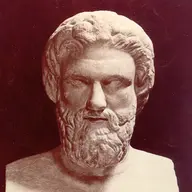
Aristophanes

, Athens (Theatre of Dionysus)Aristophanes’ Socrates, in the Clouds

In plain words, ours

I am up here in the air, thinking about the sun.

I am walking in the air, and speculating about the sun.

Aristophanes, Clouds line 225Translated by William James Hickie (1853)Read the full passage (Aristophanes, Clouds line 225, opens scaife.perseus.org)

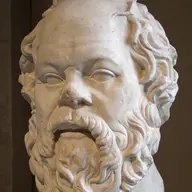
Answered by Socrates, set in 399 BCE

What was going on, our summary

In Aristophanes' comedy the Clouds, Strepsiades comes looking for Socrates and finds him hanging overhead in a basket. Asked what he is doing, this stage Socrates answers, then says thought must be suspended in the air to discover things above.

Checked claim by claim against: the passage around the quote.

Why it matters

The basket-borne Socrates is part of the play's notorious caricature of him, and Plato cites the play in the Apology as a contributing factor to Socrates' trial and execution.

Based on Wikipedia: The Clouds

The play also, however, remains notorious for its caricature of Socrates, and is cited by Plato in the Apology as a contributing factor to the philosopher's trial and execution.

Socrates appears overhead, wafted in a basket at the end of a rope, the better to observe the Sun and other meteorological phenomena.

Wikipedia, The Clouds (opens en.wikipedia.org), as of 2026-03-30. Text CC BY-SA 4.0. Our line is checked against these sentences only.

Related moments

In time order, with this one in its place. Each says why it is here.

  1. 427 BCE4 years earlier Athens votes to kill Mytilene's men, then relents Also in Athens
  2. 425 BCE2 years earlier Spartans surrender on Sphacteria Same years
  3. 424/423 BCEDuring it Thucydides fails to save Amphipolis and is exiled Same years
  4. 423 BCEThis momentAristophanes' Socrates walks on air
  5. 423 BCESame year A disciple of Socrates on the flea Same passageMore from Aristophanes
  6. 423 BCESame year Strepsiades on the gnat's trumpet More from Aristophanes
  7. 423 BCESame year Aristophanes' Socrates on the gods More from Aristophanes
  8. 423 BCESame year Strepsiades on the better and worse cause Same passage
  9. 422 BCE1 year later Cleon and Brasidas both die at Amphipolis Same years
  10. 421 BCE2 years later The Peace of Nicias Also in Athens
  11. c. 431–411 BCEDuring it Socrates on guardians sharing wives and children Same years
  12. c. 430–405 BCEDuring it Socrates would rather suffer wrong than do it Also in Athens
  13. set in 399 BCE24 years later Socrates on Aristophanes' comedy Answered by Socrates

Just before and after

The text around the quote, word for word from the same translation.

Show the passageHide the passage

Strepsiades: What say you? I don’t believe you; for I do not see the Dicasts sitting.

Disciple: Be assured that this is truly the Attic territory.

Strepsiades: Why, where are my fellow-tribesmen of Cicynna?

Disciple: Here they are. And Euboea here, as you see, is stretched out a long way by the side of it to a great distance.

Strepsiades: I know that; for it was stretched by us and Pericles. But where is Lacedaemon?

Disciple: Where is it? Here it is.

Strepsiades: How near it is to us! Pay great attention to this, to remove it very far from us.

Disciple: By Jupiter, it is not possible.

Strepsiades: Then you will weep for it. Looking up and discovering Socrates. Come, who is this man who is in the basket?

Disciple: Himself.

Strepsiades: Who’s Himself?

Disciple: Socrates.

Strepsiades: O Socrates! Come, you sir, call upon him loudly for me.

Disciple: Nay, rather, call him yourself; for I have no leisure.

Exit Disciple.

Strepsiades: Socrates! My little Socrates!

Socrates: Why callest thou me, thou creature of a day?

Strepsiades: First tell me, I beseech you, what are you doing.

The quote: Socrates: I am walking in the air, and speculating about the sun.

Strepsiades: And so you look down upon the gods from your basket, and not from the earth?

Socrates: For I should not have rightly discovered things celestial if I had not suspended the intellect, and mixed the thought in a subtle form with its kindred air. But if, being on the ground, I speculated from below on things above, I should never have discovered them. For the earth forcibly attracts to itself the meditative moisture. Water-cresses also suffer the very same thing.

Strepsiades: What do you say? Does meditation attract the moisture to the water-cresses?

Aristophanes, Clouds lines 207–235Translated by William James Hickie (1853)Read the full passage (opens scaife.perseus.org)

When, and whose words

Date
423 BCE. Clouds was first staged in 423 BCE; the text that survives is a partial revision Aristophanes made a few years later, which was never staged.
Whose words
Aristophanes’ Socrates, in the Clouds.
How this post was checked
  • The plain-words line was read against the quote alone by a second, independent pass, which found it adds no claim the quote does not make (2026-10-03).
  • Each claim in the summary was checked by an independent pass against only the material it cites.
  • The quote itself is checked by the build: word for word, once, at the cited section of the stored translation.

See it among its momentsMore from AristophanesSee it in the feed