hstry

The stage Socrates calls the Clouds goddesses

423 BCE, Athens (Theatre of Dionysus). Aristophanes’ Socrates, in the Clouds.

Where and when

423 BCEAthens (Theatre of Dionysus)

2,448 years ago

Explore
Aristophanes, c. 446 – c. 386 BCE3000 BCE2900 BCE2800 BCE2700 BCE2600 BCE2500 BCE2400 BCE2300 BCE2200 BCE2100 BCE2000 BCE1900 BCE1800 BCE1700 BCE1600 BCE1500 BCE1400 BCE1300 BCE1200 BCE1100 BCE1000 BCE900 BCE800 BCE700 BCE600 BCE500 BCE400 BCE300 BCE200 BCE100 BCE1 CE100 CE200 CE300 CE400 CE500 CE600 CE700 CE800 CE900 CE1000 CE1100 CE1200 CE1300 CE1400 CE1500 CE1600 CE1700 CE1800 CE1900 CE2000 CEGreat Pyramid of Giza built, c. 2600 BCERome founded (traditional date), 753 BCELast western Roman emperor deposed, 476 CEGutenberg's printing press, c. 1440 CEColumbus reaches the Americas, 1492 CEFirst people on the Moon, 1969 CEToday, 2026

Swipe the line. Bars: entries. Dots: events.

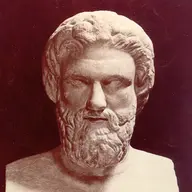
Aristophanes

, Athens (Theatre of Dionysus)Aristophanes’ Socrates, in the Clouds

In plain words, ours

These are the only real goddesses. Everything else is nonsense.

For, in fact, these alone are goddesses; and all the rest is nonsense.

Aristophanes, Clouds line 365Translated by William James Hickie (1853)Read the full passage (Aristophanes, Clouds line 365, opens scaife.perseus.org)

What was going on, our summary

In Aristophanes' play the Clouds, the Chorus of Clouds has just greeted Strepsiades and the stage Socrates. Socrates then tells Strepsiades there is no Jupiter, and that the Clouds make the rain.

Checked claim by claim against: the passage around the quote.

Related moments

In time order, with this one in its place. Each says why it is here.

  1. c. 441 BCEabout 18 years earlier Antigone defies Creon Also about the gods
  2. 427 BCE4 years earlier Athens votes to kill Mytilene's men, then relents Also in Athens
  3. 425 BCE2 years earlier Spartans surrender on Sphacteria Same years
  4. 424/423 BCEDuring it Thucydides fails to save Amphipolis and is exiled Same years
  5. 423 BCEThis momentThe stage Socrates calls the Clouds goddesses
  6. 423 BCESame year A disciple of Socrates on the flea More from Aristophanes
  7. 423 BCESame year Strepsiades on the gnat's trumpet More from Aristophanes
  8. 423 BCESame year Aristophanes' Socrates on the gods Same passage
  9. 423 BCESame year Strepsiades learns of Vortex Same passage
  10. 423 BCESame year Aristophanes' Socrates walks on air More from Aristophanes
  11. 422 BCE1 year later Cleon and Brasidas both die at Amphipolis Same years
  12. 421 BCE2 years later The Peace of Nicias Also in Athens
  13. c. 431–411 BCEDuring it Socrates on guardians sharing wives and children Same years
  14. c. 430–405 BCEDuring it Socrates would rather suffer wrong than do it Also in Athens
  15. 415 BCE7.899999999999977 years later Statues of Hermes are smashed across Athens Also about the gods

Just before and after

The text around the quote, word for word from the same translation.

Show the passageHide the passage

Strepsiades: For this reason, then, for this reason, when they yesterday saw Cleonymus the recreant, on this account they became stags, because they saw this most cowardly fellow.

Socrates: And now too, because they saw Clisthenes, you observe, on this account they became women.

Strepsiades: Hail therefore, O mistresses! And now, if ever ye did to any other, to me also utter a voice reaching to heaven, O all-powerful queens.

Chorus: Hail, O ancient veteran, hunter after learned speeches! And thou, O priest of most subtle trifles! Tell us what you require? For we would not hearken to any other of the recent meteorological sophists, except to Prodicus; to him, on account of his wisdom and intelligence; and to you, because you walk proudly in the streets, and cast your eyes askance, and endure many hardships with bare feet, and in reliance upon us lookest supercilious.

Strepsiades: O Earth, what a voice! How holy and dignified and wondrous!

The quote: Socrates: For, in fact, these alone are goddesses; and all the rest is nonsense.

Strepsiades: But come, by the Earth, is not Jupiter, the Olympian, a god?

Socrates: What Jupiter? Do not trifle. There is no Jupiter.

Strepsiades: What do you say? Who rains then? For first of all explain this to me.

Socrates: These to be sure. I will teach you it by powerful evidence. Come, where have you ever seen him raining at any time without Clouds? And yet he ought to rain in fine weather, and these be absent.

Strepsiades: By Apollo, of a truth you have rightly confirmed this by your present argument. And yet, before this, I really thought that Jupiter caused the rain. But tell me who is it that thunders. This makes me tremble.

Aristophanes, Clouds lines 353–372Translated by William James Hickie (1853)Read the full passage (opens scaife.perseus.org)

When, and whose words

Date
423 BCE. Clouds was first staged in 423 BCE; the text that survives is a partial revision Aristophanes made a few years later, which was never staged.
Whose words
Aristophanes’ Socrates, in the Clouds.
How this post was checked
  • The plain-words line was read against the quote alone by a second, independent pass, which found it adds no claim the quote does not make (2026-10-03).
  • Each claim in the summary was checked by an independent pass against only the material it cites.
  • The quote itself is checked by the build: word for word, once, at the cited section of the stored translation.

See it among its momentsMore from AristophanesSee it in the feed