hstry

Medea on passion over reason

431 BCE, Athens (Theatre of Dionysus). Medea speaking, in Euripides’ play.

Where and when

431 BCEAthens (Theatre of Dionysus)

2,456 years ago

Explore
Euripides, c. 480 – c. 406 BCE3000 BCE2900 BCE2800 BCE2700 BCE2600 BCE2500 BCE2400 BCE2300 BCE2200 BCE2100 BCE2000 BCE1900 BCE1800 BCE1700 BCE1600 BCE1500 BCE1400 BCE1300 BCE1200 BCE1100 BCE1000 BCE900 BCE800 BCE700 BCE600 BCE500 BCE400 BCE300 BCE200 BCE100 BCE1 CE100 CE200 CE300 CE400 CE500 CE600 CE700 CE800 CE900 CE1000 CE1100 CE1200 CE1300 CE1400 CE1500 CE1600 CE1700 CE1800 CE1900 CE2000 CEGreat Pyramid of Giza built, c. 2600 BCERome founded (traditional date), 753 BCELast western Roman emperor deposed, 476 CEGutenberg's printing press, c. 1440 CEColumbus reaches the Americas, 1492 CEFirst people on the Moon, 1969 CEToday, 2026

Swipe the line. Bars: entries. Dots: events.

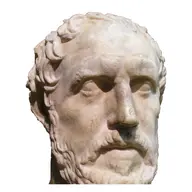
Euripides

, Athens (Theatre of Dionysus)Medea speaking, in Euripides’ play

In plain words, ours

I finally see how terrible the thing I am about to do is. But passion, the source of the worst human misery, has beaten my better judgement.

At last I understand the awful deed I am to do; but passion, that cause of direst woes to mortal man, hath triumphed o’er my sober thoughts.

Euripides, Medea lines 1075–1080Translated by E. P. Coleridge (1906)Read the full passage (Euripides, Medea lines 1075–1080, opens scaife.perseus.org)

What was going on, our summary

In Euripides' play, Medea has decided that her children must die and that she will kill them herself. A royal bride is already dying in a crown and robe. Medea says goodbye to the children, then sends them away because she cannot bear to look at them.

Checked claim by claim against: the passage around the quote.

Related moments

In time order, with this one in its place. Each says why it is here.

  1. c. 441 BCEabout 10 years earlier Haemon begs his father to bend Also about how to live well
  2. c. 433 BCEabout 2 years earlier Socrates says no one does evil willingly Also about how to live well
  3. 431 BCESame year Thebans attack Plataea and the war begins Same years
  4. 431 BCEThis momentMedea on passion over reason
  5. 431 BCESame year Medea on childbirth and battle More from Euripides
  6. 431 BCESame year Medea on being too clever More from Euripides
  7. 431 BCESame year Medea on the lot of women More from Euripides
  8. 431 BCE, written laterSame year Thucydides opens his history of the war Also in Athens
  9. 431 BCE0.10000000000002274 years later Spartan army invades Attica Same years
  10. 430 BCE1 year later Plague breaks out in Athens Same years
  11. 431/430 BCEBegins this year Athens holds a public funeral for its first war dead Same years
  12. 430 BCE, written later1 year later Thucydides on the plague he caught Also in Athens
  13. 430 BCE, written later1 year later Thucydides on the plague in Athens Also in Athens
  14. 429 BCE2 years later Pericles dies Same years

Just before and after

The text around the quote, word for word from the same translation.

Show the passageHide the passage

Medea: Die they must in any case, and since ’tis so, why I, the mother who bore them, will give the fatal blow. In any case their doom is fixed and there is no escape. Already the crown is on her head, the robe is round her, and she is dying, the royal bride; that do I know full well. But now since I have a piteous path to tread, and yet more piteous still the path I send my children on, fain would I say farewell to them. O my babes, my babes, let your mother kiss your hands. Ah! hands I love so well, O lips most dear to me! O noble form and features of my children, I wish ye joy, but in that other land, for here your father robs you of your home. O the sweet embrace, the soft young cheek, the fragrant breath! my children! Go, leave me; I cannot bear to longer look upon ye; my sorrow wins the day.

The quote: Medea: At last I understand the awful deed I am to do; but passion, that cause of direst woes to mortal man, hath triumphed o’er my sober thoughts.

Chorus: Oft ere now have I pursued subtler themes and have faced graver issues than woman’s sex should seek to probe; but then e’en we aspire to culture, which dwells with us to teach us wisdom; I say not all; for small is the class amongst women—(one maybe shalt thou find ’mid many)— that is not incapable of culture. And amongst mortals I do assert that they who are wholly without experience and have never had children far surpass in happiness those who are parents.

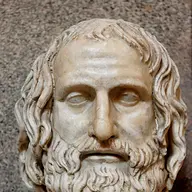
Euripides, Medea lines 1060–1090Translated by E. P. Coleridge (1906)Read the full passage (opens scaife.perseus.org)

When, and whose words

Date
431 BCE. Medea was first staged at the City Dionysia in 431 BCE.
Whose words
Medea speaking, in Euripides’ play.
How this post was checked
  • The plain-words line was read against the quote alone by a second, independent pass, which found it adds no claim the quote does not make (2026-10-03).
  • Each claim in the summary was checked by an independent pass against only the material it cites.
  • The quote itself is checked by the build: word for word, once, at the cited section of the stored translation.

See it among its momentsMore from EuripidesSee it in the feed