hstry

Epictetus on Socrates and his accusers

c. 108 CE, Nicopolis. As Arrian recorded it.

Where and when

c. 108 CENicopolis

about 1,918 years ago

Explore
Epictetus, c. 50 – c. 135 CE3000 BCE2900 BCE2800 BCE2700 BCE2600 BCE2500 BCE2400 BCE2300 BCE2200 BCE2100 BCE2000 BCE1900 BCE1800 BCE1700 BCE1600 BCE1500 BCE1400 BCE1300 BCE1200 BCE1100 BCE1000 BCE900 BCE800 BCE700 BCE600 BCE500 BCE400 BCE300 BCE200 BCE100 BCE1 CE100 CE200 CE300 CE400 CE500 CE600 CE700 CE800 CE900 CE1000 CE1100 CE1200 CE1300 CE1400 CE1500 CE1600 CE1700 CE1800 CE1900 CE2000 CEGreat Pyramid of Giza built, c. 2600 BCERome founded (traditional date), 753 BCELast western Roman emperor deposed, 476 CEGutenberg's printing press, c. 1440 CEColumbus reaches the Americas, 1492 CEFirst people on the Moon, 1969 CEToday, 2026

Swipe the line. Bars: entries. Dots: events.

Epictetus

, NicopolisAs Arrian recorded it
Quoting Socrates, as Plato tells it, set in 399 BCE, about 500 years earlierFor know that if you kill me, I being such a man as I say I am, you will not injure me so much as yourselves; for neither Meletus nor Anytus could injure me; …

How we know they are linked: Epictetus quotes Socrates. His version, Anytus and Melitus can kill me, but they cannot hurt me, echoes what Plato’s Socrates says at his trial.

In plain words, ours

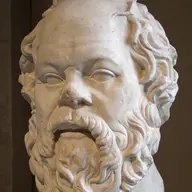
Who should we listen to, you or Socrates? He said his accusers could kill him but could not hurt him. And: if God wants it this way, so be it.

Whom shall we listen to, you or him? And what does Socrates say? Anytus and Melitus can kill me, but they cannot hurt me: and further, he says, If it so pleases God, so let it be.

Epictetus, Discourses 1.29Translated by George Long (1877)Read the full passage (Epictetus, Discourses 1.29, opens scaife.perseus.org)

What was going on, our summary

A talk by Epictetus at Nicopolis, around 108 CE, as Arrian took it down. Epictetus has been asking why Socrates was dragged to prison and given hemlock by the Athenians, and whether that should make anyone blame God.

Checked claim by claim against: the passage around the quote.

Related moments

In time order, with this one in its place. Each says why it is here.

  1. set in 399 BCEabout 506 years earlier Socrates at his trial, as Plato tells it Quoting Socrates
  2. c. 371–354 BCEabout 469 years earlier Xenophon answers the charge against Socrates Also about the trial of Socrates
  3. c. 353 BCEabout 460 years earlier Plato's Seventh Letter on Socrates in court Also about the trial of Socrates
  4. c. 108 CEThis momentEpictetus on Socrates and his accusers
  5. c. 108 CEAbout the same year Epictetus on chains and the will More from Epictetus
  6. c. 108 CEAbout the same year Epictetus on facing death without lament More from Epictetus
  7. c. 108 CEAbout the same year Epictetus on singing hymns to God More from Epictetus

Just before and after

The text around the quote, word for word from the same translation.

Show the passageHide the passage

The ten therefore conquer the one in this in which they are stronger. In what then are the ten weaker? If the one possesses right opinions and the others do not. Well then, can the ten conquer in this matter? How is it possible? If we were placed in the scales, must not the heavier draw down the scale in which it is. How strange then that Socrates should have been so treated by the Athenians. Slave, why do you say Socrates? Speak of the thing as it is: how strange that the poor body of Socrates should have been carried off and dragged to prison by stronger men, and that any one should have given hemlock to the poor body of Socrates, and that it should breathe out the life. Do these things seem strange, do they seem unjust, do you on account of these things blame God? Had Socrates then no equivalent for these things? Where then for him was the nature of good?

The quote: Whom shall we listen to, you or him? And what does Socrates say? Anytus and Melitus can kill me, but they cannot hurt me: and further, he says, If it so pleases God, so let it be.

But show me that he who has the inferior principles overpowers him who is superior in principles. You will never show this, nor come near showing it; for this is the law of nature and of God that the superior shall always overpower the inferior. In what? In that in which it is superior. One body is stronger than another: many are stronger than one: the thief is stronger than he who is not a thief. This is the reason why I also lost my lamp, because in wakefulness the thief was superior to me.

Epictetus, Discourses 1.29Translated by George Long (1877)Read the full passage (opens scaife.perseus.org)

When, and whose words

Date
c. 108 CE. Epictetus’ talks at his school in Nicopolis, as his student Arrian took them down; Arrian’s notes are usually dated to about 108 CE.
Whose words
As Arrian recorded it.
How this post was checked
  • The plain-words line was read against the quote alone by a second, independent pass, which found it adds no claim the quote does not make (2026-10-03).
  • Each claim in the summary was checked by an independent pass against only the material it cites.
  • The quote itself is checked by the build: word for word, once, at the cited section of the stored translation.

See it among its momentsMore from EpictetusSee it in the feed