hstry

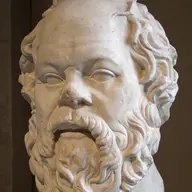
Socrates calls himself the city's gadfly

set in 399 BCE, Athens. As Plato tells it.

Where and when

set in 399 BCEAthens

2,424 years ago

Explore
Socrates, c. 470 – 399 BCE3000 BCE2900 BCE2800 BCE2700 BCE2600 BCE2500 BCE2400 BCE2300 BCE2200 BCE2100 BCE2000 BCE1900 BCE1800 BCE1700 BCE1600 BCE1500 BCE1400 BCE1300 BCE1200 BCE1100 BCE1000 BCE900 BCE800 BCE700 BCE600 BCE500 BCE400 BCE300 BCE200 BCE100 BCE1 CE100 CE200 CE300 CE400 CE500 CE600 CE700 CE800 CE900 CE1000 CE1100 CE1200 CE1300 CE1400 CE1500 CE1600 CE1700 CE1800 CE1900 CE2000 CEGreat Pyramid of Giza built, c. 2600 BCERome founded (traditional date), 753 BCELast western Roman emperor deposed, 476 CEGutenberg's printing press, c. 1440 CEColumbus reaches the Americas, 1492 CEFirst people on the Moon, 1969 CEToday, 2026

Swipe the line. Bars: entries. Dots: events.

In plain words, ours

Kill me and you won't easily find another like me: a fly stinging a big, lazy horse of a city awake.

For if you put me to death, you will not easily find another, who, to use a rather absurd figure, attaches himself to the city as a gadfly to a horse, which, though large and well bred, is sluggish on account of his size and needs to be aroused by stinging.

Plato, Apology 30eTranslated by Harold North Fowler (1914)Read the full passage (Plato, Apology 30e, opens scaife.perseus.org)

What was going on, our summary

As Plato tells it, Socrates is speaking to the jury at his trial in 399 BCE, with Meletus and Anytus against him. He says he is defending himself less for his own sake than for theirs, so they do not wrongly condemn a gift from the god.

Checked claim by claim against: Socrates is tried, condemned and put to death, the passage around the quote.

Why it matters

About the event it belongs to: Socrates is tried, condemned and put to death

Plato's account of the trial and death inspired writers, artists and philosophers to return to it. Some saw the execution as showing the defects of democracy; others as a justifiable defence of a newly restored democracy.

Based on Wikipedia: Trial of Socrates

Plato's presentation of the trial and death of Socrates inspired writers, artists, and philosophers to revisit the matter.

For some, the execution of the man whom Plato called "the wisest and most just of all men" demonstrated the defects of democracy and of popular rule; for others, the Athenian actions were a justifiable defence of the recently re-established democracy.

Wikipedia, Trial of Socrates (opens en.wikipedia.org), as of 2026-10-01. Text CC BY-SA 4.0. Our line is checked against these sentences only.

Related moments

In time order, with this one in its place. Each says why it is here.

  1. 404 BCE5 years earlier The Thirty take power in Athens Same years
  2. 403 BCE4 years earlier Democracy returns to Athens, with an amnesty Same years
  3. 399 BCESame year Socrates is tried, condemned and put to death The event behind itAlso in AthensAlso about the trial of Socrates
  4. set in 399 BCEThis momentSocrates calls himself the city's gadfly
  5. by 399 BCEBy this year Aspasia on honest matchmaking Also in Athens
  6. set in 399 BCESame year The charge Meletus swore against Socrates Also in AthensAlso about the trial of Socrates
  7. set in 399 BCESame year Socrates on the fear of death Same passage
  8. set in 399 BCESame year Socrates and the oracle at Delphi More from Socrates
  9. set in 399 BCESame year Socrates on what makes things beautiful More from Socrates
  10. set in 399 BCESame year Socrates at his trial, as Plato tells it Same passage
  11. set in 399 BCESame year Socrates on knowing that he does not know More from Socrates

Just before and after

The text around the quote, word for word from the same translation.

Show the passageHide the passage

Now I am going to say some things to you at which you will perhaps cry out; but do not do so by any means. For know that if you kill me, I being such a man as I say I am, you will not injure me so much as yourselves; for neither Meletus nor Anytus could injure me; that would be impossible, for I believe it is not God’s will that a better man be injured by a worse. He might, however, perhaps kill me or banish me or disfranchise me; and perhaps he thinks he would thus inflict great injuries upon me, and others may think so, but I do not; I think he does himself a much greater injury by doing what he is doing now—killing a man unjustly. And so, men of Athens, I am now making my defence not for my own sake, as one might imagine, but far more for yours, that you may not by condemning me err in your treatment of the gift the God gave you.

The quote: For if you put me to death, you will not easily find another, who, to use a rather absurd figure, attaches himself to the city as a gadfly to a horse, which, though large and well bred, is sluggish on account of his size and needs to be aroused by stinging.

I think the god fastened me upon the city in some such capacity, and I go about arousing, and urging and reproaching each one of you, constantly alighting upon you everywhere the whole day long. Such another is not likely to come to you, gentlemen; but if you take my advice, you will spare me. But you, perhaps, might be angry, like people awakened from a nap, and might slap me, as Anytus advises, and easily kill me; then you would pass the rest of your lives in slumber, unless God, in his care for you, should send someone else to sting you.

Plato, Apology 30c–31Translated by Harold North Fowler (1914)Read the full passage (opens scaife.perseus.org)

When, and whose words

Date
set in 399 BCE. Spoken at the trial of Socrates in 399 BCE; Plato wrote the Apology some years later.
Whose words
As Plato tells it.
How this post was checked
  • The plain-words line was read against the quote alone by a second, independent pass, which found it adds no claim the quote does not make (2026-10-03).
  • Each claim in the summary was checked by an independent pass against only the material it cites.
  • The quote itself is checked by the build: word for word, once, at the cited section of the stored translation.

See it among its momentsMore from SocratesSee it in the feed