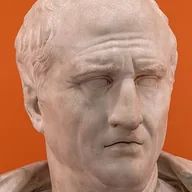
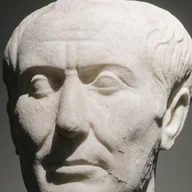
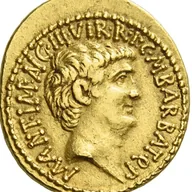
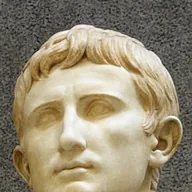
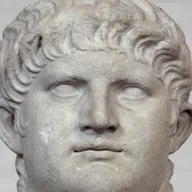
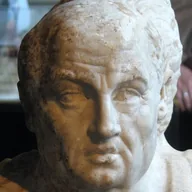
What was going on:Rome, 63 BCE. The consul Cicero faces Catiline, who planned to seize power by force, in the Senate. Catiline had come anyway; no senator would greet him, and the senior men left his bench empty. Cicero skipped the formal business and turned straight on him.
Why it matters: Cicero's speech here, the First Catilinarian, is the most famous speech in Latin literature.
Catiline, when will you stop abusing our patience? How long will your madness keep mocking us? When will your reckless swagger end?
When, O Catiline, do you mean to cease abusing our patience? How long is that madness of yours still to mock us? When is there to be an end of that unbridled audacity of yours, swaggering about as it does now?
His own words, in a speech to the Senate. Cicero, Against Catiline 1.1, translated by C. D. Yonge (1856)
What was going on: The Senate in Rome, 63 BCE. The consul Cicero has exposed Catiline's plan to seize power by force, and Catiline himself has come to the meeting. With guards posted across the city, Cicero speaks straight to him.
Why it matters: Scholars disagree about its weight: one called it among the best known and least significant episodes in Roman history, while others stress that it jolted the Republic into action.
What times we live in! The Senate knows all this, the consul sees it, and still this man is alive. He even comes into the Senate.
Shame on the age and on its principles! The senate is aware of these things; the consul sees them; and yet this man lives. Lives! aye, he comes even into the senate.
His own words, in a speech to the Senate. Cicero, Against Catiline 1.2, translated by C. D. Yonge (1856)
What was going on:Rome, 63 BCE. The consul Cicero is denouncing Catiline in the Senate for plotting to seize power by force. He says that putting Catiline to death would leave the other plotters in Rome, while his leaving would draw them out of the city with him.
Why it matters: Catiline's response to this first speech was to withdraw from the city and join an uprising in Etruria.
The consul orders an enemy to leave the city. Are you being exiled? I am not ordering it. But if you want my advice, I advise it.
The consul orders an enemy to depart from the city. Do you ask me, Are you to go into banishment? I do not order it; but, if you consult me, I advise it.
His own words, in a speech to the Senate. Cicero, Against Catiline 1.13, translated by C. D. Yonge (1856)
What was going on:Rome, 63 BCE. The consul Cicero has denounced Catiline, who planned to seize power by force, and Catiline has left the city to join his army. Cicero calls the people into the forum and gives them this speech.
Why it matters: Scholars disagree about its weight: one called it among the best known and least significant episodes in Roman history, while others stress that it jolted the Republic into action.
He is gone, he has left, he has vanished, he has rushed out. That monster can no longer plot against this city from inside its walls.
He is gone, he has departed, he has disappeared, he has rushed out. No injury will now be prepared against these walls within the walls themselves by that monster and prodigy of wickedness.
His own words, in a speech to the people. Cicero, Against Catiline 2.1, translated by C. D. Yonge (1856)
What was going on:Rome, 3 December 63 BCE. The Senate had just thanked Cicero and voted to hold Lentulus and the other plotters around Catiline. Cicero then went to the Forum to tell the people everything: how he had uncovered the plot and what the Senate had decided.
Why it matters: Cicero's efforts to suppress the conspiracy, which he reports here, earned him the honorific father of the fatherland, though he lived thereafter in fear of trial or exile.
Romans, today you see the republic, your lives, families and this beautiful city saved from fire and sword, by the gods and by my work and risks.
You see this day, O Romans, the republic, and all your lives, your goods, your fortunes, your wives and children, this home of most illustrious empire, thus most fortunate and beautiful city, by the great love of the immortal gods for you, by my labours and counsels and dangers, snatched from fire and sword, and almost from the very jaws of fate, and preserved and restored to you.
His own words, in a speech to the people. Cicero, Against Catiline 3.1, translated by C. D. Yonge (1856)
What was going on:Rome, 63 BCE: the consul Cicero, who exposed Catiline's plot to seize power, speaks to the Senate again. He tells the senators to stop sparing him and look to the Republic, and says his brother is there grieving and his wife and daughter are afraid.
Why it matters: In this fourth speech Cicero laid the ground for others, chiefly Cato, to argue for executing the conspirators, and after their combined efforts the Senate vote shifted in favour of execution.
If something happens to me, I will die calm and ready. Death cannot shame a brave man, come too soon for a consul, or make a wise man miserable.
…if anything does happen to me, I shall fall with a contented and prepared mind; and, indeed, death cannot be disgraceful to a brave man, nor premature to one of consular rank, nor miserable to a wise man.
His own words, in a speech to the Senate. Cicero, Against Catiline 4.3, translated by C. D. Yonge (1856)
What was going on:Rome, 63 BCE, as Plutarch tells it. Cicero took the plotters around Catiline to the prison one by one, leading Lentulus first through the Forum, and had each put to death. That evening crowds lit lamps and cheered him home.
Why it matters: Executing the conspirators without trial came back on Cicero: he was exiled in 58 BCE, though recalled the next year.
Seeing plotters in the forum still hoping the men were alive and could be rescued, he shouted that they had lived: the Roman way of saying someone is dead.
And seeing that many members of the conspiracy were still assembled in the forum in ignorance of what had been done and waiting for night to come, with the idea that the men were still living and might be rescued, he cried out to them with a loud voice and said: They have lived. For thus the Romans who wish to avoid words of ill omen indicate death.
As Plutarch tells it, over a century later. Plutarch, Life of Cicero 22.2, translated by Bernadotte Perrin (1919)C
What was going on:Rome, 63 BCE, as Plutarch tells it. The Senate is debating the fate of the Catiline plotters, with Cato and Caesar locked in argument. A note is brought in to Caesar; Cato says it has to do with the plot and tells him to read it aloud, so Caesar hands it to him.
Why it matters: The story of Cato mistaking Servilia's love letter for evidence is famous; if historical, it may show how suspicious Cato was of Caesar.
The note turned out to be a love letter from his sister to Caesar. He threw it to Caesar, called him a drunk, and went on with his speech.
But when Cato had read the note, which was an unchaste letter from his sister Servilia to Caesar, with whom she was passionately and guiltily in love, he threw it to Caesar, saying, Take it, thou sot, and then resumed his speech.
As Plutarch tells it, over a century later. Plutarch, Life of Cato the Younger 24.2, translated by Bernadotte Perrin (1919)
, Rome
Caesar, Pompey and Crassus join forces
Caesar reconciles the two most powerful men in Rome, Pompey and Crassus, and the three work together to get what each wants. Historians later call it the First Triumvirate.
This policy was to reconcile Pompey and Crassus, the most influential men in the city.
What was going on:Rome, 59 BCE. As Plutarch tells it, over a century later, Cato had just given way and sworn an oath Caesar wanted, and Caesar, elated, brought in a law to divide almost all of Campania among the poor and needy.
Only Cato spoke against the law, and Caesar had him dragged off to prison. He kept talking on the way, urging people to stop laws like this.
No one spoke against the law except Cato, and him Caesar ordered to be dragged from the rostra to prison. Cato did not any the more remit his bold utterances, but as he walked along discoursed about the law and advised the people to put a stop to such legislation.
As Plutarch tells it, over a century later. Plutarch, Life of Cato the Younger 33.1, translated by Bernadotte Perrin (1919)C
What was going on: As Plutarch tells it, over a century later: around 50 BCE the Senate argued over Caesar's command. Cato warned that Caesar himself was the danger. Caesar's friends demanded that Pompey also give up his armies and provinces, or Caesar would not give up his.
Now, Cato shouted, what I warned you about is happening. The man is finally using force, with armies he got by cheating the state.
Now shouted Cato, those things are come to pass which I foretold to you, and the man is at last resorting to open compulsion, using the forces which he got by deceiving and cheating the state.
As Plutarch tells it, over a century later. Plutarch, Life of Cato the Younger 51.5, translated by Bernadotte Perrin (1919)
49–44 BCE: Caesar, civil war and the Ides of March
, Rome (the Senate)
Caesar is stabbed to death in the Senate
A group of senators led by Brutus and Cassius kill Caesar at a Senate meeting. Suetonius, writing over a century later, counts the wounds.
He was stabbed with three and twenty wounds, uttering a groan only, but no cry, at the first wound
What was going on: Plutarch, writing over a century later, sets this the day before the Ides of March, 44 BCE, when Caesar was stabbed to death at a Senate meeting. He also passes on a story, told by many, that a seer had warned Caesar about that day. Now Caesar is at supper with Marcus Lepidus, signing letters.
Why it matters: The killing failed to restore the Republic. Instead it led to Caesar's deification and a civil war between his supporters and his killers, which became a stage in the Republic's collapse.
At dinner the talk turned to what kind of death is best. Before anyone else could answer, he said: the one you don’t see coming.
Moreover, on the day before, when Marcus Lepidus was entertaining him at supper, Caesar chanced to be signing letters, as his custom was, while reclining at table, and the discourse turned suddenly upon the question what sort of death was the best; before any one else could answer Caesar cried out: That which is unexpected.
As Plutarch tells it, over a century later. Plutarch, Life of Caesar 63.4, translated by Bernadotte Perrin (1919)
What was going on: As Suetonius tells it, over a century later: after bad omens and his wife Calpurnia's dream, Caesar nearly stayed home, but Decimus Brutus talked him into going to the Senate. A warning about the plot was pushed into his hand on the way. Inside, senators were waiting to kill him.
Why it matters: The killing failed to restore the Republic. Instead it led to Caesar's deification and a civil war between his supporters and his killers, which became a stage in the Republic's collapse.
Ignoring the bad omens, he walked in and teased the soothsayer: the Ides have come and nothing happened. The reply: they have come, but not passed.
Victim after victim was slain, without any favourable appearances in the entrails; but still, disregarding all omens, he entered the senate-house, laughing at Spurinna as a false prophet, because the ides of March were come, without any mischief having befallen him. To which the soothsayer replied, “They are come, indeed, but not past.”
Suetonius, describing him, over a century later. Suetonius, Life of Julius 81, translated by Alexander Thomson, revised by T. Forester (1889)
What was going on: 44 BCE, at a Senate meeting in Rome. Senators led by Brutus and Cassius crowd round Caesar as if to ask favours, then attack him with daggers. Suetonius, writing over a century later, describes it blow by blow.
Why it matters: Caesar's death precipitated the end of the Roman Republic, a result his killers did not foresee. The words some authors report here differ slightly from the more famous Et tu, Brute of Shakespeare's Julius Caesar.
He was stabbed 23 times, groaning at the first blow without a cry. Some writers say that when Brutus attacked, he said: you too? You, my son!
He was stabbed with three and twenty wounds, uttering a groan only, but no cry, at the first wound; although some authors relate, that when Marcus Brutus fell upon him, he exclaimed, “What! art thou, too, one of them? Thou, my son!”
As Suetonius tells it, over a century later. Suetonius, Life of Julius 82, translated by Alexander Thomson, revised by T. Forester (1889)
What was going on:Rome, 44 BCE: the funeral of Caesar, killed by senators led by Brutus and Cassius. As Plutarch tells it, Antony had just got the Senate to agree an amnesty for the killers, but he hoped to be first in the state if Brutus were overthrown.
Why it matters: When Antony showed the crowd Caesar's bloody toga, the funeral turned into a riot; buildings in the Forum burned and many of the killers fled Italy.
He gave the funeral speech for Caesar. Seeing the crowd moved, he mixed in grief and anger, and at the end held up Caesar’s bloody, slashed clothes.
Now, it happened that when Caesar’s body was carried forth for burial, Antony pronounced the customary eulogy over it in the forum. And when he saw that the people were mightily swayed and charmed by his words, he mingled with his praises sorrow and indignation over the dreadful deed, and at the close of his speech shook on high the garments of the dead, all bloody and tattered by the swords as they were,
Plutarch, describing him, over a century later. Plutarch, Life of Antony 14.3, translated by Bernadotte Perrin (1920)
27 BCE – 53 CE: Augustus and the first emperors
, Rome (the Senate)
Octavian takes the name Augustus
The Senate gives Octavian the new name Augustus. He keeps the forms of the Republic but holds the power, and is counted as Rome's first emperor.
it was resolved that he should rather be called Augustus, a surname not only new, but of more dignity
What was going on: Tacitus sums up how Augustus gained power. Brutus and Cassius had been destroyed and Antony was dead; Augustus dropped the title of triumvir and called himself consul. No one opposed him, Tacitus says, because the boldest men had fallen.
He won soldiers with gifts, the people with cheap grain and everyone with peace, and bit by bit took the powers of Senate, officials and laws.
Augustus won over the soldiers with gifts, the populace with cheap corn, and all men with the sweets of repose, and so grew greater by degrees, while he concentrated in himself the functions of the Senate, the magistrates, and the laws.
His own words. Tacitus, Annals 1.2, translated by A. J. Church and W. J. Brodribb (1876)
What was going on: 9 CE: Germanic tribes have wiped out Varus and three legions in Germany. Suetonius, writing over a century later, says that when the news came, Augustus put a watch on Rome against unrest and vowed great games to Jupiter.
Why it matters: It is considered one of the most important defeats in Roman history, abruptly ending expansion under Augustus. Despite revenge campaigns, the Rhine became the border between the Empire and the rest of Germania.
We are told he was so shaken that he let his hair and beard grow for months and sometimes banged his head on the door, crying: Varus, give me back my legions!
In short, we are informed that he was in such consternation at this event, that he let the hair of his head and beard grow for several months, and sometimes knocked his head against the door-posts, crying out, “O, Quintilius Varus! Give me back my legions!”
As Suetonius tells it, over a century later. Suetonius, Life of Augustus 23, translated by Alexander Thomson, revised by T. Forester (1889)T
What was going on: Tacitus describes Rome in Augustus' last years. Augustus was old, the only war was in Germany after Varus lost his army, and at his death in 14 CE his stepson Tiberius took over.
Why it matters: By then Augustus had established the principate, a government in which the emperor showed nominal deference to the Senate. It lasted until the Crisis of the Third Century.
All was calm and the old titles remained, but a generation had grown up since the victory at Actium. So few had ever seen the republic!
At home all was tranquil, and there were magistrates with the same titles; there was a younger generation, sprung up since the victory of Actium, and even many of the older men had been born during the civil wars. How few were left who had seen the republic!
His own words. Tacitus, Annals 1.3, translated by A. J. Church and W. J. Brodribb (1876)
, Rome
Tiberius succeeds Augustus
Augustus' stepson Tiberius takes over. Tacitus says senators hurried to swear loyalty, careful not to look glad or sorry.
Meanwhile at Rome people plunged into slavery—consuls, senators, knights.
What was going on: Suetonius, writing over a century later, describes Augustus choosing to keep power in his own hands rather than return it to the people. He then lists the buildings Augustus put up in Rome, among them a new forum with a temple of Mars the Avenger. Augustus held power for 41 years, until he died in 14 CE.
Why it matters: Marble was found in Roman buildings before Augustus, but it was not used widely as a building material until his reign.
The city was not grand enough for the empire and was prone to floods and fires. He improved it so much that he boasted he found it brick and left it marble.
The city, which was not built in a manner suitable to the grandeur of the empire, and was liable to inundations of the Tiber, as well as to fires, was so much improved under his administration, that he boasted, not without reason, that he “found it of brick, but left it of marble.”
As Suetonius tells it, over a century later. Suetonius, Life of Augustus 29, translated by Alexander Thomson, revised by T. Forester (1889)
What was going on: Suetonius, writing over a century later, says Augustus twice thought of handing power back and restoring the republic, but chose to keep it in his own hands. He then quotes an edict Augustus published about his intentions.
Let me set the state on solid ground, be remembered for shaping it for these times, and die hoping what I built will last.
May it be permitted me to have the happiness of establishing the commonwealth on a safe and sound basis, and thus enjoy the reward of which I am ambitious, that of being celebrated for moulding it into the form best adapted to present circumstances; so that, on my leaving the world, I may carry with me the hope that the foundations which I have laid for its future government, will stand firm and stable.
As Suetonius tells it, over a century later. Suetonius, Life of Augustus 28, translated by Alexander Thomson, revised by T. Forester (1889)T
What was going on: Tacitus is laying out the case against Augustus, who died in 14 CE after 41 years in power: citizens proscribed, lands divided, Antony lured on by treaties and a marriage. Next he turns to Augustus' family life.
Yes, peace came after all that, but it was a peace soaked in blood, with disasters, and murders in Rome itself.
No doubt, there was peace after all this, but it was a peace stained with blood; there were the disasters of Lollius and Varus, the murders at Rome of the Varros, Egnatii, and Juli.
His own words. Tacitus, Annals 1.10, translated by A. J. Church and W. J. Brodribb (1876)
, Rome
Caligula is killed by his own guards
Officers of the Praetorian Guard stab the emperor Caligula at the Palatine games. The guards make his uncle Claudius emperor.
Respecting what followed, two different accounts are given. Some say, that, whilst he was speaking to the boys, Chaerea came behind him, and gave him a heavy blow on the neck with his sword
What was going on: As Suetonius tells it, over a century later, Nero declared he would govern on the model of Augustus. He cut heavy taxes, gave money to the people and to poor senators, and greeted people by name.
When the Senate thanked him for ruling well, he said: thank me when I have earned it.
When the senate returned him their thanks for his good government, he replied to them, “It will be time enough to do so when I shall have deserved it.”
As Suetonius tells it, over a century later. Suetonius, Life of Nero 10, translated by Alexander Thomson, revised by T. Forester (1889)
What was going on: As Suetonius tells it over a century later, Nero is making a show of generosity: cutting taxes, giving money to the people and allowances to poor senators, and promising to govern on the model of Augustus.
Asked to sign a death sentence, he said he wished he had never learned to read and write.
When called upon to subscribe the sentence, according to custom, of a criminal condemned to die, “I wish,” said he, “I had never learnt to read and write.”
As Suetonius tells it, over a century later. Suetonius, Life of Nero 10, translated by Alexander Thomson, revised by T. Forester (1889)
What was going on:Rome, 62 CE. As Tacitus tells it, Nero's old tutor Seneca, made rich by Nero's gifts, asks to hand that wealth over and give his time to his mind instead. Three years later Nero ordered him to die.
Why it matters:Tacitus reports that Nero refused this request, and another in 64. In these final years Seneca wrote two of his greatest works, among them his Letters to Lucilius.
I am old and cannot carry the weight of my wealth any more. Please take my property into your estate. I need relief.
Just as I should implore support if exhausted by warfare or travel, so in this journey of life, old as I am and unequal even to the lightest cares, since I cannot any longer bear the burden of my wealth, I crave assistance. Order my property to be managed by your agents and to be included in your estate.
As Tacitus tells it. Tacitus, Annals 14.54, translated by A. J. Church and W. J. Brodribb (1876)
What was going on: As Tacitus tells it, Nero is answering his old tutor Seneca, who wants to give back the riches Nero gave him and step away. Tacitus adds that Nero hid his hatred under flattery. In 65 CE Nero ordered Seneca to kill himself.
Why it matters:Seneca's calm Stoic suicide later became the subject of numerous paintings.
Why not stay and guide me if I go wrong? If you hand back your wealth and leave, people will not praise you. They will talk of my greed and cruelty.
Why not rather, if the frailty of my youth goes in any respect astray, call me back and guide yet more zealously with your help the manhood which you have instructed? It will not be your moderation, if you restore me your wealth, not your love of quiet, if you forsake your emperor, but my avarice, the fear of my cruelty, which will be in all men's mouths.
As Tacitus tells it. Tacitus, Annals 14.56, translated by A. J. Church and W. J. Brodribb (1876)
What was going on:Rome, 62 CE. Nero's old tutor Seneca has asked to give back the wealth Nero gave him. As Tacitus tells it, Nero refuses in a speech and asks Seneca to keep guiding him. Afterwards Seneca keeps away from crowds and is seldom seen in Rome.
Why it matters:Seneca's calm Stoic suicide later became the subject of numerous paintings.
The emperor hugged and kissed him, being born and trained to hide hatred behind flattery. Seneca thanked him, which is how talks with a tyrant end.
To these words the emperor added embraces and kisses; for he was formed by nature and trained by habit to veil his hatred under delusive flattery. Seneca thanked him, the usual end of an interview with a despot.
His own words. Tacitus, Annals 14.56, translated by A. J. Church and W. J. Brodribb (1876)
, Rome
The Great Fire burns much of Rome
A fire starting by the Circus Maximus burns for days. Tacitus says no one knew whether it was an accident or set by Nero, who blamed the Christians.
A disaster followed, whether accidental or treacherously contrived by the emperor, is uncertain, as authors have given both accounts
What was going on:Rome, 64 CE: the Great Fire burned for six days and seven nights, as Suetonius tells it over a century later, and people fled to shelter among the tombs. Tacitus says no one knew whether it was an accident or set by Nero.
Why it matters: Suetonius' story of Nero singing of Troy as he watched Rome burn is where the legend that Nero fiddled as Rome burned begins.
He watched the fire from a tower, said he loved how beautiful the flames looked, and sang a poem about the fall of Troy in stage costume.
This fire he beheld from a tower in the house of Mecaenas, and “being greatly delighted,” as he said, “with the beautiful effects of the conflagration,” he sung a poem on the ruin of Troy, in the tragic dress he used on the stage.
As Suetonius tells it, over a century later. Suetonius, Life of Nero 38, translated by Alexander Thomson, revised by T. Forester (1889)T
What was going on:Rome, 64 CE. Tacitus has just described Nero's lavish and scandalous public feasts. Then comes the fire: it starts among shops full of flammable goods by the Circus, the wind drives it, and it burns for days.
Why it matters: The fire destroyed nearly three quarters of Rome, and by Tacitus' account Nero's blaming of the Christians began the empire's first persecution of them.
Then came a disaster, the worst fire the city had ever had. Whether it was an accident or the emperor's doing is uncertain; writers say both.
A disaster followed, whether accidental or treacherously contrived by the emperor, is uncertain, as authors have given both accounts, worse, however, and more dreadful than any which have ever happened to this city by the violence of fire.
His own words. Tacitus, Annals 15.38, translated by A. J. Church and W. J. Brodribb (1876)T
What was going on:Rome, 64 CE, during the great fire. As Tacitus tells it, Nero was at Antium and came back only when the flames neared his house. He opened public buildings and his own gardens to the homeless, brought in food and cut the price of grain.
Why it matters: The fire destroyed nearly three quarters of Rome, and by Tacitus' account Nero's blaming of the Christians began the empire's first persecution of them.
What he did, popular as it was, won him nothing, because a rumour was everywhere that while the city burned he sang on a private stage about the fall of Troy.
These acts, though popular, produced no effect, since a rumour had gone forth everywhere that, at the very time when the city was in flames, the emperor appeared on a private stage and sang of the destruction of Troy, comparing present misfortunes with the calamities of antiquity.
His own words. Tacitus, Annals 15.39, translated by A. J. Church and W. J. Brodribb (1876)T
What was going on:Rome, 64 CE, after the Great Fire. Tacitus has just described the city rebuilt with more open streets, and prayers and night vigils held to calm the gods.
Why it matters: By Tacitus's account, Nero's blaming of the Christians began the empire's first persecution of them, and his Annals are of interest as an early account of that persecution.
Nothing stopped the belief that the fire was ordered. So Nero blamed and tortured a hated group the people called Christians.
But all human efforts, all the lavish gifts of the emperor, and the propitiations of the gods, did not banish the sinister belief that the conflagration was the result of an order. Consequently, to get rid of the report, Nero fastened the guilt and inflicted the most exquisite tortures on a class hated for their abominations, called Christians by the populace.
His own words. Tacitus, Annals 15.44, translated by A. J. Church and W. J. Brodribb (1876)T
What was going on: After the Great Fire of Rome in 64 CE, Tacitus says, Nero blamed the Christians. Huge numbers were convicted and killed in cruel ways, some torn by dogs, some burned as lights at night, while Nero put on a show in his gardens.
Why it matters: The persecution after the fire is recorded only by Tacitus and a later writer who relied on him; even so, the record shows common Roman attitudes toward the Christian minority at the time.
Though they deserved harsh punishment, people pitied them: they seemed to die not for the public good but for one man's cruelty.
Hence, even for criminals who deserved extreme and exemplary punishment, there arose a feeling of compassion; for it was not, as it seemed, for the public good, but to glut one man's cruelty, that they were being destroyed.
His own words. Tacitus, Annals 15.44, translated by A. J. Church and W. J. Brodribb (1876)
, Rome
Nero orders his old tutor Seneca to die
Accused of a plot against Nero, the Stoic Seneca is told to kill himself. Tacitus says he left his friends the pattern of his life.
he bequeathed to them the only, but still the noblest possession yet remaining to him, the pattern of his life
What was going on: Suetonius, writing over a century later, describes the huge house Nero built in Rome: fields, vineyards and woods inside its grounds, rooms covered in gold and jewels, and a round banquet hall that turned day and night.
Why it matters: Suetonius says many Romans believed Nero started the Great Fire of Rome to clear land for this house, the Golden House.
When his grand new house was finished, all the praise he gave it was that now he had a home fit for a human being.
Upon the dedication of this magnificent house after it was finished, all he said in approval of it was, “that he had now a dwelling fit for a man.”
As Suetonius tells it, over a century later. Suetonius, Life of Nero 31, translated by Alexander Thomson, revised by T. Forester (1889)
, Rome
Four emperors in one year
After Nero, Galba, Otho and Vitellius each seize power and fall within months. Vespasian, commanding in Judaea, wins and starts the Flavian dynasty.
After the deaths of Nero and Galba, whilst Otho and Vitellius were contending for the sovereignty, he entertained hopes of obtaining the empire
What was going on:Rome, 71 CE, the year after Titus took Jerusalem. Josephus describes the huge floats carried in a procession, three or four storeys high, hung with gold and ivory, showing scenes from the war.
Why it matters: The Arch of Titus, still standing in Rome, has reliefs of soldiers parading the seven-branched menorah, the Table of Showbread, a golden cup and silver trumpets during the triumphal procession.
On display: a happy land laid waste, whole ranks of enemies killed, some fleeing, some taken captive, and great high walls smashed by siege machines.
For there was to be seen a happy country laid waste, and entire squadrons of enemies slain; while some of them ran away, and some were carried into captivity; with walls of great altitude and magnitude overthrown and ruined by machines;
His own words. Josephus, The Jewish War 7.132, translated by William Whiston (1737)J
What was going on:Rome, c. 71-75 CE, after the triumphs. Vespasian builds a Temple of Peace, finished fast, Josephus says, and fills it with pictures, statues and rare treasures. In 70 CE Titus had taken Jerusalem and its Temple had burned.
Why it matters: The treasures did not stay in Rome: Procopius records that the Vandal king Gaiseric took them to Carthage after sacking Rome in 455, and that they were paraded in Constantinople in 534.
He put the gold vessels and tools taken from the Jewish temple there as trophies. But their Law and the purple curtains of the holy place he had kept in the palace.
…he also laid up therein those golden vessels and instruments that were taken out of the Jewish temple, as ensigns of his glory. But still he gave order that they should lay up their Law, and the purple veils of the holy place, in the royal palace itself, and keep them there.
His own words. Josephus, The Jewish War 7.158, translated by William Whiston (1737)
, Rome
Titus opens the Colosseum with games
The great amphitheatre begun by Vespasian is finished and dedicated by his son Titus with games. Suetonius does not give the year.
Having dedicated his amphitheatre, and built some warm baths close by it with great expedition, he entertained the people with most magnificent spectacles.