hstry

Tacitus on how few had seen the republic

c. 10–14 CE, Rome. His own words.

Where and when

c. 10–14 CERome

about 2,014 years ago

Explore
Tacitus, c. 56 – c. 120 CE3000 BCE2900 BCE2800 BCE2700 BCE2600 BCE2500 BCE2400 BCE2300 BCE2200 BCE2100 BCE2000 BCE1900 BCE1800 BCE1700 BCE1600 BCE1500 BCE1400 BCE1300 BCE1200 BCE1100 BCE1000 BCE900 BCE800 BCE700 BCE600 BCE500 BCE400 BCE300 BCE200 BCE100 BCE1 CE100 CE200 CE300 CE400 CE500 CE600 CE700 CE800 CE900 CE1000 CE1100 CE1200 CE1300 CE1400 CE1500 CE1600 CE1700 CE1800 CE1900 CE2000 CEGreat Pyramid of Giza built, c. 2600 BCERome founded (traditional date), 753 BCELast western Roman emperor deposed, 476 CEGutenberg's printing press, c. 1440 CEColumbus reaches the Americas, 1492 CEFirst people on the Moon, 1969 CEToday, 2026sometime in these 4 years

Swipe the line. Bars: entries. Dots: events.

In plain words, ours

All was calm and the old titles remained, but a generation had grown up since the victory at Actium. So few had ever seen the republic!

At home all was tranquil, and there were magistrates with the same titles; there was a younger generation, sprung up since the victory of Actium, and even many of the older men had been born during the civil wars. How few were left who had seen the republic!

Tacitus, Annals 1.3Translated by A. J. Church and W. J. Brodribb (1876)Read the full passage (Tacitus, Annals 1.3, opens scaife.perseus.org)

What was going on, our summary

Tacitus describes Rome in Augustus' last years. Augustus was old, the only war was in Germany after Varus lost his army, and at his death in 14 CE his stepson Tiberius took over.

Checked claim by claim against: Augustus dies at Nola after 41 years in power, Tiberius succeeds Augustus, the passage around the quote.

Why it matters

By then Augustus had established the principate, a government in which the emperor showed nominal deference to the Senate. It lasted until the Crisis of the Third Century.

Based on Wikipedia: Augustus

The principate, a style of government in which the emperor showed nominal deference to the Senate, was established during his reign and lasted until the Crisis of the Third Century.

Wikipedia, Augustus (opens en.wikipedia.org), as of 2026-09-25. Text CC BY-SA 4.0. Our line is checked against these sentences only.

Related moments

In time order, with this one in its place. Each says why it is here.

  1. 27 BCEabout 38 years earlier Octavian takes the name Augustus Also about democracy and government
  2. c. 30–20 BCEabout 36 years earlier Tacitus on how Augustus won power Same passageMore from Tacitus
  3. 9 CEabout 3 years earlier Three Roman legions are destroyed in Germany Same years
  4. c. 10–14 CEThis momentTacitus on how few had seen the republic
  5. 14 CEabout 2 years later Augustus dies at Nola after 41 years in power The event behind it
  6. 14 CEabout 2 years later Tiberius succeeds Augustus The event behind itAlso in Rome
  7. by 14 CEabout 2 years later Augustus' brick and marble boast, in Suetonius Also in Rome
  8. by 14 CEabout 2 years later Augustus on a stable commonwealth, per Suetonius Also in RomeAlso about democracy and government
  9. by 14 CEabout 2 years later Augustus on hastening slowly, in Suetonius Same years
  10. set in 14 CEabout 2 years later Tacitus on Augustus' peace stained with blood More from Tacitus
  11. 62 CEabout 50 years later Tacitus on Nero's answer to Seneca More from Tacitus
  12. c. 115–120 CEabout 105 years later Tacitus on writing without bitterness Same passage

Just before and after

The text around the quote, word for word from the same translation.

Show the passageHide the passage

For she had gained such a hold on the aged Augustus that he drove out as an exile into the island of Planasia, his only grandson, Agrippa Postumus, who, though devoid of worthy qualities, and having only the brute courage of physical strength, had not been convicted of any gross offence. And yet Augustus had appointed Germanicus, Drusus's offspring, to the command of eight legions on the Rhine, and required Tiberius to adopt him, although Tiberius had a son, now a young man, in his house; but he did it that he might have several safeguards to rest on. He had no war at the time on his hands except against the Germans, which was rather to wipe out the disgrace of the loss of Quintilius Varus and his army than out of an ambition to extend the empire, or for any adequate recompense.

The quote: At home all was tranquil, and there were magistrates with the same titles; there was a younger generation, sprung up since the victory of Actium, and even many of the older men had been born during the civil wars. How few were left who had seen the republic!

Thus the State had been revolutionised, and there was not a vestige left of the old sound morality. Stript of equality, all looked up to the commands of a sovereign without the least apprehension for the present, while Augustus in the vigour of life, could maintain his own position, that of his house, and the general tranquillity. When in advanced old age, he was worn out by a sickly frame, and the end was near and new prospects opened, a few spoke in vain of the blessings of freedom, but most people dreaded and some longed for war.

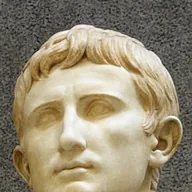
Tacitus, Annals 1.3–4Translated by A. J. Church and W. J. Brodribb (1876)Read the full passage (opens scaife.perseus.org)

When, and whose words

Date
c. 10–14 CE. Tacitus is describing the last years of Augustus, who died in 14 CE; he wrote c. 115–120 CE.
Whose words
His own words.
How this post was checked
  • The plain-words line was read against the quote alone by a second, independent pass, which found it adds no claim the quote does not make (2026-10-03).
  • Each claim in the summary was checked by an independent pass against only the material it cites.
  • The quote itself is checked by the build: word for word, once, at the cited section of the stored translation.

See it among its momentsMore from TacitusSee it in the feed