hstry

Tacitus on writing without bitterness

c. 115–120 CE. His own words.

Where and when

c. 115–120 CERome and its world

about 1,909 years ago

Explore
Tacitus, c. 56 – c. 120 CE3000 BCE2900 BCE2800 BCE2700 BCE2600 BCE2500 BCE2400 BCE2300 BCE2200 BCE2100 BCE2000 BCE1900 BCE1800 BCE1700 BCE1600 BCE1500 BCE1400 BCE1300 BCE1200 BCE1100 BCE1000 BCE900 BCE800 BCE700 BCE600 BCE500 BCE400 BCE300 BCE200 BCE100 BCE1 CE100 CE200 CE300 CE400 CE500 CE600 CE700 CE800 CE900 CE1000 CE1100 CE1200 CE1300 CE1400 CE1500 CE1600 CE1700 CE1800 CE1900 CE2000 CEGreat Pyramid of Giza built, c. 2600 BCERome founded (traditional date), 753 BCELast western Roman emperor deposed, 476 CEGutenberg's printing press, c. 1440 CEColumbus reaches the Americas, 1492 CEFirst people on the Moon, 1969 CEToday, 2026sometime in these 5 years

Swipe the line. Bars: entries. Dots: events.

In plain words, ours

The histories of the emperors from Tiberius to Nero were faked out of fear while they lived, and written in fresh hatred after. I will tell it without anger or favour.

The histories of Tiberius, Caius, Claudius, and Nero, while they were in power, were falsified through terror, and after their death were written under the irritation of a recent hatred. Hence my purpose is to relate a few facts about Augustus—more particularly his last acts, then the reign of Tiberius, and all which follows, without either bitterness or partiality, from any motives to which I am far removed.

Tacitus, Annals 1.1Translated by A. J. Church and W. J. Brodribb (1876)Read the full passage (Tacitus, Annals 1.1, opens scaife.perseus.org)
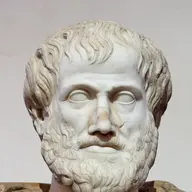
What was going on, our summary

Tacitus begins his history, written around 115–120 CE, with a quick run through Rome's past, from its first kings to Augustus, who took power when the world was worn out by civil strife. Next he says what he means to write and how.

Checked claim by claim against: the passage around the quote.

Why it matters

Tacitus' statement of how he means to write history is well known. It comes at the start of the Annals, which modern historians generally consider his magnum opus.

Based on Wikipedia: Tacitus, Annals (Tacitus)

Tacitus's own declaration regarding his approach to history (Annals I,1) is well known

Tacitus' final work is generally considered by modern historians his magnum opus which historian Ronald Mellor says represents the "pinnacle of Roman historical writing".

Wikipedia, Tacitus (opens en.wikipedia.org), as of 2026-09-25; Wikipedia, Annals (Tacitus) (opens en.wikipedia.org), as of 2026-08-23. Text CC BY-SA 4.0. Our line is checked against these sentences only.

Related moments

In time order, with this one in its place. Each says why it is here.

  1. c. 335–322 BCEabout 444 years earlier Aristotle on poetry and history Also about how history gets told
  2. c. 30–20 BCEabout 141 years earlier Tacitus on how Augustus won power Same passage
  3. c. 10–14 CEabout 105 years earlier Tacitus on how few had seen the republic Same passage
  4. set in 64 CEabout 53 years earlier Tacitus on the Great Fire of Rome More from Tacitus
  5. c. 75–79 CEabout 40 years earlier Josephus introduces himself Also about how history gets told
  6. c. 98 CEabout 19 years earlier Tacitus on the extreme of servitude More from Tacitus
  7. c. 98 CEabout 19 years earlier Tacitus on the terror under Domitian More from Tacitus
  8. 117 CEAbout the same year The empire is at its largest when Trajan dies Same years
  9. c. 115–120 CEThis momentTacitus on writing without bitterness
  10. 122 CEabout 5 years later Hadrian's Wall is begun across northern Britain Same years

Just before and after

The text around the quote, word for word from the same translation.

Show the passageHide the passage

ROME at the beginning was ruled by kings. Freedom and the consulship were established by Lucius Brutus. Dictatorships were held for a temporary crisis. The power of the decemvirs did not last beyond two years, nor was the consular jurisdiction of the military tribunes of long duration. The despotisms of Cinna and Sulla were brief; the rule of Pompeius and of Crassus soon yielded before Cæsar; the arms of Lepidus and Antonius before Augustus; who, when the world was wearied by civil strife, subjected it to empire under the title of "Prince." But the successes and reverses of the old Roman people have been recorded by famous historians; and fine intellects were not wanting to describe the times of Augustus, till growing sycophancy scared them away.

The quote: The histories of Tiberius, Caius, Claudius, and Nero, while they were in power, were falsified through terror, and after their death were written under the irritation of a recent hatred. Hence my purpose is to relate a few facts about Augustus—more particularly his last acts, then the reign of Tiberius, and all which follows, without either bitterness or partiality, from any motives to which I am far removed.

Tacitus, Annals 1.1Translated by A. J. Church and W. J. Brodribb (1876)Read the full passage (opens scaife.perseus.org)

When, and whose words

Date
c. 115–120 CE. The opening of the Annals, which Tacitus wrote c. 115–120 CE.
Whose words
His own words.
How this post was checked
  • The plain-words line was read against the quote alone by a second, independent pass, which found it adds no claim the quote does not make (2026-10-03).
  • Each claim in the summary was checked by an independent pass against only the material it cites.
  • The quote itself is checked by the build: word for word, once, at the cited section of the stored translation.

See it among its momentsMore from TacitusSee it in the feed