hstry

Tacitus on the Great Fire of Rome

set in 64 CE, Rome. His own words.

Where and when

set in 64 CERome

1,962 years ago

Explore
Tacitus, c. 56 – c. 120 CE3000 BCE2900 BCE2800 BCE2700 BCE2600 BCE2500 BCE2400 BCE2300 BCE2200 BCE2100 BCE2000 BCE1900 BCE1800 BCE1700 BCE1600 BCE1500 BCE1400 BCE1300 BCE1200 BCE1100 BCE1000 BCE900 BCE800 BCE700 BCE600 BCE500 BCE400 BCE300 BCE200 BCE100 BCE1 CE100 CE200 CE300 CE400 CE500 CE600 CE700 CE800 CE900 CE1000 CE1100 CE1200 CE1300 CE1400 CE1500 CE1600 CE1700 CE1800 CE1900 CE2000 CEGreat Pyramid of Giza built, c. 2600 BCERome founded (traditional date), 753 BCELast western Roman emperor deposed, 476 CEGutenberg's printing press, c. 1440 CEColumbus reaches the Americas, 1492 CEFirst people on the Moon, 1969 CEToday, 2026

Swipe the line. Bars: entries. Dots: events.

In plain words, ours

Then came a disaster, the worst fire the city had ever had. Whether it was an accident or the emperor's doing is uncertain; writers say both.

A disaster followed, whether accidental or treacherously contrived by the emperor, is uncertain, as authors have given both accounts, worse, however, and more dreadful than any which have ever happened to this city by the violence of fire.

Tacitus, Annals 15.38Translated by A. J. Church and W. J. Brodribb (1876)Read the full passage (Tacitus, Annals 15.38, opens scaife.perseus.org)

What was going on, our summary

Rome, 64 CE. Tacitus has just described Nero's lavish and scandalous public feasts. Then comes the fire: it starts among shops full of flammable goods by the Circus, the wind drives it, and it burns for days.

Checked claim by claim against: The Great Fire burns much of Rome, the passage around the quote.

Why it matters

About the event it belongs to: The Great Fire burns much of Rome

The fire destroyed nearly three quarters of Rome, and by Tacitus' account Nero's blaming of the Christians began the empire's first persecution of them.

Based on Wikipedia: Great Fire of Rome

In the aftermath of the fire, nearly three quarters of Rome had been destroyed (10 out of 14 districts).

According to Tacitus, Emperor Nero blamed the devastation on the Christian community in the city, initiating the empire's first persecution against the Christians.

Wikipedia, Great Fire of Rome (opens en.wikipedia.org), as of 2026-10-03. Text CC BY-SA 4.0. Our line is checked against these sentences only.

Related moments

In time order, with this one in its place. Each says why it is here.

  1. c. 335–322 BCEabout 391 years earlier Aristotle on poetry and history Also about how history gets told
  2. c. 62–65 CEDuring it Seneca on time, the only thing we own Same years
  3. 64 CESame year The Great Fire burns much of Rome The event behind itAlso in Rome
  4. set in 64 CEThis momentTacitus on the Great Fire of Rome
  5. set in 64 CESame year Nero watches the fire, as Suetonius tells it Also in Rome
  6. by 64 CEBy this year Nero on fire devouring the world, in Suetonius Same years
  7. set in 64 CESame year Tacitus on Nero blaming the Christians More from Tacitus
  8. set in 64 CESame year Tacitus on Nero's punishment of Christians More from Tacitus
  9. set in 64 CESame year Tacitus on the rumour that Nero sang of Troy Same passageMore from Tacitus
  10. 65 CE1 year later Nero orders his old tutor Seneca to die Also in Rome
  11. 66 CE2 years later Judaea rises against Rome Same years
  12. c. 75–79 CEabout 13 years later Josephus introduces himself Also about how history gets told

Just before and after

The text around the quote, word for word from the same translation.

Show the passageHide the passage

Birds and beasts had been procured from remote countries, and sea monsters from the ocean. On the margin of the lake were set up brothels crowded with noble ladies, and on the opposite bank were seen naked prostitutes with obscene gestures and movements. As darkness approached, all the adjacent grove and surrounding buildings resounded with song, and shone brilliantly with lights. Nero, who polluted himself by every lawful or lawless indulgence, had not omitted a single abomination which could heighten his depravity, till a few days afterwards he stooped to marry himself to one of that filthy herd, by name Pythagoras, with all the forms of regular wedlock. The bridal veil was put over the emperor; people saw the witnesses of the ceremony, the wedding dower, the couch and the nuptial torches; everything in a word was plainly visible, which, even when a woman weds darkness hides.

The quote: A disaster followed, whether accidental or treacherously contrived by the emperor, is uncertain, as authors have given both accounts, worse, however, and more dreadful than any which have ever happened to this city by the violence of fire.

It had its beginning in that part of the circus which adjoins the Palatine and Cælian hills, where, amid the shops containing inflammable wares, the conflagration both broke out and instantly became so fierce and so rapid from the wind that it seized in its grasp the entire length of the circus. For here there were no houses fenced in by solid masonry, or temples surrounded by walls, or any other obstacle to interpose delay.

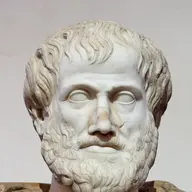
Tacitus, Annals 15.37–38Translated by A. J. Church and W. J. Brodribb (1876)Read the full passage (opens scaife.perseus.org)

When, and whose words

Date
set in 64 CE. Set in the great fire of Rome, 64 CE. Tacitus wrote the Annals c. 115–120 CE.
Whose words
His own words.
How this post was checked
  • The plain-words line was read against the quote alone by a second, independent pass, which found it adds no claim the quote does not make (2026-10-03).
  • Each claim in the summary was checked by an independent pass against only the material it cites.
  • The quote itself is checked by the build: word for word, once, at the cited section of the stored translation.

See it among its momentsMore from TacitusSee it in the feed