hstry

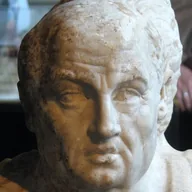
Nero watches the fire, as Suetonius tells it

set in 64 CE, Rome. As Suetonius tells it, over a century later.

Where and when

set in 64 CERome

1,962 years ago

Explore
Nero, 37 – 68 CE3000 BCE2900 BCE2800 BCE2700 BCE2600 BCE2500 BCE2400 BCE2300 BCE2200 BCE2100 BCE2000 BCE1900 BCE1800 BCE1700 BCE1600 BCE1500 BCE1400 BCE1300 BCE1200 BCE1100 BCE1000 BCE900 BCE800 BCE700 BCE600 BCE500 BCE400 BCE300 BCE200 BCE100 BCE1 CE100 CE200 CE300 CE400 CE500 CE600 CE700 CE800 CE900 CE1000 CE1100 CE1200 CE1300 CE1400 CE1500 CE1600 CE1700 CE1800 CE1900 CE2000 CEGreat Pyramid of Giza built, c. 2600 BCERome founded (traditional date), 753 BCELast western Roman emperor deposed, 476 CEGutenberg's printing press, c. 1440 CEColumbus reaches the Americas, 1492 CEFirst people on the Moon, 1969 CEToday, 2026

Swipe the line. Bars: entries. Dots: events.

Nero

, RomeAs Suetonius tells it, over a century later

In plain words, ours

He watched the fire from a tower, said he loved how beautiful the flames looked, and sang a poem about the fall of Troy in stage costume.

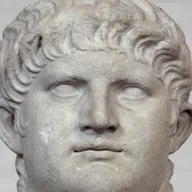
This fire he beheld from a tower in the house of Mecaenas, and “being greatly delighted,” as he said, “with the beautiful effects of the conflagration,” he sung a poem on the ruin of Troy, in the tragic dress he used on the stage.

Suetonius, Life of Nero 38Translated by Alexander Thomson, revised by T. Forester (1889)Read the full passage (Suetonius, Life of Nero 38, opens gutenberg.org)

What was going on, our summary

Rome, 64 CE: the Great Fire burned for six days and seven nights, as Suetonius tells it over a century later, and people fled to shelter among the tombs. Tacitus says no one knew whether it was an accident or set by Nero.

Checked claim by claim against: The Great Fire burns much of Rome, the passage around the quote.

Why it matters

Suetonius' story of Nero singing of Troy as he watched Rome burn is where the legend that Nero fiddled as Rome burned begins.

Based on Wikipedia: The Twelve Caesars

It is in Suetonius that we find the beginnings of the legend that Nero "fiddled as Rome burned."

Suetonius recounts how Nero, while watching Rome burn, exclaimed how beautiful it was, and sang an epic poem about the sack of Troy while playing the lyre.

Wikipedia, The Twelve Caesars (opens en.wikipedia.org), as of 2026-10-02. Text CC BY-SA 4.0. Our line is checked against these sentences only.

Related moments

In time order, with this one in its place. Each says why it is here.

  1. 62 CE2 years earlier Nero answers Seneca, as Tacitus tells it More from Nero
  2. c. 62–65 CEDuring it Seneca on time, the only thing we own Same years
  3. 64 CESame year The Great Fire burns much of Rome The event behind it
  4. set in 64 CEThis momentNero watches the fire, as Suetonius tells it
  5. by 64 CEBy this year Nero on fire devouring the world, in Suetonius Same passageMore from Nero
  6. set in 64 CESame year Tacitus on Nero blaming the Christians Also in Rome
  7. set in 64 CESame year Tacitus on the Great Fire of Rome Also in Rome
  8. set in 64 CESame year Tacitus on the rumour that Nero sang of Troy Also in Rome
  9. 65 CE1 year later Nero orders his old tutor Seneca to die Same years
  10. 66 CE2 years later Judaea rises against Rome Same years
  11. c. 64–68 CEBegins this year Nero on his new house, as Suetonius tells it More from Nero

Just before and after

The text around the quote, word for word from the same translation.

Show the passageHide the passage

There being near his Golden House some granaries, the site of which he exceedingly coveted, they were battered as if with machines of war, and set on fire, the walls being built of stone. During six days and seven nights this terrible devastation continued, the people being obliged to fly to the tombs and monuments for lodging and shelter. Meanwhile, a vast number of stately buildings, the houses of generals celebrated in former times, and even then still decorated with the spoils of war, were laid in ashes; as well as the temples of the gods, which had been vowed and dedicated by the kings of Rome, and afterwards in the Punic and Gallic wars: in short, everything that was remarkable and worthy to be seen which time had spared.

The quote: This fire he beheld from a tower in the house of Mecaenas, and “being greatly delighted,” as he said, “with the beautiful effects of the conflagration,” he sung a poem on the ruin of Troy, in the tragic dress he used on the stage.

To turn this calamity to his own advantage by plunder and rapine, he promised to remove the bodies of those who had perished in the fire, and clear the rubbish at his own expense; suffering no one to meddle with the remains of their property. But he not only received, but exacted contributions on account of the loss, until he had exhausted the means both of the provinces and private persons. To these terrible and shameful calamities brought upon the people by their prince, were added some proceeding from misfortune.

Suetonius, Life of Nero 38–39Translated by Alexander Thomson, revised by T. Forester (1889)Read the full passage (opens gutenberg.org)

When, and whose words

Date
set in 64 CE. Set during the great fire of Rome, 64 CE. Suetonius wrote c. 120 CE.
Whose words
As Suetonius tells it, over a century later.
How this post was checked
  • The plain-words line was read against the quote alone by a second, independent pass, which found it adds no claim the quote does not make (2026-10-03).
  • Each claim in the summary was checked by an independent pass against only the material it cites.
  • The quote itself is checked by the build: word for word, once, at the cited section of the stored translation.

See it among its momentsMore from NeroSee it in the feed