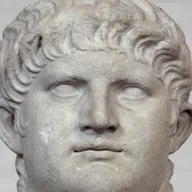
Nero at this time was at Antium, and did not return to Rome until the fire approached his house, which he had built to connect the palace with the gardens of Mæcenas. It could not, however, be stopped from devouring the palace, the house, and everything around it. However, to relieve the people, driven out homeless as they were, he threw open to them the Campus Martius and the public buildings of Agrippa, and even his own gardens, and raised temporary structures to receive the destitute multitude. Supplies of food were brought up from Ostia and the neighbouring towns, and the price of corn was reduced to three sesterces a peck.
The quote: These acts, though popular, produced no effect, since a rumour had gone forth everywhere that, at the very time when the city was in flames, the emperor appeared on a private stage and sang of the destruction of Troy, comparing present misfortunes with the calamities of antiquity.
At last, after five days, an end was put to the conflagration at the foot of the Esquiline hill, by the destruction of all buildings on a vast space, so that the violence of the fire was met by clear ground and an open sky. But before people had laid aside their fears, the flames returned, with no less fury this second time, and especially in the spacious districts of the city. Consequently, though there was less loss of life, the temples of the gods, and the porticoes which were devoted to enjoyment, fell in a yet more widespread ruin.