hstry

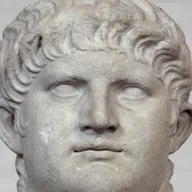
Tacitus on Nero blaming the Christians

set in 64 CE, Rome. His own words.

Where and when

set in 64 CERome

1,962 years ago

Explore
Tacitus, c. 56 – c. 120 CE3000 BCE2900 BCE2800 BCE2700 BCE2600 BCE2500 BCE2400 BCE2300 BCE2200 BCE2100 BCE2000 BCE1900 BCE1800 BCE1700 BCE1600 BCE1500 BCE1400 BCE1300 BCE1200 BCE1100 BCE1000 BCE900 BCE800 BCE700 BCE600 BCE500 BCE400 BCE300 BCE200 BCE100 BCE1 CE100 CE200 CE300 CE400 CE500 CE600 CE700 CE800 CE900 CE1000 CE1100 CE1200 CE1300 CE1400 CE1500 CE1600 CE1700 CE1800 CE1900 CE2000 CEGreat Pyramid of Giza built, c. 2600 BCERome founded (traditional date), 753 BCELast western Roman emperor deposed, 476 CEGutenberg's printing press, c. 1440 CEColumbus reaches the Americas, 1492 CEFirst people on the Moon, 1969 CEToday, 2026

Swipe the line. Bars: entries. Dots: events.

In plain words, ours

Nothing stopped the belief that the fire was ordered. So Nero blamed and tortured a hated group the people called Christians.

But all human efforts, all the lavish gifts of the emperor, and the propitiations of the gods, did not banish the sinister belief that the conflagration was the result of an order. Consequently, to get rid of the report, Nero fastened the guilt and inflicted the most exquisite tortures on a class hated for their abominations, called Christians by the populace.

Tacitus, Annals 15.44Translated by A. J. Church and W. J. Brodribb (1876)Read the full passage (Tacitus, Annals 15.44, opens scaife.perseus.org)

What was going on, our summary

Rome, 64 CE, after the Great Fire. Tacitus has just described the city rebuilt with more open streets, and prayers and night vigils held to calm the gods.

Checked claim by claim against: The Great Fire burns much of Rome, the passage around the quote.

Why it matters

By Tacitus's account, Nero's blaming of the Christians began the empire's first persecution of them, and his Annals are of interest as an early account of that persecution.

Based on Wikipedia: Great Fire of Rome, Tacitus

According to Tacitus, Emperor Nero blamed the devastation on the Christian community in the city, initiating the empire's first persecution against the Christians.

His Annals are of interest for providing an early account of the persecution of Christians and one of the earliest extra-Biblical references to the crucifixion of Jesus.

Wikipedia, Great Fire of Rome (opens en.wikipedia.org), as of 2026-10-03; Wikipedia, Tacitus (opens en.wikipedia.org), as of 2026-09-25. Text CC BY-SA 4.0. Our line is checked against these sentences only.

Related moments

In time order, with this one in its place. Each says why it is here.

  1. c. 62–65 CEDuring it Seneca on time, the only thing we own Same years
  2. 64 CESame year The Great Fire burns much of Rome The event behind itAlso in Rome
  3. set in 64 CEThis momentTacitus on Nero blaming the Christians
  4. set in 64 CESame year Nero watches the fire, as Suetonius tells it Also in Rome
  5. by 64 CEBy this year Nero on fire devouring the world, in Suetonius Same years
  6. set in 64 CESame year Tacitus on Nero's punishment of Christians Same passageMore from Tacitus
  7. set in 64 CESame year Tacitus on the Great Fire of Rome More from Tacitus
  8. set in 64 CESame year Tacitus on the rumour that Nero sang of Troy Same passageMore from Tacitus
  9. 65 CE1 year later Nero orders his old tutor Seneca to die Also in Rome
  10. 66 CE2 years later Judaea rises against Rome Same years

Just before and after

The text around the quote, word for word from the same translation.

Show the passageHide the passage

These changes which were liked for their utility, also added beauty to the new city. Some, however, thought that its old arrangement had been more conducive to health, inasmuch as the narrow streets with the elevation of the roofs were not equally penetrated by the sun's heat, while now the open space, unsheltered by any shade, was scorched by a fiercer glow. Such indeed were the precautions of human wisdom. The next thing was to seek means of propitiating the gods, and recourse was had to the Sibylline books, by the direction of which prayers were offered to Vulcanus, Ceres, and Proserpina. Juno, too, was entreated by the matrons, first, in the Capitol, then on the nearest part of the coast, whence water was procured to sprinkle the fane and image of the goddess. And there were sacred banquets and nightly vigils celebrated by married women.

The quote: But all human efforts, all the lavish gifts of the emperor, and the propitiations of the gods, did not banish the sinister belief that the conflagration was the result of an order. Consequently, to get rid of the report, Nero fastened the guilt and inflicted the most exquisite tortures on a class hated for their abominations, called Christians by the populace.

Christus, from whom the name had its origin, suffered the extreme penalty during the reign of Tiberius at the hands of one of our procurators, Pontius Pilatus, and a most mischievous superstition, thus checked for the moment, again broke out not only in Judæa, the first source of the evil, but even in Rome, where all things hideous and shameful from every part of the world find their centre and become popular.

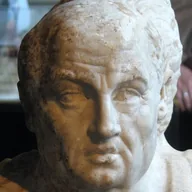
Tacitus, Annals 15.43–44Translated by A. J. Church and W. J. Brodribb (1876)Read the full passage (opens scaife.perseus.org)

When, and whose words

Date
set in 64 CE. Set in the great fire of Rome, 64 CE. Tacitus wrote the Annals c. 115–120 CE.
Whose words
His own words.
How this post was checked
  • The plain-words line was read against the quote alone by a second, independent pass, which found it adds no claim the quote does not make (2026-10-03).
  • Each claim in the summary was checked by an independent pass against only the material it cites.
  • The quote itself is checked by the build: word for word, once, at the cited section of the stored translation.

See it among its momentsMore from TacitusSee it in the feed