hstry

Tacitus on the terror under Domitian

c. 98 CE. His own words.

Where and when

c. 98 CERome and its world

about 1,928 years ago

Explore
Tacitus, c. 56 – c. 120 CE3000 BCE2900 BCE2800 BCE2700 BCE2600 BCE2500 BCE2400 BCE2300 BCE2200 BCE2100 BCE2000 BCE1900 BCE1800 BCE1700 BCE1600 BCE1500 BCE1400 BCE1300 BCE1200 BCE1100 BCE1000 BCE900 BCE800 BCE700 BCE600 BCE500 BCE400 BCE300 BCE200 BCE100 BCE1 CE100 CE200 CE300 CE400 CE500 CE600 CE700 CE800 CE900 CE1000 CE1100 CE1200 CE1300 CE1400 CE1500 CE1600 CE1700 CE1800 CE1900 CE2000 CEGreat Pyramid of Giza built, c. 2600 BCERome founded (traditional date), 753 BCELast western Roman emperor deposed, 476 CEGutenberg's printing press, c. 1440 CEColumbus reaches the Americas, 1492 CEFirst people on the Moon, 1969 CEToday, 2026

Swipe the line. Bars: entries. Dots: events.

Tacitus

His own words

In plain words, ours

Even Nero looked away from the horrors he ordered. Under Domitian the worst part was being watched, knowing even our sighs were written down.

Even Nero turned his eyes away, and did not gaze upon the atrocities which he ordered; with Domitian it was the chief part of our miseries to see and to be seen, to know that our sighs were being recorded

Tacitus, Agricola 45Translated by A. J. Church and W. J. Brodribb (1877)Read the full passage (Tacitus, Agricola 45, opens scaife.perseus.org)

What was going on, our summary

Tacitus wrote this about 98 CE, remembering Agricola. He says Agricola died before the worst years under Domitian, when the Senate was hemmed in by armed men and noble women were exiled.

Checked claim by claim against: the passage around the quote.

Related moments

In time order, with this one in its place. Each says why it is here.

  1. c. 50 BCEabout 147 years earlier Cato warns the Senate about Caesar, in Plutarch Also about tyrants and the Thirty
  2. 44 BCE, written laterabout 141 years earlier Cicero on Cato's choice to die Also about tyrants and the Thirty
  3. set in 64 CEabout 34 years earlier Tacitus on the Great Fire of Rome More from Tacitus
  4. c. 98 CEThis momentTacitus on the terror under Domitian
  5. c. 98 CEAbout the same year Tacitus on the extreme of servitude More from Tacitus
  6. c. 115–120 CEabout 19 years later Tacitus on writing without bitterness More from Tacitus

Just before and after

The text around the quote, word for word from the same translation.

Show the passageHide the passage

Agricola did not see the senate-house besieged, or the senate hemmed in by armed men, or so many of our consulars falling at one single massacre, or so many of Rome's noblest ladies exiles and fugitives. Carus Metius had as yet the distinction of but one victory, and the noisy counsels of Messalinus were not heard beyond the walls of Alba, and Massa Bæbius was then answering for his life. It was not long before our hands dragged Helvidius to prison, before we gazed on the dying looks of Manricus and Rusticus, before we were steeped in Senecio's innocent blood.

The quote: Even Nero turned his eyes away, and did not gaze upon the atrocities which he ordered; with Domitian it was the chief part of our miseries to see and to be seen, to know that our sighs were being recorded

, to have, ever ready to note the pallid looks of so many faces, that savage countenance reddened with the hue with which he defied shame. Thou wast indeed fortunate, Agricola, not only in the splendour of thy life, but in the opportune moment of thy death. Thou submittedst to thy fate, so they tell us who were present to hear thy last words, with courage and cheerfulness, seeming to be doing all thou couldst to give thine Emperor full acquittal.

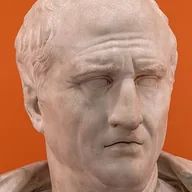
Tacitus, Agricola 45Translated by A. J. Church and W. J. Brodribb (1877)Read the full passage (opens scaife.perseus.org)

When, and whose words

Date
c. 98 CE. Written c. 98 CE, soon after the death of Domitian (96 CE), early in the reign of Trajan, whom the book names.
Whose words
His own words.
How this post was checked
  • The plain-words line was read against the quote alone by a second, independent pass, which found it adds no claim the quote does not make (2026-10-03).
  • Each claim in the summary was checked by an independent pass against only the material it cites.
  • The quote itself is checked by the build: word for word, once, at the cited section of the stored translation.

See it among its momentsMore from TacitusSee it in the feed