hstry

Augustus' brick and marble boast, in Suetonius

by 14 CE, Rome. As Suetonius tells it, over a century later.

Where and when

by 14 CERome

about 2,012 years ago

Explore
Augustus, 63 BCE – 14 CE3000 BCE2900 BCE2800 BCE2700 BCE2600 BCE2500 BCE2400 BCE2300 BCE2200 BCE2100 BCE2000 BCE1900 BCE1800 BCE1700 BCE1600 BCE1500 BCE1400 BCE1300 BCE1200 BCE1100 BCE1000 BCE900 BCE800 BCE700 BCE600 BCE500 BCE400 BCE300 BCE200 BCE100 BCE1 CE100 CE200 CE300 CE400 CE500 CE600 CE700 CE800 CE900 CE1000 CE1100 CE1200 CE1300 CE1400 CE1500 CE1600 CE1700 CE1800 CE1900 CE2000 CEGreat Pyramid of Giza built, c. 2600 BCERome founded (traditional date), 753 BCELast western Roman emperor deposed, 476 CEGutenberg's printing press, c. 1440 CEColumbus reaches the Americas, 1492 CEFirst people on the Moon, 1969 CEToday, 2026

Swipe the line. Bars: entries. Dots: events.

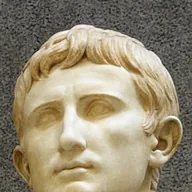
Augustus

, RomeAs Suetonius tells it, over a century later

In plain words, ours

The city was not grand enough for the empire and was prone to floods and fires. He improved it so much that he boasted he found it brick and left it marble.

The city, which was not built in a manner suitable to the grandeur of the empire, and was liable to inundations of the Tiber, as well as to fires, was so much improved under his administration, that he boasted, not without reason, that he “found it of brick, but left it of marble.”

Suetonius, Life of Augustus 29Translated by Alexander Thomson, revised by T. Forester (1889)Read the full passage (Suetonius, Life of Augustus 29, opens gutenberg.org)

What was going on, our summary

Suetonius, writing over a century later, describes Augustus choosing to keep power in his own hands rather than return it to the people. He then lists the buildings Augustus put up in Rome, among them a new forum with a temple of Mars the Avenger. Augustus held power for 41 years, until he died in 14 CE.

Checked claim by claim against: Augustus dies at Nola after 41 years in power, the passage around the quote.

Why it matters

Marble was found in Roman buildings before Augustus, but it was not used widely as a building material until his reign.

Based on Wikipedia: Augustus

Marble could be found in Roman buildings before Augustus, but it was not extensively used as a building material until his reign.

Wikipedia, Augustus (opens en.wikipedia.org), as of 2026-09-25. Text CC BY-SA 4.0. Our line is checked against these sentences only.

Related moments

In time order, with this one in its place. Each says why it is here.

  1. c. 10–14 CEDuring it Tacitus on how few had seen the republic Also in Rome
  2. 14 CEBy this year Augustus dies at Nola after 41 years in power The event behind it
  3. 14 CEBy this year Tiberius succeeds Augustus Also in Rome
  4. by 14 CEThis momentAugustus' brick and marble boast, in Suetonius
  5. by 14 CEBy this year Augustus on a stable commonwealth, per Suetonius More from Augustus
  6. by 14 CEBy this year Augustus' golden hook, as Suetonius tells it Same passageMore from Augustus
  7. by 14 CEBy this year Augustus on hastening slowly, in Suetonius Same passageMore from Augustus
  8. set in 14 CEBy this year Tacitus on Augustus' peace stained with blood Also in Rome

Just before and after

The text around the quote, word for word from the same translation.

Show the passageHide the passage

But reflecting at the same time that it would be both hazardous to himself to return to the condition of a private person, and might be dangerous to the public to have the government placed again under the control of the people, he resolved to keep it in his own hands, whether with the better event or intention, is hard to say. His good intentions he often affirmed in private discourse, and also published an edict, in which it was declared in the following terms: “May it be permitted me to have the happiness of establishing the commonwealth on a safe and sound basis, and thus enjoy the reward of which I am ambitious, that of being celebrated for moulding it into the form best adapted to present circumstances; so that, on my leaving the world, I may carry with me the hope that the foundations which I have laid for its future government, will stand firm and stable.”

The quote: The city, which was not built in a manner suitable to the grandeur of the empire, and was liable to inundations of the Tiber, as well as to fires, was so much improved under his administration, that he boasted, not without reason, that he “found it of brick, but left it of marble.”

He also rendered it secure for the time to come against such disasters, as far as could be effected by human foresight. A great number of public buildings were erected by him, the most considerable of which were a forum, containing the temple of Mars the Avenger, the temple of Apollo on the Palatine hill, and the temple of Jupiter Tonans in the Capitol. The reason of his building a new forum was the vast increase in the population, and the number of causes to be tried in the courts, for which, the two already existing not affording sufficient space, it was thought necessary to have a third.

Suetonius, Life of Augustus 28–29Translated by Alexander Thomson, revised by T. Forester (1889)Read the full passage (opens gutenberg.org)

When, and whose words

Date
by 14 CE. Suetonius gives no date; a saying from his years in power, which ended with his death in 14 CE. Suetonius wrote c. 120 CE.
Whose words
As Suetonius tells it, over a century later.
How this post was checked
  • The plain-words line was read against the quote alone by a second, independent pass, which found it adds no claim the quote does not make (2026-10-03).
  • Each claim in the summary was checked by an independent pass against only the material it cites.
  • The quote itself is checked by the build: word for word, once, at the cited section of the stored translation.

See it among its momentsMore from AugustusSee it in the feed