hstry

Four emperors in one year

69 CE, Rome. An event.

Where and when

69 CERome

1,957 years ago

Explore
3000 BCE2900 BCE2800 BCE2700 BCE2600 BCE2500 BCE2400 BCE2300 BCE2200 BCE2100 BCE2000 BCE1900 BCE1800 BCE1700 BCE1600 BCE1500 BCE1400 BCE1300 BCE1200 BCE1100 BCE1000 BCE900 BCE800 BCE700 BCE600 BCE500 BCE400 BCE300 BCE200 BCE100 BCE1 CE100 CE200 CE300 CE400 CE500 CE600 CE700 CE800 CE900 CE1000 CE1100 CE1200 CE1300 CE1400 CE1500 CE1600 CE1700 CE1800 CE1900 CE2000 CEGreat Pyramid of Giza built, c. 2600 BCERome founded (traditional date), 753 BCELast western Roman emperor deposed, 476 CEGutenberg's printing press, c. 1440 CEColumbus reaches the Americas, 1492 CEFirst people on the Moon, 1969 CEToday, 2026

Swipe the line. Bars: entries. Dots: events.

, Rome

After Nero, Galba, Otho and Vitellius each seize power and fall within months. Vespasian, commanding in Judaea, wins and starts the Flavian dynasty.

After the deaths of Nero and Galba, whilst Otho and Vitellius were contending for the sovereignty, he entertained hopes of obtaining the empire

Suetonius, Life of Vespasian 5Translated by Alexander Thomson, revised by T. Forester (1889)Read the full passage (Suetonius, Life of Vespasian 5, opens gutenberg.org)

Background: Year of the Four Emperors, Wikipedia (opens en.wikipedia.org)

Why it matters

The year was the Roman Empire's first civil war, and it marked the change from the first imperial dynasty, the Julio-Claudians, to the Flavians.

Based on Wikipedia: Year of the Four Emperors

The Year of the Four Emperors, AD 69, was the first civil war of the Roman Empire, during which four emperors ruled in succession, Galba, Otho, Vitellius, and Vespasian.

It is considered an important interval, marking the change from the Julio-Claudians, the first imperial dynasty, to the Flavian dynasty.

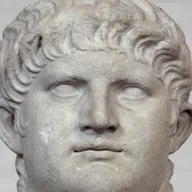
Wikipedia, Year of the Four Emperors (opens en.wikipedia.org), as of 2026-09-29. Text CC BY-SA 4.0. Our line is checked against these sentences only.

Related moments

In time order, with this one in its place. Each says why it is here.

  1. 65 CE4 years earlier Nero orders his old tutor Seneca to die Same years
  2. 66 CE3 years earlier Judaea rises against Rome Same years
  3. c. 64–68 CEabout 3 years earlier Nero on his new house, as Suetonius tells it Also in Rome
  4. 68 CE1 year earlier Nero kills himself as the Senate declares him an enemy Same years
  5. set in 68 CE1 year earlier The death of Nero, as Suetonius tells it Same years
  6. set in 68 CE1 year earlier Nero's last hours, as Suetonius tells it Same years
  7. 69 CEThis momentFour emperors in one year
  8. 70 CE1 year later Titus takes Jerusalem and the Temple burns Also about war and empire
  9. set in 70 CE1 year later Titus orders the Temple fire out, per Josephus Also about war and empire
  10. set in 71 CE2 years later Josephus on the war paraded through Rome Also in Rome
  11. c. 71–75 CEabout 4 years later Josephus on the Temple spoils in Rome Also in Rome

See it among its momentsSee it in the feedExplore by place and time