hstry

Josephus on the war paraded through Rome

set in 71 CE, Rome. His own words.

Where and when

set in 71 CERome

1,955 years ago

Explore
Josephus, c. 37 – c. 100 CE3000 BCE2900 BCE2800 BCE2700 BCE2600 BCE2500 BCE2400 BCE2300 BCE2200 BCE2100 BCE2000 BCE1900 BCE1800 BCE1700 BCE1600 BCE1500 BCE1400 BCE1300 BCE1200 BCE1100 BCE1000 BCE900 BCE800 BCE700 BCE600 BCE500 BCE400 BCE300 BCE200 BCE100 BCE1 CE100 CE200 CE300 CE400 CE500 CE600 CE700 CE800 CE900 CE1000 CE1100 CE1200 CE1300 CE1400 CE1500 CE1600 CE1700 CE1800 CE1900 CE2000 CEGreat Pyramid of Giza built, c. 2600 BCERome founded (traditional date), 753 BCELast western Roman emperor deposed, 476 CEGutenberg's printing press, c. 1440 CEColumbus reaches the Americas, 1492 CEFirst people on the Moon, 1969 CEToday, 2026

Swipe the line. Bars: entries. Dots: events.

In plain words, ours

On display: a happy land laid waste, whole ranks of enemies killed, some fleeing, some taken captive, and great high walls smashed by siege machines.

For there was to be seen a happy country laid waste, and entire squadrons of enemies slain; while some of them ran away, and some were carried into captivity; with walls of great altitude and magnitude overthrown and ruined by machines;

Josephus, The Jewish War 7.132Translated by William Whiston (1737)Read the full passage (Josephus, The Jewish War 7.132, opens scaife.perseus.org)

What was going on, our summary

Rome, 71 CE, the year after Titus took Jerusalem. Josephus describes the huge floats carried in a procession, three or four storeys high, hung with gold and ivory, showing scenes from the war.

Checked claim by claim against: Titus takes Jerusalem and the Temple burns, the passage around the quote.

Why it matters

The Arch of Titus, still standing in Rome, has reliefs of soldiers parading the seven-branched menorah, the Table of Showbread, a golden cup and silver trumpets during the triumphal procession.

Based on Wikipedia: Siege of Jerusalem (70 CE)

Most prominent is the Arch of Titus, still standing along the Via Sacra, ancient Rome's main thoroughfare.

Its interior reliefs portray soldiers parading the seven-branched menorah, the Table of Showbread, a golden cup, and silver trumpets, during the triumphal procession.

Wikipedia, Siege of Jerusalem (70 CE) (opens en.wikipedia.org), as of 2026-09-25. Text CC BY-SA 4.0. Our line is checked against these sentences only.

Related moments

In time order, with this one in its place. Each says why it is here.

  1. 65 CE6 years earlier Nero orders his old tutor Seneca to die Also in Rome
  2. c. 64–68 CEabout 5 years earlier Nero on his new house, as Suetonius tells it Also in Rome
  3. 68 CE3 years earlier Nero kills himself as the Senate declares him an enemy Same years
  4. set in 68 CE3 years earlier Nero's last hours, as Suetonius tells it Same years
  5. 69 CE2 years earlier Four emperors in one year Also in RomeAlso about war and empire
  6. 70 CE1 year earlier Titus takes Jerusalem and the Temple burns The event behind itAlso about war and empire
  7. set in 70 CE1 year earlier Josephus on the burning of the Temple More from Josephus
  8. set in 70 CE1 year earlier Josephus on the famine in besieged Jerusalem More from Josephus
  9. set in 70 CE1 year earlier Titus orders the Temple fire out, per Josephus More from Josephus
  10. set in 71 CEThis momentJosephus on the war paraded through Rome
  11. c. 73–74 CEabout 2 years later Masada falls, ending the Jewish revolt Same years
  12. c. 71–75 CEBegins this year Josephus on the Temple spoils in Rome Same passage

Just before and after

The text around the quote, word for word from the same translation.

Show the passageHide the passage

Besides these, one might see that even the great number of the captives was not unadorned, while the variety that was in their garments, and their fine texture, concealed from the sight the deformity of their bodies. But what afforded the greatest surprise of all was the structure of the pageants that were borne along; for indeed he that met them could not but be afraid that the bearers would not be able firmly enough to support them, such was their magnitude; for many of them were so made, that they were on three or even four stories, one above another. The magnificence also of their structure afforded one both pleasure and surprise; for upon many of them were laid carpets of gold. There was also wrought gold and ivory fastened about them all; and many resemblances of the war, and those in several ways, and variety of contrivances, affording a most lively portraiture of itself.

The quote: For there was to be seen a happy country laid waste, and entire squadrons of enemies slain; while some of them ran away, and some were carried into captivity; with walls of great altitude and magnitude overthrown and ruined by machines;

with the strongest fortifications taken, and the walls of most populous cities upon the tops of hills seized on, and an army pouring itself within the walls; as also every place full of slaughter, and supplications of the enemies, when they were no longer able to lift up their hands in way of opposition.

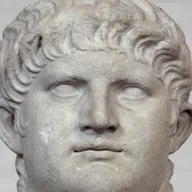
Josephus, The Jewish War 7.132Translated by William Whiston (1737)Read the full passage (opens scaife.perseus.org)

When, and whose words

Date
set in 71 CE. Set at the triumph of Vespasian and Titus in Rome in 71 CE; he wrote it in the 70s CE.
Whose words
His own words.
How this post was checked
  • The plain-words line was read against the quote alone by a second, independent pass, which found it adds no claim the quote does not make (2026-10-03).
  • Each claim in the summary was checked by an independent pass against only the material it cites.
  • The quote itself is checked by the build: word for word, once, at the cited section of the stored translation.

See it among its momentsMore from JosephusSee it in the feed