hstry

Antony at Caesar's funeral, in Plutarch

44 BCE, Rome (the Forum). Plutarch, describing him, over a century later.

Where and when

44 BCERome (the Forum)

2,069 years ago

Explore
Mark Antony, 83 – 30 BCE3000 BCE2900 BCE2800 BCE2700 BCE2600 BCE2500 BCE2400 BCE2300 BCE2200 BCE2100 BCE2000 BCE1900 BCE1800 BCE1700 BCE1600 BCE1500 BCE1400 BCE1300 BCE1200 BCE1100 BCE1000 BCE900 BCE800 BCE700 BCE600 BCE500 BCE400 BCE300 BCE200 BCE100 BCE1 CE100 CE200 CE300 CE400 CE500 CE600 CE700 CE800 CE900 CE1000 CE1100 CE1200 CE1300 CE1400 CE1500 CE1600 CE1700 CE1800 CE1900 CE2000 CEGreat Pyramid of Giza built, c. 2600 BCERome founded (traditional date), 753 BCELast western Roman emperor deposed, 476 CEGutenberg's printing press, c. 1440 CEColumbus reaches the Americas, 1492 CEFirst people on the Moon, 1969 CEToday, 2026

Swipe the line. Bars: entries. Dots: events.

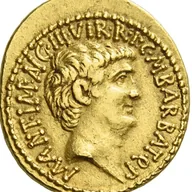
Mark Antony

, Rome (the Forum)Plutarch, describing him, over a century later

In plain words, ours

He gave the funeral speech for Caesar. Seeing the crowd moved, he mixed in grief and anger, and at the end held up Caesar’s bloody, slashed clothes.

Now, it happened that when Caesar’s body was carried forth for burial, Antony pronounced the customary eulogy over it in the forum. And when he saw that the people were mightily swayed and charmed by his words, he mingled with his praises sorrow and indignation over the dreadful deed, and at the close of his speech shook on high the garments of the dead, all bloody and tattered by the swords as they were,

Plutarch, Life of Antony 14.3Translated by Bernadotte Perrin (1920)Read the full passage (Plutarch, Life of Antony 14.3, opens scaife.perseus.org)

What was going on, our summary

Rome, 44 BCE: the funeral of Caesar, killed by senators led by Brutus and Cassius. As Plutarch tells it, Antony had just got the Senate to agree an amnesty for the killers, but he hoped to be first in the state if Brutus were overthrown.

Checked claim by claim against: Caesar is stabbed to death in the Senate, the passage around the quote.

Why it matters

When Antony showed the crowd Caesar's bloody toga, the funeral turned into a riot; buildings in the Forum burned and many of the killers fled Italy.

Based on Wikipedia: Mark Antony

Antony then seized the blood-stained toga from Caesar's body and presented it to the crowd. Worked into a fury by the bloody spectacle, the assembly turned into a riot.

Several buildings in the Forum and some houses of the conspirators were burned to the ground. Panicked, many of the conspirators fled Italy.

Wikipedia, Mark Antony (opens en.wikipedia.org), as of 2026-09-17. Text CC BY-SA 4.0. Our line is checked against these sentences only.

Related moments

In time order, with this one in its place. Each says why it is here.

  1. c. 335–322 BCEabout 284 years earlier Aristotle on metaphor Also about speech and persuasion
  2. 46 BCE2 years earlier Cato kills himself rather than accept Caesar's pardon Same years
  3. 44 BCESame year Caesar is stabbed to death in the Senate The event behind it
  4. 44 BCEThis momentAntony at Caesar's funeral, in Plutarch
  5. 44 BCESame year Caesar and the soothsayer, in Suetonius Also in Rome
  6. 44 BCESame year Caesar on the best death, as Plutarch tells it Also in Rome
  7. 44 BCESame year The stabbing of Caesar, as Suetonius tells it Also in Rome
  8. 43 BCE1 year later Cicero is killed on Antony's orders Same years
  9. 42 BCE2 years later Antony and Octavian defeat Caesar's killers at Philippi Same years
  10. c. 41–40 BCEabout 3 years later Antony's idle days, as Plutarch tells it More from Mark Antony
  11. 41 BCE3 years later Plutarch on Cleopatra's charm Also about speech and persuasion
  12. 31 BCE13 years later Antony after Actium, as Plutarch tells it More from Mark Antony
  13. c. 31–30 BCEabout 13 years later The Partners in Death, as Plutarch tells it More from Mark Antony

Just before and after

The text around the quote, word for word from the same translation.

Show the passageHide the passage

Besides, he called the senate together and spoke in favour of amnesty and a distribution of provinces among Brutus and Cassius and their partisans, and the senate ratified this proposal, and voted that no change should be made in what Caesar had done. So Antony went out of the senate the most illustrious of men; for he was thought to have put an end to civil war, and to have handled matters involving great difficulty and extraordinary confusion in a most prudent and statesmanlike manner. From such considerations as these, however, he was soon shaken by the repute in which he stood with the multitude, and he had hopes that he would surely be first in the state if Brutus were overthrown.

The quote: Now, it happened that when Caesar’s body was carried forth for burial, Antony pronounced the customary eulogy over it in the forum. And when he saw that the people were mightily swayed and charmed by his words, he mingled with his praises sorrow and indignation over the dreadful deed, and at the close of his speech shook on high the garments of the dead, all bloody and tattered by the swords as they were,

called those who had wrought such work villains and murderers, and inspired his hearers with such rage that they heaped together benches and tables and burned Caesar’s body in the forum, and then, snatching the blazing faggots from the pyre, ran to the houses of the assassins and assaulted them. On account of these things Brutus and his associates left the city, the friends of Caesar united in support of Antony, and Caesar’s wife, Calpurnia, putting confidence in Antony, took most of the treasure from Caesar’s house and put it in his charge; it amounted in all to four thousand talents.

Plutarch, Life of Antony 14.2–15.1Translated by Bernadotte Perrin (1920)Read the full passage (opens scaife.perseus.org)

When, and whose words

Date
44 BCE. Caesar’s funeral, March 44 BCE; Plutarch wrote c. 100–120 CE.
Whose words
Plutarch, describing him, over a century later.
How this post was checked
  • The plain-words line was read against the quote alone by a second, independent pass, which found it adds no claim the quote does not make (2026-10-03).
  • Each claim in the summary was checked by an independent pass against only the material it cites.
  • The quote itself is checked by the build: word for word, once, at the cited section of the stored translation.

See it among its momentsMore from Mark AntonySee it in the feed