hstry

Antony's idle days, as Plutarch tells it

c. 41–40 BCE, Alexandria. Plutarch, describing him, over a century later.

Where and when

c. 41–40 BCEAlexandria

about 2,066 years ago

Explore
Mark Antony, 83 – 30 BCE3000 BCE2900 BCE2800 BCE2700 BCE2600 BCE2500 BCE2400 BCE2300 BCE2200 BCE2100 BCE2000 BCE1900 BCE1800 BCE1700 BCE1600 BCE1500 BCE1400 BCE1300 BCE1200 BCE1100 BCE1000 BCE900 BCE800 BCE700 BCE600 BCE500 BCE400 BCE300 BCE200 BCE100 BCE1 CE100 CE200 CE300 CE400 CE500 CE600 CE700 CE800 CE900 CE1000 CE1100 CE1200 CE1300 CE1400 CE1500 CE1600 CE1700 CE1800 CE1900 CE2000 CEGreat Pyramid of Giza built, c. 2600 BCERome founded (traditional date), 753 BCELast western Roman emperor deposed, 476 CEGutenberg's printing press, c. 1440 CEColumbus reaches the Americas, 1492 CEFirst people on the Moon, 1969 CEToday, 2026sometime in these 1 years

Swipe the line. Bars: entries. Dots: events.

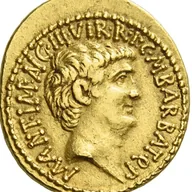
Mark Antony

, AlexandriaPlutarch, describing him, over a century later

In plain words, ours

There he lived for fun like an idle young man, spending on pleasures what one writer called the costliest thing of all: time.

There, indulging in the sports and diversions of a young man of leisure, he squandered and spent upon pleasures that which Antiphon calls the most costly outlay, namely, time.

Plutarch, Life of Antony 28.1Translated by Bernadotte Perrin (1920)Read the full passage (Plutarch, Life of Antony 28.1, opens scaife.perseus.org)

What was going on, our summary

Plutarch, writing over a century later, describes the years around 41–40 BCE, when Cleopatra carried Antony off to Alexandria. Meanwhile, he says, Antony's wife Fulvia was fighting a war at Rome to defend his interests, and a Parthian army was threatening Syria.

Checked claim by claim against: the passage around the quote.

Related moments

In time order, with this one in its place. Each says why it is here.

  1. 48–47 BCEabout 7 years earlier Caesar takes Cleopatra's side in Egypt Also in Alexandria
  2. 44 BCEabout 3 years earlier Caesar is stabbed to death in the Senate Same years
  3. 44 BCEabout 3 years earlier Antony at Caesar's funeral, in Plutarch More from Mark Antony
  4. 43 BCEabout 2 years earlier Cicero is killed on Antony's orders Same years
  5. 43 BCEabout 2 years earlier The death of Cicero, as Plutarch tells it Same years
  6. 42 BCE1 year earlier Antony and Octavian defeat Caesar's killers at Philippi Same years
  7. c. 41–40 BCEThis momentAntony's idle days, as Plutarch tells it
  8. c. 41–40 BCEBegins this year Cleopatra's fishing joke, as Plutarch tells it Also in Alexandria
  9. 41 BCEAbout the same year Plutarch on Cleopatra's charm Same passage
  10. 41 BCEAbout the same year Cleopatra sails to Antony, in Plutarch Same passage
  11. 31 BCEabout 10 years later Antony after Actium, as Plutarch tells it More from Mark Antony
  12. c. 31–30 BCEabout 10 years later The Partners in Death, as Plutarch tells it More from Mark Antony
  13. 30 BCEabout 11 years later Cleopatra at Antony's tomb, in Plutarch Also in Alexandria

Just before and after

The text around the quote, word for word from the same translation.

Show the passageHide the passage

Nay, it is said that she knew the speech of many other peoples also, although the kings of Egypt before her had not even made an effort to learn the native language, and some actually gave up their Macedonian dialect. Accordingly, she made such booty of Antony that, while Fulvia his wife was carrying on war at Rome with Caesar in defence of her husband’s interests, and while a Parthian army was hovering about Mesopotamia (over this country the generals of the king had appointed Labienus Parthian commander-in-chief, and were about to invade Syria), he suffered her to hurry him off to Alexandria.

The quote: There, indulging in the sports and diversions of a young man of leisure, he squandered and spent upon pleasures that which Antiphon calls the most costly outlay, namely, time.

For they had an association called The Inimitable Livers, and every day they feasted one another, making their expenditures of incredible profusion. At any rate, Philotas, the physician of Amphissa, used to tell my grandfather, Lamprias, that he was in Alexandria at this time, studying his profession, and that having got well acquainted with one of the royal cooks, he was easily persuaded by him (young man that he was) to take a view of the extravagant preparations for a royal supper.

Plutarch, Life of Antony 27.4–28.2Translated by Bernadotte Perrin (1920)Read the full passage (opens scaife.perseus.org)

When, and whose words

Date
c. 41–40 BCE. The winter he spent with Cleopatra in Alexandria after meeting her in 41 BCE; Plutarch wrote c. 100–120 CE.
Whose words
Plutarch, describing him, over a century later.
How this post was checked
  • The plain-words line was read against the quote alone by a second, independent pass, which found it adds no claim the quote does not make (2026-10-03).
  • Each claim in the summary was checked by an independent pass against only the material it cites.
  • The quote itself is checked by the build: word for word, once, at the cited section of the stored translation.

See it among its momentsMore from Mark AntonySee it in the feed