hstry

Plutarch on Cleopatra's charm

41 BCE, Asia Minor. Plutarch, describing her, over a century later.

Where and when

41 BCEAsia Minor

2,066 years ago

Explore
Cleopatra, 69 – 30 BCE3000 BCE2900 BCE2800 BCE2700 BCE2600 BCE2500 BCE2400 BCE2300 BCE2200 BCE2100 BCE2000 BCE1900 BCE1800 BCE1700 BCE1600 BCE1500 BCE1400 BCE1300 BCE1200 BCE1100 BCE1000 BCE900 BCE800 BCE700 BCE600 BCE500 BCE400 BCE300 BCE200 BCE100 BCE1 CE100 CE200 CE300 CE400 CE500 CE600 CE700 CE800 CE900 CE1000 CE1100 CE1200 CE1300 CE1400 CE1500 CE1600 CE1700 CE1800 CE1900 CE2000 CEGreat Pyramid of Giza built, c. 2600 BCERome founded (traditional date), 753 BCELast western Roman emperor deposed, 476 CEGutenberg's printing press, c. 1440 CEColumbus reaches the Americas, 1492 CEFirst people on the Moon, 1969 CEToday, 2026

Swipe the line. Bars: entries. Dots: events.

Cleopatra

, Asia MinorPlutarch, describing her, over a century later

In plain words, ours

Her looks alone were not stunning, people said. It was talking with her that was irresistible: her presence, her persuasiveness, her character.

For her beauty, as we are told, was in itself not altogether incomparable, nor such as to strike those who saw her; but converse with her had an irresistible charm, and her presence, combined with the persuasiveness of her discourse and the character which was somehow diffused about her behaviour towards others, had something stimulating about it.

Plutarch, Life of Antony 27.2Translated by Bernadotte Perrin (1920)Read the full passage (Plutarch, Life of Antony 27.2, opens scaife.perseus.org)

What was going on, our summary

As Plutarch tells it, writing over a century later, in Asia Minor in 41 BCE Cleopatra hosts Antony at a feast lit by countless lamps, and his attempt to outdo her the next day falls short. Plutarch then stops to describe what made her so striking.

Checked claim by claim against: the passage around the quote.

Related moments

In time order, with this one in its place. Each says why it is here.

  1. c. 335–322 BCEabout 287 years earlier Aristotle on metaphor Also about speech and persuasion
  2. 47 BCE6 years earlier Caesar's three words, as Plutarch tells it Also in Asia Minor
  3. 44 BCE3 years earlier Caesar is stabbed to death in the Senate Same years
  4. 44 BCE3 years earlier Antony at Caesar's funeral, in Plutarch Also about speech and persuasion
  5. 43 BCE2 years earlier Cicero is killed on Antony's orders Same years
  6. 43 BCE2 years earlier The death of Cicero, as Plutarch tells it Same years
  7. 42 BCE1 year earlier Antony and Octavian defeat Caesar's killers at Philippi Same years
  8. 41 BCEThis momentPlutarch on Cleopatra's charm
  9. c. 41–40 BCEBegins this year Antony's idle days, as Plutarch tells it Same years
  10. c. 41–40 BCEBegins this year Cleopatra's fishing joke, as Plutarch tells it More from Cleopatra
  11. 41 BCESame year Cleopatra sails to Antony, in Plutarch Same passageMore from Cleopatra
  12. by 30 BCEabout 11 years later Plutarch on Cleopatra's many languages Same passageMore from Cleopatra
  13. 117 CE157 years later The empire is at its largest when Trajan dies Also in Asia Minor

Just before and after

The text around the quote, word for word from the same translation.

Show the passageHide the passage

He found there a preparation that beggared description, but was most amazed at the multitude of lights. For, as we are told, so many of these were let down and displayed on all sides at once, and they were arranged and ordered with so many inclinations and adjustments to each other in the form of rectangles and circles, that few sights were so beautiful or so worthy to be seen as this. On the following day Antony feasted her in his turn, and was ambitious to surpass her splendour and elegance, but in both regards he was left behind, and vanquished in these very points, and was first to rail at the meagreness and rusticity of his own arrangements. Cleopatra observed in the jests of Antony much of the soldier and the common man, and adopted this manner also towards him, without restraint now, and boldly.

The quote: For her beauty, as we are told, was in itself not altogether incomparable, nor such as to strike those who saw her; but converse with her had an irresistible charm, and her presence, combined with the persuasiveness of her discourse and the character which was somehow diffused about her behaviour towards others, had something stimulating about it.

There was sweetness also in the tones of her voice; and her tongue, like an instrument of many strings, she could readily turn to whatever language she pleased, so that in her interviews with Barbarians she very seldom had need of an interpreter, but made her replies to most of them herself and unassisted, whether they were Ethiopians, Troglodytes, Hebrews, Arabians, Syrians, Medes or Parthians.

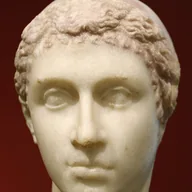
Plutarch, Life of Antony 26.4–27.3Translated by Bernadotte Perrin (1920)Read the full passage (opens scaife.perseus.org)

When, and whose words

Date
41 BCE. Told of her first meeting with Antony at Tarsus, 41 BCE; Plutarch wrote c. 100–120 CE.
Whose words
Plutarch, describing her, over a century later.
How this post was checked
  • The plain-words line was read against the quote alone by a second, independent pass, which found it adds no claim the quote does not make (2026-10-03).
  • Each claim in the summary was checked by an independent pass against only the material it cites.
  • The quote itself is checked by the build: word for word, once, at the cited section of the stored translation.

See it among its momentsMore from CleopatraSee it in the feed