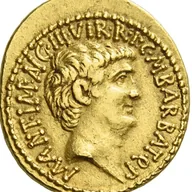
What was going on:Rome, 44 BCE: the funeral of Caesar, killed by senators led by Brutus and Cassius. As Plutarch tells it, Antony had just got the Senate to agree an amnesty for the killers, but he hoped to be first in the state if Brutus were overthrown.
Why it matters: When Antony showed the crowd Caesar's bloody toga, the funeral turned into a riot; buildings in the Forum burned and many of the killers fled Italy.
He gave the funeral speech for Caesar. Seeing the crowd moved, he mixed in grief and anger, and at the end held up Caesar’s bloody, slashed clothes.
Now, it happened that when Caesar’s body was carried forth for burial, Antony pronounced the customary eulogy over it in the forum. And when he saw that the people were mightily swayed and charmed by his words, he mingled with his praises sorrow and indignation over the dreadful deed, and at the close of his speech shook on high the garments of the dead, all bloody and tattered by the swords as they were,
Plutarch, describing him, over a century later. Plutarch, Life of Antony 14.3, translated by Bernadotte Perrin (1920)
What was going on: Plutarch, writing over a century later, describes the years around 41–40 BCE, when Cleopatra carried Antony off to Alexandria. Meanwhile, he says, Antony's wife Fulvia was fighting a war at Rome to defend his interests, and a Parthian army was threatening Syria.
There he lived for fun like an idle young man, spending on pleasures what one writer called the costliest thing of all: time.
There, indulging in the sports and diversions of a young man of leisure, he squandered and spent upon pleasures that which Antiphon calls the most costly outlay, namely, time.
Plutarch, describing him, over a century later. Plutarch, Life of Antony 28.1, translated by Bernadotte Perrin (1920)
What was going on: As Plutarch tells it, over a century later: in the sea battle at Actium in 31 BCE, Cleopatra's ship sailed away, and Antony left the men fighting for him to chase her in a small galley. Octavian's fleet won the battle.
Why it matters: Octavian's victory at Actium, consolidating his power over every Roman institution, marked Rome's transition from republic to empire.
He was taken aboard her ship, but they did not see each other. He sat alone at the front in silence, holding his head in his hands.
Cleopatra recognized him and raised a signal on her ship; so Antony came up and was taken on board, but he neither saw her nor was seen by her. Instead, he went forward alone to the prow and sat down by himself in silence, holding his head in both hands.
Plutarch, describing him, over a century later. Plutarch, Life of Antony 67.1, translated by Bernadotte Perrin (1920)
What was going on: After their defeat at Actium, Antony and Cleopatra are back in Alexandria, filling the city with feasts and revels. Plutarch, writing over a century later, describes their last months before both took their own lives.
Why it matters: The victory let Octavian consolidate his power over Rome and its lands. Historians generally see that consolidation and his new titles as the end of the Republic and the beginning of the Empire.
They closed their party club and started a new one, just as lavish, called Partners in Death. Their friends joined as people who would die together.
Cleopatra and Antony now dissolved their famous society of Inimitable Livers, and founded another, not at all inferior to that in daintiness and luxury and extravagant outlay, which they called the society of Partners in Death. For their friends enrolled themselves as those who would die together, and passed the time delightfully in a round of suppers.
Plutarch, describing him, over a century later. Plutarch, Life of Antony 71.3, translated by Bernadotte Perrin (1920)
What was going on:Alexandria, 30 BCE, after Octavian's fleet beat Antony and Cleopatra at Actium. As Plutarch tells it, Antony's ships and cavalry had just gone over to the enemy, and Cleopatra, afraid of his anger, shut herself in her tomb and sent word that she was dead.
Why it matters: The victory let Octavian consolidate his power over Rome and its lands. Historians generally see that consolidation and his new titles as the end of the Republic and the beginning of the Empire.
Believing the message, he said: I am not sad to lose you, Cleopatra, since I will join you soon. I am sad that a woman was braver than me.
Antony believed the message, and saying to himself, Why dost thou longer delay, Antony? Fortune has taken away thy sole remaining excuse for clinging to life, he went into his chamber. Here, as he unfastened his breastplate and laid it aside, he said; O Cleopatra, I am not grieved to be bereft of thee, for I shall straight-way join thee; but I am grieved that such an imperator as I am has been found to be inferior to a woman in courage.
As Plutarch tells it, over a century later. Plutarch, Life of Antony 76.3, translated by Bernadotte Perrin (1920)
What was going on:Alexandria, 30 BCE: a year after losing to Octavian at Actium, Antony has fallen on his sword. As Plutarch tells it, Cleopatra and her women hauled him up to her on a rope, and, dying, he asked for wine before speaking to her.
Why it matters: With Antony's death, Octavian became the uncontested ruler of Rome.
He told her to look after her own safety and not mourn him: he had been great and powerful, and was beaten honourably, a Roman by a Roman.
When he had drunk, he advised her to consult her own safety, if she could do it without disgrace, and among all the companions of Caesar to put most confidence in Proculeius, and not to lament him for his last reverses, but to count him happy for the good things that had been his, since he had become most illustrious of men, had won greatest power, and now had been not ignobly conquered, a Roman by a Roman.
As Plutarch tells it, over a century later. Plutarch, Life of Antony 77.4, translated by Bernadotte Perrin (1920)