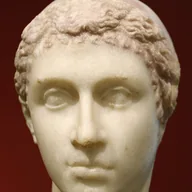
hstry

Antony on his courage, per Plutarch

30 BCE, Alexandria. As Plutarch tells it, over a century later.

Where and when

30 BCEAlexandria

2,055 years ago

Explore
Mark Antony, 83 – 30 BCE3000 BCE2900 BCE2800 BCE2700 BCE2600 BCE2500 BCE2400 BCE2300 BCE2200 BCE2100 BCE2000 BCE1900 BCE1800 BCE1700 BCE1600 BCE1500 BCE1400 BCE1300 BCE1200 BCE1100 BCE1000 BCE900 BCE800 BCE700 BCE600 BCE500 BCE400 BCE300 BCE200 BCE100 BCE1 CE100 CE200 CE300 CE400 CE500 CE600 CE700 CE800 CE900 CE1000 CE1100 CE1200 CE1300 CE1400 CE1500 CE1600 CE1700 CE1800 CE1900 CE2000 CEGreat Pyramid of Giza built, c. 2600 BCERome founded (traditional date), 753 BCELast western Roman emperor deposed, 476 CEGutenberg's printing press, c. 1440 CEColumbus reaches the Americas, 1492 CEFirst people on the Moon, 1969 CEToday, 2026

Swipe the line. Bars: entries. Dots: events.

Mark Antony

, AlexandriaAs Plutarch tells it, over a century later

In plain words, ours

Believing the message, he said: I am not sad to lose you, Cleopatra, since I will join you soon. I am sad that a woman was braver than me.

Antony believed the message, and saying to himself, Why dost thou longer delay, Antony? Fortune has taken away thy sole remaining excuse for clinging to life, he went into his chamber. Here, as he unfastened his breastplate and laid it aside, he said; O Cleopatra, I am not grieved to be bereft of thee, for I shall straight-way join thee; but I am grieved that such an imperator as I am has been found to be inferior to a woman in courage.

Plutarch, Life of Antony 76.3Translated by Bernadotte Perrin (1920)Read the full passage (Plutarch, Life of Antony 76.3, opens scaife.perseus.org)

What was going on, our summary

Alexandria, 30 BCE, after Octavian's fleet beat Antony and Cleopatra at Actium. As Plutarch tells it, Antony's ships and cavalry had just gone over to the enemy, and Cleopatra, afraid of his anger, shut herself in her tomb and sent word that she was dead.

Checked claim by claim against: Octavian's fleet beats Antony and Cleopatra at Actium, Antony and Cleopatra take their own lives, the passage around the quote.

Why it matters

About the event it belongs to: Octavian's fleet beats Antony and Cleopatra at Actium

The victory let Octavian consolidate his power over Rome and its lands. Historians generally see that consolidation and his new titles as the end of the Republic and the beginning of the Empire.

Based on Wikipedia: Battle of Actium

Octavian's victory enabled him to consolidate his power over Rome and its dominions.

historians generally view his consolidation of power and the adoption of these honorifics as the end of the Roman Republic and the beginning of the Roman Empire

Wikipedia, Battle of Actium (opens en.wikipedia.org), as of 2026-10-03. Text CC BY-SA 4.0. Our line is checked against these sentences only.

Related moments

In time order, with this one in its place. Each says why it is here.

  1. 31 BCE1 year earlier Octavian's fleet beats Antony and Cleopatra at Actium The event behind it
  2. 31 BCE1 year earlier Antony after Actium, as Plutarch tells it More from Mark Antony
  3. c. 31–30 BCEDuring it The Partners in Death, as Plutarch tells it Same passageMore from Mark Antony
  4. 30 BCESame year Antony and Cleopatra take their own lives The event behind itAlso in AlexandriaAlso about death
  5. 30 BCEThis momentAntony on his courage, per Plutarch
  6. 30 BCESame year Antony's last words, as Plutarch tells it Same passageMore from Mark Antony
  7. 30 BCESame year Cleopatra at Antony's tomb, in Plutarch Also in AlexandriaAlso about death
  8. by 30 BCEBy this year Plutarch on Cleopatra's many languages Same years
  9. 30 BCESame year Cleopatra and the asp, as Plutarch tells it Also in Alexandria
  10. 27 BCE3 years later Octavian takes the name Augustus Same years

Just before and after

The text around the quote, word for word from the same translation.

Show the passageHide the passage

But the crews of his ships, as soon as they were near, saluted Caesar’s crews with their oars, and on their returning the salute changed sides, and so all the ships, now united into one fleet, sailed up towards the city prows on. No sooner had Antony seen this than he was deserted by his cavalry, which went over to the enemy, and after being defeated with his infantry he retired into the city, crying out that he had been betrayed by Cleopatra to those with whom he waged war for her sake. But she, fearing his anger and his madness, fled for refuge into her tomb and let fall the drop-doors, which were made strong with bolts and bars; then she sent messengers to tell Antony that she was dead.

The quote: Antony believed the message, and saying to himself, Why dost thou longer delay, Antony? Fortune has taken away thy sole remaining excuse for clinging to life, he went into his chamber. Here, as he unfastened his breastplate and laid it aside, he said; O Cleopatra, I am not grieved to be bereft of thee, for I shall straight-way join thee; but I am grieved that such an imperator as I am has been found to be inferior to a woman in courage.

Now, Antony had a trusty slave named Eros. Him Antony had long before engaged, in case of need, to kill him, and now demanded the fulfilment of his promise. So Eros drew his sword and held it up as though he would smite his master, but then turned his face away and slew himself. And as he fell at his master’s feet Antony said: Well done, Eros! though thou wast not able to do it thyself, thou teachest me what I must do; and running himself through the belly he dropped upon the couch. But the wound did not bring a speedy death.

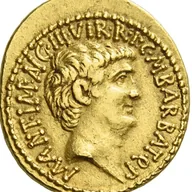
Plutarch, Life of Antony 76.1–5Translated by Bernadotte Perrin (1920)Read the full passage (opens scaife.perseus.org)

When, and whose words

Date
30 BCE. His last day, in Alexandria, 30 BCE; Plutarch wrote c. 100–120 CE.
Whose words
As Plutarch tells it, over a century later.
How this post was checked
  • The plain-words line was read against the quote alone by a second, independent pass, which found it adds no claim the quote does not make (2026-10-03).
  • Each claim in the summary was checked by an independent pass against only the material it cites.
  • The quote itself is checked by the build: word for word, once, at the cited section of the stored translation.

See it among its momentsMore from Mark AntonySee it in the feed