hstry

Augustus mourns Varus' legions, per Suetonius

set in 9 CE, Rome. As Suetonius tells it, over a century later.

Where and when

set in 9 CERome

2,017 years ago

Explore
Augustus, 63 BCE – 14 CE3000 BCE2900 BCE2800 BCE2700 BCE2600 BCE2500 BCE2400 BCE2300 BCE2200 BCE2100 BCE2000 BCE1900 BCE1800 BCE1700 BCE1600 BCE1500 BCE1400 BCE1300 BCE1200 BCE1100 BCE1000 BCE900 BCE800 BCE700 BCE600 BCE500 BCE400 BCE300 BCE200 BCE100 BCE1 CE100 CE200 CE300 CE400 CE500 CE600 CE700 CE800 CE900 CE1000 CE1100 CE1200 CE1300 CE1400 CE1500 CE1600 CE1700 CE1800 CE1900 CE2000 CEGreat Pyramid of Giza built, c. 2600 BCERome founded (traditional date), 753 BCELast western Roman emperor deposed, 476 CEGutenberg's printing press, c. 1440 CEColumbus reaches the Americas, 1492 CEFirst people on the Moon, 1969 CEToday, 2026

Swipe the line. Bars: entries. Dots: events.

Augustus

, RomeAs Suetonius tells it, over a century later

In plain words, ours

We are told he was so shaken that he let his hair and beard grow for months and sometimes banged his head on the door, crying: Varus, give me back my legions!

In short, we are informed that he was in such consternation at this event, that he let the hair of his head and beard grow for several months, and sometimes knocked his head against the door-posts, crying out, “O, Quintilius Varus! Give me back my legions!”

Suetonius, Life of Augustus 23Translated by Alexander Thomson, revised by T. Forester (1889)Read the full passage (Suetonius, Life of Augustus 23, opens gutenberg.org)

What was going on, our summary

9 CE: Germanic tribes have wiped out Varus and three legions in Germany. Suetonius, writing over a century later, says that when the news came, Augustus put a watch on Rome against unrest and vowed great games to Jupiter.

Checked claim by claim against: Three Roman legions are destroyed in Germany, the passage around the quote.

Why it matters

About the event it belongs to: Three Roman legions are destroyed in Germany

It is considered one of the most important defeats in Roman history, abruptly ending expansion under Augustus. Despite revenge campaigns, the Rhine became the border between the Empire and the rest of Germania.

Based on Wikipedia: Battle of the Teutoburg Forest

Teutoburg Forest is considered one of the most important defeats in Roman history, bringing the triumphant period of expansion under Augustus to an abrupt end.

Retaliatory campaigns were commanded by Tiberius and Germanicus and enjoyed success, but the Rhine became the border between the Roman Empire and the rest of Germania.

Wikipedia, Battle of the Teutoburg Forest (opens en.wikipedia.org), as of 2026-09-25. Text CC BY-SA 4.0. Our line is checked against these sentences only.

Related moments

In time order, with this one in its place. Each says why it is here.

  1. 9 CESame year Three Roman legions are destroyed in Germany The event behind itAlso about war and empire
  2. set in 9 CEThis momentAugustus mourns Varus' legions, per Suetonius
  3. c. 10–14 CEabout 3 years later Tacitus on how few had seen the republic Also in Rome
  4. 14 CE5 years later Augustus dies at Nola after 41 years in power Same years
  5. 14 CE5 years later Tiberius succeeds Augustus Also in Rome
  6. by 14 CEabout 5 years later Augustus' brick and marble boast, in Suetonius More from Augustus
  7. by 14 CEabout 5 years later Augustus' golden hook, as Suetonius tells it Same passageMore from Augustus
  8. by 14 CEabout 5 years later Augustus on hastening slowly, in Suetonius Same passageMore from Augustus
  9. set in 14 CE5 years later Tacitus on Augustus' peace stained with blood Also in Rome
  10. 43 CE34 years later Claudius invades Britain Also about war and empire

Just before and after

The text around the quote, word for word from the same translation.

Show the passageHide the passage

In all his wars, he never received any signal or ignominious defeat, except twice in Germany, under his lieutenants Lollius and Varus. The former indeed had in it more of dishonour than disaster; but that of Varus threatened the security of the empire itself; three legions, with the commander, his lieutenants, and all the auxiliaries, being cut off. Upon receiving intelligence of this disaster, he gave orders for keeping a strict watch over the city, to prevent any public disturbance, and prolonged the appointments of the prefects in the provinces, that the allies might be kept in order by experience of persons to whom they were used. He made a vow to celebrate the great games in honour of Jupiter, Optimus, Maximus, “if he would be pleased to restore the state to more prosperous circumstances.” This had formerly been resorted to in the Cimbrian and Marsian wars.

The quote: In short, we are informed that he was in such consternation at this event, that he let the hair of his head and beard grow for several months, and sometimes knocked his head against the door-posts, crying out, “O, Quintilius Varus! Give me back my legions!”

And ever after, he observed the anniversary of this calamity, as a day of sorrow and mourning. In military affairs he made many alterations, introducing some practices entirely new, and reviving others, which had become obsolete. He maintained the strictest discipline among the troops; and would not allow even his lieutenants the liberty to visit their wives, except reluctantly, and in the winter season only. A Roman knight having cut off the thumbs of his two young sons, to render them incapable of serving in the wars, he exposed both him and his estate to public sale.

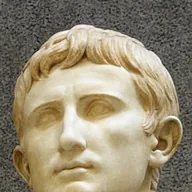
Suetonius, Life of Augustus 23–24Translated by Alexander Thomson, revised by T. Forester (1889)Read the full passage (opens gutenberg.org)

When, and whose words

Date
set in 9 CE. Set after the loss of Varus and three legions in Germany, 9 CE. Suetonius wrote c. 120 CE.
Whose words
As Suetonius tells it, over a century later.
How this post was checked
  • The plain-words line was read against the quote alone by a second, independent pass, which found it adds no claim the quote does not make (2026-10-03).
  • Each claim in the summary was checked by an independent pass against only the material it cites.
  • The quote itself is checked by the build: word for word, once, at the cited section of the stored translation.

See it among its momentsMore from AugustusSee it in the feed