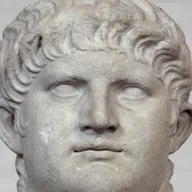
What was going on: As Suetonius tells it, over a century later, Nero declared he would govern on the model of Augustus. He cut heavy taxes, gave money to the people and to poor senators, and greeted people by name.
When the Senate thanked him for ruling well, he said: thank me when I have earned it.
When the senate returned him their thanks for his good government, he replied to them, “It will be time enough to do so when I shall have deserved it.”
As Suetonius tells it, over a century later. Suetonius, Life of Nero 10, translated by Alexander Thomson, revised by T. Forester (1889)
What was going on: As Suetonius tells it over a century later, Nero is making a show of generosity: cutting taxes, giving money to the people and allowances to poor senators, and promising to govern on the model of Augustus.
Asked to sign a death sentence, he said he wished he had never learned to read and write.
When called upon to subscribe the sentence, according to custom, of a criminal condemned to die, “I wish,” said he, “I had never learnt to read and write.”
As Suetonius tells it, over a century later. Suetonius, Life of Nero 10, translated by Alexander Thomson, revised by T. Forester (1889)
, Britain
Boudica leads a British revolt against Rome
After Romans flog her and abuse her daughters, Boudica, queen of the Iceni, leads a revolt that burns Camulodunum, London and Verulamium before Rome wins.
Boudicea, with her daughters before her in a chariot, went up to tribe after tribe, protesting that it was indeed usual for Britons to fight under the leadership of women.
What was going on: As Tacitus tells it: Boudica, queen of the Iceni, has led a revolt that burned three towns. Her huge army, so sure of winning that the Britons brought their wives in wagons to watch, now faces a Roman force of about ten thousand.
Why it matters:Rome's final victory over the revolt ended resistance to Roman rule in most of southern Britain, a period that lasted until AD 410.
With her daughters in her chariot, she went from tribe to tribe, saying Britons were used to going to war led by women.
Boudicea, with her daughters before her in a chariot, went up to tribe after tribe, protesting that it was indeed usual for Britons to fight under the leadership of women.
As Tacitus tells it. Tacitus, Annals 14.35, translated by A. J. Church and W. J. Brodribb (1876)B
What was going on: Britain, 60 or 61 CE. As Tacitus tells it, a vast British army, wives watching from wagons, faces the Roman legions, and Boudica rides with her daughters in a chariot from tribe to tribe to rouse them.
Why it matters: Boudica's battle speeches in Tacitus and Dio are thought never to have been recorded in her life, but these imagined speeches helped create an image of patriotism that turned her into a legendary figure.
I am not fighting as a noblewoman but as one of the people, for our lost freedom, my whipped body, and the violated honour of my daughters.
…it is not as a woman descended from noble ancestry, but as one of the people that I am avenging lost freedom, my scourged body, the outraged chastity of my daughters.
As Tacitus tells it. Tacitus, Annals 14.35, translated by A. J. Church and W. J. Brodribb (1876)B
What was going on: Britain, 60 or 61 CE, before a battle with the Romans. As Tacitus tells it, Boudica rides in a chariot with her daughters from tribe to tribe, speaking of her flogging and the abuse of her daughters. The huge British army has brought wives to watch from wagons.
Why it matters:Rome's final victory over the revolt ended resistance to Roman rule in most of southern Britain, a period that lasted until AD 410.
The gods are with a just revenge. One legion that dared fight us is dead. The rest are hiding in camp or thinking about running.
But heaven is on the side of a righteous vengeance; a legion which dared to fight has perished; the rest are hiding themselves in their camp, or are thinking anxiously of flight.
As Tacitus tells it. Tacitus, Annals 14.35, translated by A. J. Church and W. J. Brodribb (1876)B
What was going on: Britain, 60 or 61 CE. After Romans flogged Boudica and abused her daughters, she led a revolt that burned three towns. As Tacitus tells it, before the battle she drove with her daughters in a chariot from tribe to tribe.
Why it matters:Rome's final victory over the revolt ended resistance to Roman rule in most of southern Britain, a period that lasted until AD 410.
Think it through and you will see: in this battle we win or die. That is what a woman has decided. Men can live as slaves if they like.
If you weigh well the strength of the armies, and the causes of the war, you will see that in this battle you must conquer or die. This is a woman's resolve; as for men, they may live and be slaves.
As Tacitus tells it. Tacitus, Annals 14.35, translated by A. J. Church and W. J. Brodribb (1876)
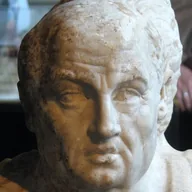
What was going on:Rome, 62 CE. As Tacitus tells it, Nero's old tutor Seneca, made rich by Nero's gifts, asks to hand that wealth over and give his time to his mind instead. Three years later Nero ordered him to die.
Why it matters:Tacitus reports that Nero refused this request, and another in 64. In these final years Seneca wrote two of his greatest works, among them his Letters to Lucilius.
I am old and cannot carry the weight of my wealth any more. Please take my property into your estate. I need relief.
Just as I should implore support if exhausted by warfare or travel, so in this journey of life, old as I am and unequal even to the lightest cares, since I cannot any longer bear the burden of my wealth, I crave assistance. Order my property to be managed by your agents and to be included in your estate.
As Tacitus tells it. Tacitus, Annals 14.54, translated by A. J. Church and W. J. Brodribb (1876)
What was going on: As Tacitus tells it, Nero is answering his old tutor Seneca, who wants to give back the riches Nero gave him and step away. Tacitus adds that Nero hid his hatred under flattery. In 65 CE Nero ordered Seneca to kill himself.
Why it matters:Seneca's calm Stoic suicide later became the subject of numerous paintings.
Why not stay and guide me if I go wrong? If you hand back your wealth and leave, people will not praise you. They will talk of my greed and cruelty.
Why not rather, if the frailty of my youth goes in any respect astray, call me back and guide yet more zealously with your help the manhood which you have instructed? It will not be your moderation, if you restore me your wealth, not your love of quiet, if you forsake your emperor, but my avarice, the fear of my cruelty, which will be in all men's mouths.
As Tacitus tells it. Tacitus, Annals 14.56, translated by A. J. Church and W. J. Brodribb (1876)
What was going on:Rome, 62 CE. Nero's old tutor Seneca has asked to give back the wealth Nero gave him. As Tacitus tells it, Nero refuses in a speech and asks Seneca to keep guiding him. Afterwards Seneca keeps away from crowds and is seldom seen in Rome.
Why it matters:Seneca's calm Stoic suicide later became the subject of numerous paintings.
The emperor hugged and kissed him, being born and trained to hide hatred behind flattery. Seneca thanked him, which is how talks with a tyrant end.
To these words the emperor added embraces and kisses; for he was formed by nature and trained by habit to veil his hatred under delusive flattery. Seneca thanked him, the usual end of an interview with a despot.
His own words. Tacitus, Annals 14.56, translated by A. J. Church and W. J. Brodribb (1876)
What was going on: A letter from Seneca to Lucilius, written in his last years, c. 62–65 CE, before Nero ordered him to die. Seneca has been urging Lucilius to hold on to every hour and not put things off.
Why it matters: Seneca's calm Stoic suicide later became the subject of numerous paintings.
Time is the only thing that is really ours, and it is so slippery that anyone who wants to can take it from us.
Nothing, Lucilius, is ours, except time. We were entrusted by nature with the ownership of this single thing, so fleeting and slippery that anyone who will can oust us from possession.
His own words, in a letter to Lucilius. Seneca, Moral Letters to Lucilius 1.3, translated by Richard M. Gummere (1917)
What was going on: Seneca, in a letter to Lucilius written around 62–65 CE, is urging him to stop letting his time slip away through carelessness. In 65 CE Nero ordered Seneca to kill himself.
Why it matters: Seneca's observation that we are dying every day sums up the concern with death that underlies a large number of his letters.
Who values each day and sees that he is dying a little every day? Death is not only ahead of us: the years behind us already belong to it.
What man can you show me who places any value on his time, who reckons the worth of each day, who understands that he is dying daily? For we are mistaken when we look forward to death; the major portion of death has already passed. Whatever years lie behind us are in death’s hands.
His own words, in a letter to Lucilius. Seneca, Moral Letters to Lucilius 1.2, translated by Richard M. Gummere (1917)
What was going on: In a letter to Lucilius, c. 62-65 CE, Seneca answers the question of what to avoid most. He admits his own weakness: he never comes home with the same character he went out with.
Crowds are bad for you: someone always makes a bad habit look good or rubs it off on you without you noticing. The bigger the crowd, the bigger the risk.
To consort with the crowd is harmful; there is no person who does not make some vice attractive to us, or stamp it upon us, or taint us unconsciously therewith. Certainly, the greater the mob with which we mingle, the greater the danger.
His own words, in a letter to Lucilius. Seneca, Moral Letters to Lucilius 7.2, translated by Richard M. Gummere (1917)
What was going on: Seneca, in a letter to Lucilius written c. 62–65 CE. He went to a midday show at the arena expecting fun and relaxation. Instead he saw men with no armour or shields made to fight until they died, a show many people liked better than the usual bouts.
Why it matters: Seneca's letter on this visit to the arena is the first surviving record of a pre-Christian writer expressing moral qualms about fights to the death.
Armour and skill would only put off the deaths. In the morning men are thrown to lions and bears; at noon, to the crowd.
What is the need of defensive armour, or of skill? All these mean delaying death. In the morning they throw men to the lions and the bears; at noon, they throw them to the spectators.
His own words, in a letter to Lucilius. Seneca, Moral Letters to Lucilius 7.4, translated by Richard M. Gummere (1917)
What was going on: A letter from Seneca to Lucilius, c. 62–65 CE. Seneca has heard that Lucilius lives on friendly terms with his slaves and praises him for it, then turns on masters who think it degrading to dine with a slave.
People say: they are slaves. No, they are human beings, companions, humble friends. Even fellow slaves, since luck rules the free and the enslaved alike.
“They are slaves,” people declare. Nay, rather they are men. “Slaves!” No, comrades. “Slaves!” No, they are unpretentious friends. “Slaves!” No, they are our fellow-slaves, if one reflects that Fortune has equal rights over slaves and free men alike.
His own words, in a letter to Lucilius. Seneca, Moral Letters to Lucilius 47.1, translated by Richard M. Gummere (1917)
What was going on: In a letter to Lucilius around 62–65 CE, Seneca writes about slaves: the man you call a slave comes from the same stock as you, and fortune has turned well-born men into shepherds and caretakers.
We Romans are far too proud, cruel and insulting toward slaves. My advice in short: treat those below you the way you would want those above you to treat you.
I do not wish to involve myself in too large a question, and to discuss the treatment of slaves, towards whom we Romans are excessively haughty, cruel, and insulting. But this is the kernel of my advice: Treat your inferiors as you would be treated by your betters.
His own words, in a letter to Lucilius. Seneca, Moral Letters to Lucilius 47.11, translated by Richard M. Gummere (1917)
What was going on: In a letter to Lucilius, Seneca answers a complaint that a long journey did not help. He backs his point with lines from Vergil and a remark Socrates made to a man with the same complaint.
Surprised that all that travel and new scenery did not lift your gloom? You need to change what is inside you, not where you are.
Are you surprised, as if it were a novelty, that after such long travel and so many changes of scene you have not been able to shake off the gloom and heaviness of your mind? You need a change of soul rather than a change of climate.
His own words, in a letter to Lucilius. Seneca, Moral Letters to Lucilius 28.1, translated by Richard M. Gummere (1917)
What was going on: In a letter to Lucilius, c. 62–65 CE, Seneca reminds him that Fortune has often knocked him down and he has got up again. Now Seneca offers some extra advice for facing fear, in his own milder style rather than the stern Stoic way.
More things scare us than actually hurt us. We suffer more often in our heads than in real life.
There are more things, Lucilius, likely to frighten us than there are to crush us; we suffer more often in imagination than in reality.
His own words, in a letter to Lucilius. Seneca, Moral Letters to Lucilius 13.4, translated by Richard M. Gummere (1917)
What was going on: A letter from Seneca to Lucilius, c. 62–65 CE. Seneca is trying to study and describes the racket around him, from men grunting as they lift lead weights to the slap of a hand giving someone a rubdown.
Why it matters: Letters like this one, On Noise, give valuable insights into daily life in ancient Rome as well as Seneca's Stoic philosophy.
Nothing matters more than quiet when you shut yourself away to study. Imagine the noise in my ears: I live right above a bathhouse.
Beshrew me if I think anything more requisite than silence for a man who secludes himself in order to study! Imagine what a variety of noises reverberates about my ears! I have lodgings right over a bathing establishment.
His own words, in a letter to Lucilius. Seneca, Moral Letters to Lucilius 56.1, translated by Richard M. Gummere (1917)
What was going on: Seneca writes to Lucilius around 62–65 CE, calling himself old. He says he has stopped wanting what he wanted as a boy, and writes this letter as if death might call him away while he writes. In 65 CE Nero ordered him to kill himself.
Why it matters: Seneca's calm Stoic suicide later became the subject of numerous paintings.
I try to live each day as if it were a whole life. I do not grab at it as if it were my last, but I keep in mind that it might be.
I am endeavouring to live every day as if it were a complete life. I do not indeed snatch it up as if it were my last; I do regard it, however, as if it might even be my last.
His own words, in a letter to Lucilius. Seneca, Moral Letters to Lucilius 61.1, translated by Richard M. Gummere (1917)
What was going on: In a late letter to Lucilius, Seneca writes about death, comparing life to a voyage that ends in a harbour every ship must reach. In 65 CE, accused of a plot, he was told by Nero to kill himself.
Why it matters: Seneca's calm Stoic suicide later became the subject of numerous paintings.
You should not always cling to a life like that. Just being alive is not the good thing; living well is. A wise person lives as long as he should, not as long as he can.
To such a life, as you are aware, one should not always cling. For mere living is not a good, but living well. Accordingly, the wise man will live as long as he ought, not as long as he can.
His own words, in a letter to Lucilius. Seneca, Moral Letters to Lucilius 70.4, translated by Richard M. Gummere (1917)
, Rome
The Great Fire burns much of Rome
A fire starting by the Circus Maximus burns for days. Tacitus says no one knew whether it was an accident or set by Nero, who blamed the Christians.
A disaster followed, whether accidental or treacherously contrived by the emperor, is uncertain, as authors have given both accounts
What was going on: Suetonius, writing over a century later, tells this just before the great fire of Rome in 64 CE, in a list of Nero's boasts and scorn for the Senate. Right after, he claims Nero set the city alight; Tacitus says no one knew if the fire was an accident or set.
Why it matters: The fire destroyed nearly three quarters of Rome, and by Tacitus' account Nero's blaming of the Christians began the empire's first persecution of them.
Someone quoted a line: when I am dead, let fire swallow the world. He answered: no, let it happen while I am alive.
Somebody in conversation saying-- Emou thanontos gaia michthaeto pyri When I am dead let fire devour the world-- “Nay,” said he, “let it be while I am living” [emou xontos].
As Suetonius tells it, over a century later. Suetonius, Life of Nero 38, translated by Alexander Thomson, revised by T. Forester (1889)
What was going on:Rome, 64 CE: the Great Fire burned for six days and seven nights, as Suetonius tells it over a century later, and people fled to shelter among the tombs. Tacitus says no one knew whether it was an accident or set by Nero.
Why it matters: Suetonius' story of Nero singing of Troy as he watched Rome burn is where the legend that Nero fiddled as Rome burned begins.
He watched the fire from a tower, said he loved how beautiful the flames looked, and sang a poem about the fall of Troy in stage costume.
This fire he beheld from a tower in the house of Mecaenas, and “being greatly delighted,” as he said, “with the beautiful effects of the conflagration,” he sung a poem on the ruin of Troy, in the tragic dress he used on the stage.
As Suetonius tells it, over a century later. Suetonius, Life of Nero 38, translated by Alexander Thomson, revised by T. Forester (1889)T
What was going on:Rome, 64 CE. Tacitus has just described Nero's lavish and scandalous public feasts. Then comes the fire: it starts among shops full of flammable goods by the Circus, the wind drives it, and it burns for days.
Why it matters: The fire destroyed nearly three quarters of Rome, and by Tacitus' account Nero's blaming of the Christians began the empire's first persecution of them.
Then came a disaster, the worst fire the city had ever had. Whether it was an accident or the emperor's doing is uncertain; writers say both.
A disaster followed, whether accidental or treacherously contrived by the emperor, is uncertain, as authors have given both accounts, worse, however, and more dreadful than any which have ever happened to this city by the violence of fire.
His own words. Tacitus, Annals 15.38, translated by A. J. Church and W. J. Brodribb (1876)T
What was going on:Rome, 64 CE, during the great fire. As Tacitus tells it, Nero was at Antium and came back only when the flames neared his house. He opened public buildings and his own gardens to the homeless, brought in food and cut the price of grain.
Why it matters: The fire destroyed nearly three quarters of Rome, and by Tacitus' account Nero's blaming of the Christians began the empire's first persecution of them.
What he did, popular as it was, won him nothing, because a rumour was everywhere that while the city burned he sang on a private stage about the fall of Troy.
These acts, though popular, produced no effect, since a rumour had gone forth everywhere that, at the very time when the city was in flames, the emperor appeared on a private stage and sang of the destruction of Troy, comparing present misfortunes with the calamities of antiquity.
His own words. Tacitus, Annals 15.39, translated by A. J. Church and W. J. Brodribb (1876)T
What was going on:Rome, 64 CE, after the Great Fire. Tacitus has just described the city rebuilt with more open streets, and prayers and night vigils held to calm the gods.
Why it matters: By Tacitus's account, Nero's blaming of the Christians began the empire's first persecution of them, and his Annals are of interest as an early account of that persecution.
Nothing stopped the belief that the fire was ordered. So Nero blamed and tortured a hated group the people called Christians.
But all human efforts, all the lavish gifts of the emperor, and the propitiations of the gods, did not banish the sinister belief that the conflagration was the result of an order. Consequently, to get rid of the report, Nero fastened the guilt and inflicted the most exquisite tortures on a class hated for their abominations, called Christians by the populace.
His own words. Tacitus, Annals 15.44, translated by A. J. Church and W. J. Brodribb (1876)T
What was going on: After the Great Fire of Rome in 64 CE, Tacitus says, Nero blamed the Christians. Huge numbers were convicted and killed in cruel ways, some torn by dogs, some burned as lights at night, while Nero put on a show in his gardens.
Why it matters: The persecution after the fire is recorded only by Tacitus and a later writer who relied on him; even so, the record shows common Roman attitudes toward the Christian minority at the time.
Though they deserved harsh punishment, people pitied them: they seemed to die not for the public good but for one man's cruelty.
Hence, even for criminals who deserved extreme and exemplary punishment, there arose a feeling of compassion; for it was not, as it seemed, for the public good, but to glut one man's cruelty, that they were being destroyed.
His own words. Tacitus, Annals 15.44, translated by A. J. Church and W. J. Brodribb (1876)
, Rome
Nero orders his old tutor Seneca to die
Accused of a plot against Nero, the Stoic Seneca is told to kill himself. Tacitus says he left his friends the pattern of his life.
he bequeathed to them the only, but still the noblest possession yet remaining to him, the pattern of his life
What was going on: Suetonius, writing over a century later, describes the huge house Nero built in Rome: fields, vineyards and woods inside its grounds, rooms covered in gold and jewels, and a round banquet hall that turned day and night.
Why it matters: Suetonius says many Romans believed Nero started the Great Fire of Rome to clear land for this house, the Golden House.
When his grand new house was finished, all the praise he gave it was that now he had a home fit for a human being.
Upon the dedication of this magnificent house after it was finished, all he said in approval of it was, “that he had now a dwelling fit for a man.”
As Suetonius tells it, over a century later. Suetonius, Life of Nero 31, translated by Alexander Thomson, revised by T. Forester (1889)J
What was going on: Judaea, 67 CE, during the revolt against Rome. Nicanor is urging Josephus to come out to the Romans. Writing of himself, Josephus says he recalled dreams in which God showed him what would happen to the Jews and to Rome's emperors, and prayed in secret.
Why it matters: The first of three major Jewish rebellions against Rome, the revolt ended with Jerusalem and the Temple destroyed, mass displacement and the end of the Jewish polity.
God, since you have brought my people low and handed their luck to Rome, and chose me to tell the future, I surrender and will live. I go as your servant, not a deserter.
Since it pleaseth thee, who hast created the Jewish nation, to depress the same, and since all their good fortune is gone over to the Romans, and since thou hast made choice of this soul of mine to foretell what is to come to pass hereafter, I willingly give them my hands, and am content to live. And I protest openly that I do not go over to the Romans as a deserter of the Jews, but as a minister from thee.
His own account of himself, written in the third person. Josephus, The Jewish War 3.350, translated by William Whiston (1737)J
What was going on: Judaea, 67 CE, in the revolt against Rome. Josephus, telling it himself in the third person, was with men who had resolved to die, and as their general he had them draw lots to kill one another in turn.
Why it matters: The first of three major Jewish rebellions against Rome, the revolt ended with Jerusalem and the Temple destroyed, mass displacement and the end of the Jewish polity.
He and one other man were left last, by chance or by God. Not wanting to die or to kill his own people, he talked the other man into living too.
…yet was he with another left to the last, whether we must say it happened so by chance, or whether by the providence of God. And as he was very desirous neither to be condemned by the lot, nor, if he had been left to the last, to imbrue his right hand in the blood of his countrymen, he persuaded him to trust his fidelity to him, and to live as well as himself.
His own account of himself, written in the third person. Josephus, The Jewish War 3.387, translated by William Whiston (1737)J
What was going on: Judaea, 67 CE, during the revolt against Rome. Josephus, writing of himself by name, has just been captured and led to the Roman general Vespasian, while soldiers crowd round and some shout for his death. Titus is Vespasian's son.
Why it matters: The first of three major Jewish rebellions against Rome, the revolt ended with Jerusalem and the Temple destroyed, mass displacement and the end of the Jewish polity.
Above all, his own courage and the prisoner's patience made Titus pity him. Seeing a fighter suddenly a captive made him think how fast fortune turns in war, and that no one's place is safe.
Above all the rest, Titus's own valor, and Josephus's own patience under his afflictions, made him pity him, as did also the commiseration of his age, when he recalled to mind that but a little while ago he was fighting, but lay now in the hands of his enemies, which made him consider the power of fortune, and how quick is the turn of affairs in war, and how no state of men is sure;
His own words, about Titus and himself. Josephus, The Jewish War 3.392, translated by William Whiston (1737)J
What was going on: Judaea, 67 CE, early in the Jewish revolt. Josephus, who fought against Rome, has been taken captive, and Vespasian plans to send him to Nero. Josephus asks to speak privately, before Titus and two friends. He tells this himself.
Why it matters: When the prediction came true, Vespasian, who took Josephus' prophecy to be divine, set him free.
Why send me to Nero? Will the rulers after Nero, before you, even live? You, Vespasian, are Caesar and emperor, you and your son here.
Dost thou send me to Nero? For why? Are Nero's successors till they come to thee still alive? Thou, O Vespasian, art Caesar and emperor, thou, and this thy son.
His own account of what he said. Josephus, The Jewish War 3.399, translated by William Whiston (1737)
, Italy
Nero kills himself as the Senate declares him an enemy
With the armies in revolt and the Senate against him, Nero flees Rome and takes his own life at a freedman's villa outside the city.
What was going on: 68 CE. With the armies in revolt and the Senate against him, Nero has fled Rome and crawled through a hole in the wall into a freedman's villa. The people with him urge him to save himself from the shame that awaits. Suetonius tells it over a century later.
Why it matters: Nero was the last emperor of the Julio-Claudian dynasty, and his death set off the brief civil war known as the Year of the Four Emperors.
He had his own grave dug in front of him, crying at every step and saying again and again: what an artist is about to die!
…he ordered a pit to be sunk before his eyes, of the size of his body, and the bottom to be covered with pieces of marble put together, if any could be found about the house; and water and wood, to be got ready for immediate use about his corpse; weeping at every thing that was done, and frequently saying, “What an artist is now about to perish!”
As Suetonius tells it, over a century later. Suetonius, Life of Nero 49, translated by Alexander Thomson, revised by T. Forester (1889)
What was going on: 68 CE, the day Nero died, as Suetonius tells it. With the Senate against him, Nero had fled Rome to a freedman's villa. As horsemen sent to bring him back alive came near, he drove a dagger into his throat, helped by his secretary Epaphroditus.
Why it matters: Nero was the last emperor of the Julio-Claudian dynasty, and his death set off the brief civil war known as the Year of the Four Emperors.
Half dead, as a soldier pressed a cloak to his wound pretending to help, he said only: too late. Is this your loyalty?
A centurion bursting in just as he was half-dead, and applying his cloak to the wound, pretending that he was come to his assistance, he made no other reply but this, “‘Tis too late;” and “Is this your loyalty?”
As Suetonius tells it, over a century later. Suetonius, Life of Nero 49, translated by Alexander Thomson, revised by T. Forester (1889)
, Rome
Four emperors in one year
After Nero, Galba, Otho and Vitellius each seize power and fall within months. Vespasian, commanding in Judaea, wins and starts the Flavian dynasty.
After the deaths of Nero and Galba, whilst Otho and Vitellius were contending for the sovereignty, he entertained hopes of obtaining the empire