hstry

Seneca on fear and imagination

c. 62–65 CE. His own words, in a letter to Lucilius.

Where and when

c. 62–65 CERome and its world

about 1,963 years ago

Explore
Seneca, c. 4 BCE – 65 CE3000 BCE2900 BCE2800 BCE2700 BCE2600 BCE2500 BCE2400 BCE2300 BCE2200 BCE2100 BCE2000 BCE1900 BCE1800 BCE1700 BCE1600 BCE1500 BCE1400 BCE1300 BCE1200 BCE1100 BCE1000 BCE900 BCE800 BCE700 BCE600 BCE500 BCE400 BCE300 BCE200 BCE100 BCE1 CE100 CE200 CE300 CE400 CE500 CE600 CE700 CE800 CE900 CE1000 CE1100 CE1200 CE1300 CE1400 CE1500 CE1600 CE1700 CE1800 CE1900 CE2000 CEGreat Pyramid of Giza built, c. 2600 BCERome founded (traditional date), 753 BCELast western Roman emperor deposed, 476 CEGutenberg's printing press, c. 1440 CEColumbus reaches the Americas, 1492 CEFirst people on the Moon, 1969 CEToday, 2026sometime in these 3 years

Swipe the line. Bars: entries. Dots: events.

Seneca

His own words, in a letter to Lucilius

In plain words, ours

More things scare us than actually hurt us. We suffer more often in our heads than in real life.

There are more things, Lucilius, likely to frighten us than there are to crush us; we suffer more often in imagination than in reality.

Seneca, Moral Letters to Lucilius 13.4Translated by Richard M. Gummere (1917)Read the full passage (Seneca, Moral Letters to Lucilius 13.4, opens en.wikisource.org)

What was going on, our summary

In a letter to Lucilius, c. 62–65 CE, Seneca reminds him that Fortune has often knocked him down and he has got up again. Now Seneca offers some extra advice for facing fear, in his own milder style rather than the stern Stoic way.

Checked claim by claim against: the passage around the quote.

Related moments

In time order, with this one in its place. Each says why it is here.

  1. 44 BCE, written laterabout 106 years earlier Cicero on what we owe our country Also about how to live well
  2. c. 60–61 CEabout 3 years earlier Boudica leads a British revolt against Rome Same years
  3. c. 62–65 CEThis momentSeneca on fear and imagination
  4. c. 62–65 CEDuring it Seneca on the harm of crowds More from Seneca
  5. c. 62–65 CEDuring it Seneca on dying daily More from Seneca
  6. c. 62–65 CEDuring it Seneca on time, the only thing we own More from Seneca
  7. 64 CE1 year later The Great Fire burns much of Rome Same years
  8. by 64 CE1 year later Nero on fire devouring the world, in Suetonius Same years
  9. 65 CEabout 2 years later Nero orders his old tutor Seneca to die Same years
  10. 66 CEabout 3 years later Judaea rises against Rome Same years
  11. c. 108 CEabout 45 years later Epictetus on facing death without lament Also about how to live well

Just before and after

The text around the quote, word for word from the same translation.

Show the passageHide the passage

This is the touchstone of such a spirit; no prizefighter can go with high spirits into the strife if he has never been beaten black and blue; the only contestant who can confidently enter the lists is the man who has seen his own blood, who has felt his teeth rattle beneath his opponent’s fist, who has been tripped and felt the full force of his adversary’s charge, who has been downed in body but not in spirit, one who, as often as he falls, rises again with greater defiance than ever. So then, to keep up my figure, Fortune has often in the past got the upper hand of you, and yet you have not surrendered, but have leaped up and stood your ground still more eagerly. For manliness gains much strength by being challenged; nevertheless, if you approve, allow me to offer some additional safeguards by which you may fortify yourself.

The quote: There are more things, Lucilius, likely to frighten us than there are to crush us; we suffer more often in imagination than in reality.

I am not speaking with you in the Stoic strain but in my milder style. For it is our Stoic fashion to speak of all those things, which provoke cries and groans, as unimportant and beneath notice; but you and I must drop such great-sounding words, although, Heaven knows, they are true enough. What I advise you to do is, not to be unhappy before the crisis comes; since it may be that the dangers before which you paled as if they were threatening you, will never come upon you; they certainly have not yet come.

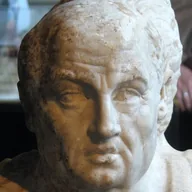
Seneca, Moral Letters to Lucilius 13.2–4Translated by Richard M. Gummere (1917)Read the full passage (opens en.wikisource.org)

When, and whose words

Date
c. 62–65 CE. The Letters to Lucilius were written in the last years of Seneca’s life, c. 62–65 CE; this letter does not date itself.
Whose words
His own words, in a letter to Lucilius.
How this post was checked
  • The plain-words line was read against the quote alone by a second, independent pass, which found it adds no claim the quote does not make (2026-10-03).
  • Each claim in the summary was checked by an independent pass against only the material it cites.
  • The quote itself is checked by the build: word for word, once, at the cited section of the stored translation.

See it among its momentsMore from SenecaSee it in the feed