hstry

Seneca on dying daily

c. 62–65 CE. His own words, in a letter to Lucilius.

Where and when

c. 62–65 CERome and its world

about 1,963 years ago

Explore
Seneca, c. 4 BCE – 65 CE3000 BCE2900 BCE2800 BCE2700 BCE2600 BCE2500 BCE2400 BCE2300 BCE2200 BCE2100 BCE2000 BCE1900 BCE1800 BCE1700 BCE1600 BCE1500 BCE1400 BCE1300 BCE1200 BCE1100 BCE1000 BCE900 BCE800 BCE700 BCE600 BCE500 BCE400 BCE300 BCE200 BCE100 BCE1 CE100 CE200 CE300 CE400 CE500 CE600 CE700 CE800 CE900 CE1000 CE1100 CE1200 CE1300 CE1400 CE1500 CE1600 CE1700 CE1800 CE1900 CE2000 CEGreat Pyramid of Giza built, c. 2600 BCERome founded (traditional date), 753 BCELast western Roman emperor deposed, 476 CEGutenberg's printing press, c. 1440 CEColumbus reaches the Americas, 1492 CEFirst people on the Moon, 1969 CEToday, 2026sometime in these 3 years

Swipe the line. Bars: entries. Dots: events.

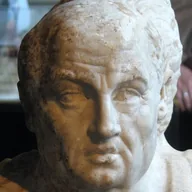
Seneca

His own words, in a letter to Lucilius

In plain words, ours

Who values each day and sees that he is dying a little every day? Death is not only ahead of us: the years behind us already belong to it.

What man can you show me who places any value on his time, who reckons the worth of each day, who understands that he is dying daily? For we are mistaken when we look forward to death; the major portion of death has already passed. Whatever years lie behind us are in death’s hands.

Seneca, Moral Letters to Lucilius 1.2Translated by Richard M. Gummere (1917)Read the full passage (Seneca, Moral Letters to Lucilius 1.2, opens en.wikisource.org)

What was going on, our summary

Seneca, in a letter to Lucilius written around 62–65 CE, is urging him to stop letting his time slip away through carelessness. In 65 CE Nero ordered Seneca to kill himself.

Checked claim by claim against: Nero orders his old tutor Seneca to die, the passage around the quote.

Why it matters

Seneca's observation that we are dying every day sums up the concern with death that underlies a large number of his letters.

Based on Wikipedia: Epistulae Morales ad Lucilium

Underlying a large number of the letters is a concern with death on the one hand (a central topic of Stoic philosophy, and one embodied in Seneca's observation that we are "dying every day")

Wikipedia, Epistulae Morales ad Lucilium (opens en.wikipedia.org), as of 2026-08-06. Text CC BY-SA 4.0. Our line is checked against these sentences only.

Related moments

In time order, with this one in its place. Each says why it is here.

  1. c. 60–61 CEabout 3 years earlier Boudica leads a British revolt against Rome Same years
  2. c. 62–65 CEThis momentSeneca on dying daily
  3. c. 62–65 CEDuring it Seneca on the harm of crowds More from Seneca
  4. c. 62–65 CEDuring it Seneca on the midday games More from Seneca
  5. c. 62–65 CEDuring it Seneca on time, the only thing we own Same passageMore from Seneca
  6. 64 CE1 year later The Great Fire burns much of Rome Same years
  7. by 64 CE1 year later Nero on fire devouring the world, in Suetonius Same years
  8. 65 CEabout 2 years later Nero orders his old tutor Seneca to die The event behind itAlso about death
  9. 66 CEabout 3 years later Judaea rises against Rome Same years
  10. set in 68 CEabout 5 years later Nero's last hours, as Suetonius tells it Also about death

Just before and after

The text around the quote, word for word from the same translation.

Show the passageHide the passage

Continue to act thus, my dear Lucilius—set yourself free for your own sake; gather and save your time, which till lately has been forced from you, or filched away, or has merely slipped from your hands. Make yourself believe the truth of my words,—that certain moments are torn from us, that some are gently removed, and that others glide beyond our reach. The most disgraceful kind of loss, however, is that due to carelessness. Furthermore, if you will pay close heed to the problem, you will find that the largest portion of our life passes while we are doing ill, a goodly share while we are doing nothing, and the whole while we are doing that which is not to the purpose.

The quote: What man can you show me who places any value on his time, who reckons the worth of each day, who understands that he is dying daily? For we are mistaken when we look forward to death; the major portion of death has already passed. Whatever years lie behind us are in death’s hands.

Therefore, Lucilius, do as you write me that you are doing: hold every hour in your grasp. Lay hold of to-day’s task, and you will not need to depend so much upon to-morrow’s. While we are postponing, life speeds by. Nothing, Lucilius, is ours, except time. We were entrusted by nature with the ownership of this single thing, so fleeting and slippery that anyone who will can oust us from possession. What fools these mortals be!

Seneca, Moral Letters to Lucilius 1.1–3Translated by Richard M. Gummere (1917)Read the full passage (opens en.wikisource.org)

When, and whose words

Date
c. 62–65 CE. The Letters to Lucilius were written in the last years of Seneca’s life, c. 62–65 CE; this letter does not date itself.
Whose words
His own words, in a letter to Lucilius.
How this post was checked
  • The plain-words line was read against the quote alone by a second, independent pass, which found it adds no claim the quote does not make (2026-10-03).
  • Each claim in the summary was checked by an independent pass against only the material it cites.
  • The quote itself is checked by the build: word for word, once, at the cited section of the stored translation.

See it among its momentsMore from SenecaSee it in the feed