hstry

Seneca on the midday games

c. 62–65 CE. His own words, in a letter to Lucilius.

Where and when

c. 62–65 CERome and its world

about 1,963 years ago

Explore
Seneca, c. 4 BCE – 65 CE3000 BCE2900 BCE2800 BCE2700 BCE2600 BCE2500 BCE2400 BCE2300 BCE2200 BCE2100 BCE2000 BCE1900 BCE1800 BCE1700 BCE1600 BCE1500 BCE1400 BCE1300 BCE1200 BCE1100 BCE1000 BCE900 BCE800 BCE700 BCE600 BCE500 BCE400 BCE300 BCE200 BCE100 BCE1 CE100 CE200 CE300 CE400 CE500 CE600 CE700 CE800 CE900 CE1000 CE1100 CE1200 CE1300 CE1400 CE1500 CE1600 CE1700 CE1800 CE1900 CE2000 CEGreat Pyramid of Giza built, c. 2600 BCERome founded (traditional date), 753 BCELast western Roman emperor deposed, 476 CEGutenberg's printing press, c. 1440 CEColumbus reaches the Americas, 1492 CEFirst people on the Moon, 1969 CEToday, 2026sometime in these 3 years

Swipe the line. Bars: entries. Dots: events.

Seneca

His own words, in a letter to Lucilius

In plain words, ours

Armour and skill would only put off the deaths. In the morning men are thrown to lions and bears; at noon, to the crowd.

What is the need of defensive armour, or of skill? All these mean delaying death. In the morning they throw men to the lions and the bears; at noon, they throw them to the spectators.

Seneca, Moral Letters to Lucilius 7.4Translated by Richard M. Gummere (1917)Read the full passage (Seneca, Moral Letters to Lucilius 7.4, opens en.wikisource.org)

What was going on, our summary

Seneca, in a letter to Lucilius written c. 62–65 CE. He went to a midday show at the arena expecting fun and relaxation. Instead he saw men with no armour or shields made to fight until they died, a show many people liked better than the usual bouts.

Checked claim by claim against: the passage around the quote.

Why it matters

Seneca's letter on this visit to the arena is the first surviving record of a pre-Christian writer expressing moral qualms about fights to the death.

Based on Wikipedia: Epistulae Morales ad Lucilium

In letter 7, for instance, Seneca reports a chance visit to an arena gladiatorial combat, fought to the death; he then questions the morality and ethics of such a spectacle, in what is the first extant record of a pre-Christian writer expressing moral qualms on the matter.

Wikipedia, Epistulae Morales ad Lucilium (opens en.wikipedia.org), as of 2026-08-06. Text CC BY-SA 4.0. Our line is checked against these sentences only.

Related moments

In time order, with this one in its place. Each says why it is here.

  1. c. 60–61 CEabout 3 years earlier Boudica leads a British revolt against Rome Same years
  2. c. 62–65 CEThis momentSeneca on the midday games
  3. c. 62–65 CEDuring it Seneca on the harm of crowds Same passageMore from Seneca
  4. c. 62–65 CEDuring it Seneca on dying daily More from Seneca
  5. c. 62–65 CEDuring it Seneca on time, the only thing we own More from Seneca
  6. 64 CE1 year later The Great Fire burns much of Rome Same years
  7. by 64 CE1 year later Nero on fire devouring the world, in Suetonius Same years
  8. 65 CEabout 2 years later Nero orders his old tutor Seneca to die Also about death
  9. 66 CEabout 3 years later Judaea rises against Rome Same years
  10. set in 68 CEabout 5 years later Nero's last hours, as Suetonius tells it Also about death

Just before and after

The text around the quote, word for word from the same translation.

Show the passageHide the passage

What do you think I mean? I mean that I come home more greedy, more ambitious, more voluptuous, and even more cruel and inhuman,—because I have been among human beings. By chance I attended a mid-day exhibition, expecting some fun, wit, and relaxation,—an exhibition at which men’s eyes have respite from the slaughter of their fellow-men. But it was quite the reverse. The previous combats were the essence of compassion; but now all the trifling is put aside and it is pure murder. The men have no defensive armour. They are exposed to blows at all points, and no one ever strikes in vain. Many persons prefer this programme to the usual pairs and to the bouts “by request.” Of course they do; there is no helmet or shield to deflect the weapon.

The quote: What is the need of defensive armour, or of skill? All these mean delaying death. In the morning they throw men to the lions and the bears; at noon, they throw them to the spectators.

The spectators demand that the slayer shall face the man who is to slay him in his turn; and they always reserve the latest conqueror for another butchering. The outcome of every fight is death, and the means are fire and sword. This sort of thing goes on while the arena is empty. You may retort: “But he was a highway robber; he killed a man!” And what of it? Granted that, as a murderer, he deserved this punishment, what crime have you committed, poor fellow, that you should deserve to sit and see this show? In the morning they cried “Kill him! Lash him! Burn him!

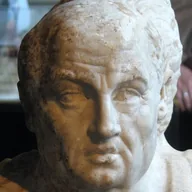
Seneca, Moral Letters to Lucilius 7.3–5Translated by Richard M. Gummere (1917)Read the full passage (opens en.wikisource.org)

When, and whose words

Date
c. 62–65 CE. The Letters to Lucilius were written in the last years of Seneca’s life, c. 62–65 CE; this letter does not date itself.
Whose words
His own words, in a letter to Lucilius.
How this post was checked
  • The plain-words line was read against the quote alone by a second, independent pass, which found it adds no claim the quote does not make (2026-10-03).
  • Each claim in the summary was checked by an independent pass against only the material it cites.
  • The quote itself is checked by the build: word for word, once, at the cited section of the stored translation.

See it among its momentsMore from SenecaSee it in the feed