hstry

Seneca on why travel does not cure gloom

c. 62–65 CE. His own words, in a letter to Lucilius.

Where and when

c. 62–65 CERome and its world

about 1,963 years ago

Explore
Seneca, c. 4 BCE – 65 CE3000 BCE2900 BCE2800 BCE2700 BCE2600 BCE2500 BCE2400 BCE2300 BCE2200 BCE2100 BCE2000 BCE1900 BCE1800 BCE1700 BCE1600 BCE1500 BCE1400 BCE1300 BCE1200 BCE1100 BCE1000 BCE900 BCE800 BCE700 BCE600 BCE500 BCE400 BCE300 BCE200 BCE100 BCE1 CE100 CE200 CE300 CE400 CE500 CE600 CE700 CE800 CE900 CE1000 CE1100 CE1200 CE1300 CE1400 CE1500 CE1600 CE1700 CE1800 CE1900 CE2000 CEGreat Pyramid of Giza built, c. 2600 BCERome founded (traditional date), 753 BCELast western Roman emperor deposed, 476 CEGutenberg's printing press, c. 1440 CEColumbus reaches the Americas, 1492 CEFirst people on the Moon, 1969 CEToday, 2026sometime in these 3 years

Swipe the line. Bars: entries. Dots: events.

Seneca

His own words, in a letter to Lucilius

In plain words, ours

Surprised that all that travel and new scenery did not lift your gloom? You need to change what is inside you, not where you are.

Are you surprised, as if it were a novelty, that after such long travel and so many changes of scene you have not been able to shake off the gloom and heaviness of your mind? You need a change of soul rather than a change of climate.

Seneca, Moral Letters to Lucilius 28.1Translated by Richard M. Gummere (1917)Read the full passage (Seneca, Moral Letters to Lucilius 28.1, opens en.wikisource.org)

What was going on, our summary

In a letter to Lucilius, Seneca answers a complaint that a long journey did not help. He backs his point with lines from Vergil and a remark Socrates made to a man with the same complaint.

Checked claim by claim against: the passage around the quote.

Related moments

In time order, with this one in its place. Each says why it is here.

  1. 44 BCE, written laterabout 106 years earlier Cicero on what we owe our country Also about how to live well
  2. c. 60–61 CEabout 3 years earlier Boudica leads a British revolt against Rome Same years
  3. c. 62–65 CEThis momentSeneca on why travel does not cure gloom
  4. c. 62–65 CEDuring it Seneca on the harm of crowds More from Seneca
  5. c. 62–65 CEDuring it Seneca on dying daily More from Seneca
  6. c. 62–65 CEDuring it Seneca on time, the only thing we own More from Seneca
  7. 64 CE1 year later The Great Fire burns much of Rome Same years
  8. by 64 CE1 year later Nero on fire devouring the world, in Suetonius Same years
  9. 65 CEabout 2 years later Nero orders his old tutor Seneca to die Same years
  10. 66 CEabout 3 years later Judaea rises against Rome Same years
  11. c. 108 CEabout 45 years later Epictetus on facing death without lament Also about how to live well

Just before and after

The text around the quote, word for word from the same translation.

Show the passageHide the passage

This same Satellius began to advise Sabinus to take wrestling lessons,—sickly, pale, and thin as he was, Sabinus answered: “How can I? I can scarcely stay alive now.” “Don’t say that, I implore you,” replied the other, “consider how many perfectly healthy slaves you have!” No man is able to borrow or buy a sound mind; in fact, as it seems to me, even though sound minds were for sale, they would not find buyers. Depraved minds, however, are bought and sold every day. But let me pay off my debt and say farewell: “Real wealth is poverty adjusted to the law of Nature.” Epicurus has this saying in various ways and contexts; but it can never be repeated too often, since it can never be learned too well. For some persons the remedy should be merely prescribed; in the case of others, it should be forced down their throats. Farewell. Do you suppose that you alone have had this experience?

The quote: Are you surprised, as if it were a novelty, that after such long travel and so many changes of scene you have not been able to shake off the gloom and heaviness of your mind? You need a change of soul rather than a change of climate.

Though you may cross vast spaces of sea, and though, as our Vergil remarks, Lands and cities are left astern, your faults will follow you whithersoever you travel. Socrates made the same remark to one who complained; he said: “Why do you wonder that globe-trotting does not help you, seeing that you always take yourself with you? The reason which set you wandering is ever at your heels.” What pleasure is there in seeing new lands? Or in surveying cities and spots of interest? All your bustle is useless. Do you ask why such flight does not help you? It is because you flee along with yourself.

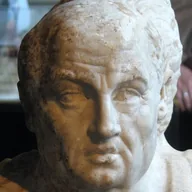
Seneca, Moral Letters to Lucilius 27.8–28.2Translated by Richard M. Gummere (1917)Read the full passage (opens en.wikisource.org)

When, and whose words

Date
c. 62–65 CE. The Letters to Lucilius were written in the last years of Seneca’s life, c. 62–65 CE; this letter does not date itself.
Whose words
His own words, in a letter to Lucilius.
How this post was checked
  • The plain-words line was read against the quote alone by a second, independent pass, which found it adds no claim the quote does not make (2026-10-03).
  • Each claim in the summary was checked by an independent pass against only the material it cites.
  • The quote itself is checked by the build: word for word, once, at the cited section of the stored translation.

See it among its momentsMore from SenecaSee it in the feed