hstry

Josephus on giving himself up to the Romans

set in 67 CE, Judaea. His own account of himself, written in the third person.

Where and when

set in 67 CEJudaea

1,959 years ago

Explore
Josephus, c. 37 – c. 100 CE3000 BCE2900 BCE2800 BCE2700 BCE2600 BCE2500 BCE2400 BCE2300 BCE2200 BCE2100 BCE2000 BCE1900 BCE1800 BCE1700 BCE1600 BCE1500 BCE1400 BCE1300 BCE1200 BCE1100 BCE1000 BCE900 BCE800 BCE700 BCE600 BCE500 BCE400 BCE300 BCE200 BCE100 BCE1 CE100 CE200 CE300 CE400 CE500 CE600 CE700 CE800 CE900 CE1000 CE1100 CE1200 CE1300 CE1400 CE1500 CE1600 CE1700 CE1800 CE1900 CE2000 CEGreat Pyramid of Giza built, c. 2600 BCERome founded (traditional date), 753 BCELast western Roman emperor deposed, 476 CEGutenberg's printing press, c. 1440 CEColumbus reaches the Americas, 1492 CEFirst people on the Moon, 1969 CEToday, 2026

Swipe the line. Bars: entries. Dots: events.

Josephus

, JudaeaHis own account of himself, written in the third person

In plain words, ours

God, since you have brought my people low and handed their luck to Rome, and chose me to tell the future, I surrender and will live. I go as your servant, not a deserter.

Since it pleaseth thee, who hast created the Jewish nation, to depress the same, and since all their good fortune is gone over to the Romans, and since thou hast made choice of this soul of mine to foretell what is to come to pass hereafter, I willingly give them my hands, and am content to live. And I protest openly that I do not go over to the Romans as a deserter of the Jews, but as a minister from thee.

Josephus, The Jewish War 3.350Translated by William Whiston (1737)Read the full passage (Josephus, The Jewish War 3.350, opens scaife.perseus.org)

What was going on, our summary

Judaea, 67 CE, during the revolt against Rome. Nicanor is urging Josephus to come out to the Romans. Writing of himself, Josephus says he recalled dreams in which God showed him what would happen to the Jews and to Rome's emperors, and prayed in secret.

Checked claim by claim against: Judaea rises against Rome, the passage around the quote.

Why it matters

About the event it belongs to: Judaea rises against Rome

The first of three major Jewish rebellions against Rome, the revolt ended with Jerusalem and the Temple destroyed, mass displacement and the end of the Jewish polity.

Based on Wikipedia: First Jewish–Roman War

was the first of three major Jewish rebellions against the Roman Empire.

it resulted in the destruction of Jerusalem and the Jewish Temple, mass displacement, land appropriation, and the dissolution of the Jewish polity.

Wikipedia, First Jewish–Roman War (opens en.wikipedia.org), as of 2026-09-09. Text CC BY-SA 4.0. Our line is checked against these sentences only.

Related moments

In time order, with this one in its place. Each says why it is here.

  1. c. 360–348 BCEabout 420 years earlier The Athenian Stranger on puppets of the gods Also about the gods
  2. 64 CE3 years earlier The Great Fire burns much of Rome Same years
  3. 65 CE2 years earlier Nero orders his old tutor Seneca to die Same years
  4. 66 CE1 year earlier Judaea rises against Rome The event behind itAlso in Judaea
  5. set in 67 CEThis momentJosephus on giving himself up to the Romans
  6. set in 67 CESame year Josephus on being left to the last More from Josephus
  7. set in 67 CESame year Josephus on Titus pitying him More from Josephus
  8. set in 67 CESame year Josephus hails Vespasian as Caesar More from Josephus
  9. 68 CE1 year later Nero kills himself as the Senate declares him an enemy Same years
  10. 69 CE2 years later Four emperors in one year Same years
  11. c. 108 CEabout 41 years later Epictetus on singing hymns to God Also about the gods

Just before and after

The text around the quote, word for word from the same translation.

Show the passageHide the passage

And now, as Nicanor lay hard at Josephus to comply, and he understood how the multitude of the enemies threatened him, he called to mind the dreams which he had dreamed in the night time, whereby God had signified to him beforehand both the future calamities of the Jews, and the events that concerned the Roman emperors. Now Josephus was able to give shrewd conjectures about the interpretation of such dreams as have been ambiguously delivered by God. Moreover, he was not unacquainted with the prophecies contained in the sacred books, as being a priest himself, and of the posterity of priests: and just then was he in an ecstasy; and setting before him the tremendous images of the dreams he had lately had, he put up a secret prayer to God, and said,

The quote: Since it pleaseth thee, who hast created the Jewish nation, to depress the same, and since all their good fortune is gone over to the Romans, and since thou hast made choice of this soul of mine to foretell what is to come to pass hereafter, I willingly give them my hands, and am content to live. And I protest openly that I do not go over to the Romans as a deserter of the Jews, but as a minister from thee.

When he had said this, he complied with Nicanor's invitation. But when those Jews who had fled with him understood that he yielded to those that invited him to come up, they came about him in a body, and cried out, Nay, indeed, now may the laws of our forefathers, which God ordained himself, well groan to purpose; that God we mean who hath created the souls of the Jews of such a temper, that they despise death. O Josephus! art thou still fond of life? and canst thou bear to see the light in a state of slavery? How soon hast thou forgotten thyself!

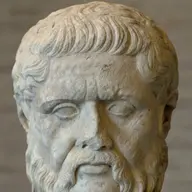
Josephus, The Jewish War 3.350–355Translated by William Whiston (1737)Read the full passage (opens scaife.perseus.org)

When, and whose words

Date
set in 67 CE. Set at the fall of Jotapata in 67 CE; he wrote it in the 70s CE.
Whose words
His own account of himself, written in the third person.
How this post was checked
  • The plain-words line was read against the quote alone by a second, independent pass, which found it adds no claim the quote does not make (2026-10-03).
  • Each claim in the summary was checked by an independent pass against only the material it cites.
  • The quote itself is checked by the build: word for word, once, at the cited section of the stored translation.

See it among its momentsMore from JosephusSee it in the feed