hstry

Seneca on the noise from the baths below

c. 62–65 CE. His own words, in a letter to Lucilius.

Where and when

c. 62–65 CERome and its world

about 1,963 years ago

Explore
Seneca, c. 4 BCE – 65 CE3000 BCE2900 BCE2800 BCE2700 BCE2600 BCE2500 BCE2400 BCE2300 BCE2200 BCE2100 BCE2000 BCE1900 BCE1800 BCE1700 BCE1600 BCE1500 BCE1400 BCE1300 BCE1200 BCE1100 BCE1000 BCE900 BCE800 BCE700 BCE600 BCE500 BCE400 BCE300 BCE200 BCE100 BCE1 CE100 CE200 CE300 CE400 CE500 CE600 CE700 CE800 CE900 CE1000 CE1100 CE1200 CE1300 CE1400 CE1500 CE1600 CE1700 CE1800 CE1900 CE2000 CEGreat Pyramid of Giza built, c. 2600 BCERome founded (traditional date), 753 BCELast western Roman emperor deposed, 476 CEGutenberg's printing press, c. 1440 CEColumbus reaches the Americas, 1492 CEFirst people on the Moon, 1969 CEToday, 2026sometime in these 3 years

Swipe the line. Bars: entries. Dots: events.

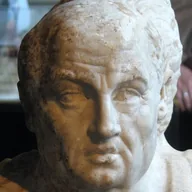
Seneca

His own words, in a letter to Lucilius

In plain words, ours

Nothing matters more than quiet when you shut yourself away to study. Imagine the noise in my ears: I live right above a bathhouse.

Beshrew me if I think anything more requisite than silence for a man who secludes himself in order to study! Imagine what a variety of noises reverberates about my ears! I have lodgings right over a bathing establishment.

Seneca, Moral Letters to Lucilius 56.1Translated by Richard M. Gummere (1917)Read the full passage (Seneca, Moral Letters to Lucilius 56.1, opens en.wikisource.org)

What was going on, our summary

A letter from Seneca to Lucilius, c. 62–65 CE. Seneca is trying to study and describes the racket around him, from men grunting as they lift lead weights to the slap of a hand giving someone a rubdown.

Checked claim by claim against: the passage around the quote.

Why it matters

Letters like this one, On Noise, give valuable insights into daily life in ancient Rome as well as Seneca's Stoic philosophy.

Based on Wikipedia: Epistulae Morales ad Lucilium

Some of the letters include "On Noise" and "Asthma".

Although they deal with Seneca's personal style of Stoic philosophy, they also give valuable insights into daily life in ancient Rome.

Wikipedia, Epistulae Morales ad Lucilium (opens en.wikipedia.org), as of 2026-08-06. Text CC BY-SA 4.0. Our line is checked against these sentences only.

Related moments

In time order, with this one in its place. Each says why it is here.

  1. c. 60–61 CEabout 3 years earlier Boudica leads a British revolt against Rome Same years
  2. c. 62–65 CEThis momentSeneca on the noise from the baths below
  3. c. 62–65 CEDuring it Seneca on the harm of crowds More from Seneca
  4. c. 62–65 CEDuring it Seneca on dying daily More from Seneca
  5. c. 62–65 CEDuring it Seneca on time, the only thing we own More from Seneca
  6. 64 CE1 year later The Great Fire burns much of Rome Same years
  7. by 64 CE1 year later Nero on fire devouring the world, in Suetonius Same years
  8. 65 CEabout 2 years later Nero orders his old tutor Seneca to die Same years
  9. 66 CEabout 3 years later Judaea rises against Rome Same years

Just before and after

The text around the quote, word for word from the same translation.

Show the passageHide the passage

Include among such cases, in the first place, the nights spent apart, then the different engagements which each of two friends has, then the private studies of each and their excursions into the country, and you will see that foreign travel does not rob us of much. A friend should be retained in the spirit; such a friend can never be absent. He can see every day whomsoever he desires to see. I would therefore have you share your studies with me, your meals, and your walks. We should be living within too narrow limits if anything were barred to our thoughts. I see you, my dear Lucilius, and at this very moment I hear you; I am with you to such an extent that I hesitate whether I should not begin to write you notes instead of letters. Farewell.

The quote: Beshrew me if I think anything more requisite than silence for a man who secludes himself in order to study! Imagine what a variety of noises reverberates about my ears! I have lodgings right over a bathing establishment.

So picture to yourself the assortment of sounds, which are strong enough to make me hate my very powers of hearing! When your strenuous gentleman, for example, is exercising himself by flourishing leaden weights; when he is working hard, or else pretends to be working hard, I can hear him grunt; and whenever he releases his imprisoned breath, I can hear him panting in wheezy and high-pitched tones. Or perhaps I notice some lazy fellow, content with a cheap rubdown, and hear the crack of the pummeling hand on his shoulder, varying in sound according as the hand is laid on flat or hollow.

Seneca, Moral Letters to Lucilius 55.10–56.1Translated by Richard M. Gummere (1917)Read the full passage (opens en.wikisource.org)

When, and whose words

Date
c. 62–65 CE. The Letters to Lucilius were written in the last years of Seneca’s life, c. 62–65 CE; this letter does not date itself.
Whose words
His own words, in a letter to Lucilius.
How this post was checked
  • The plain-words line was read against the quote alone by a second, independent pass, which found it adds no claim the quote does not make (2026-10-03).
  • Each claim in the summary was checked by an independent pass against only the material it cites.
  • The quote itself is checked by the build: word for word, once, at the cited section of the stored translation.

See it among its momentsMore from SenecaSee it in the feed