hstry

Seneca on slaves as fellow men

c. 62–65 CE. His own words, in a letter to Lucilius.

Where and when

c. 62–65 CERome and its world

about 1,963 years ago

Explore
Seneca, c. 4 BCE – 65 CE3000 BCE2900 BCE2800 BCE2700 BCE2600 BCE2500 BCE2400 BCE2300 BCE2200 BCE2100 BCE2000 BCE1900 BCE1800 BCE1700 BCE1600 BCE1500 BCE1400 BCE1300 BCE1200 BCE1100 BCE1000 BCE900 BCE800 BCE700 BCE600 BCE500 BCE400 BCE300 BCE200 BCE100 BCE1 CE100 CE200 CE300 CE400 CE500 CE600 CE700 CE800 CE900 CE1000 CE1100 CE1200 CE1300 CE1400 CE1500 CE1600 CE1700 CE1800 CE1900 CE2000 CEGreat Pyramid of Giza built, c. 2600 BCERome founded (traditional date), 753 BCELast western Roman emperor deposed, 476 CEGutenberg's printing press, c. 1440 CEColumbus reaches the Americas, 1492 CEFirst people on the Moon, 1969 CEToday, 2026sometime in these 3 years

Swipe the line. Bars: entries. Dots: events.

Seneca

His own words, in a letter to Lucilius

In plain words, ours

People say: they are slaves. No, they are human beings, companions, humble friends. Even fellow slaves, since luck rules the free and the enslaved alike.

“They are slaves,” people declare. Nay, rather they are men. “Slaves!” No, comrades. “Slaves!” No, they are unpretentious friends. “Slaves!” No, they are our fellow-slaves, if one reflects that Fortune has equal rights over slaves and free men alike.

Seneca, Moral Letters to Lucilius 47.1Translated by Richard M. Gummere (1917)Read the full passage (Seneca, Moral Letters to Lucilius 47.1, opens en.wikisource.org)

What was going on, our summary

A letter from Seneca to Lucilius, c. 62–65 CE. Seneca has heard that Lucilius lives on friendly terms with his slaves and praises him for it, then turns on masters who think it degrading to dine with a slave.

Checked claim by claim against: the passage around the quote.

Related moments

In time order, with this one in its place. Each says why it is here.

  1. 44 BCE, written laterabout 106 years earlier Cicero on what we owe our country Also about how to live well
  2. c. 60–61 CEabout 3 years earlier Boudica leads a British revolt against Rome Same years
  3. c. 62–65 CEThis momentSeneca on slaves as fellow men
  4. c. 62–65 CEDuring it Seneca on the harm of crowds More from Seneca
  5. c. 62–65 CEDuring it Seneca on dying daily More from Seneca
  6. c. 62–65 CEDuring it Seneca on time, the only thing we own More from Seneca
  7. c. 62–65 CEDuring it Seneca on how to treat slaves Same passage
  8. 64 CE1 year later The Great Fire burns much of Rome Same years
  9. by 64 CE1 year later Nero on fire devouring the world, in Suetonius Same years
  10. 65 CEabout 2 years later Nero orders his old tutor Seneca to die Same years
  11. 66 CEabout 3 years later Judaea rises against Rome Same years
  12. c. 108 CEabout 45 years later Epictetus on facing death without lament Also about how to live well

Just before and after

The text around the quote, word for word from the same translation.

Show the passageHide the passage

Your style is lofty and noble; I want you to keep to this manner and this direction. Your subject also contributed something; for this reason you should choose productive topics, which will lay hold of the mind and arouse it. I shall discuss the book more fully after a second perusal; meantime, my judgment is somewhat unsettled, just as if I had heard it read aloud, and had not read it myself. You must allow me to examine it also. You need not be afraid; you shall hear the truth. Lucky fellow, to offer a man no opportunity to tell you lies at such long range! Unless perhaps, even now, when excuses for lying are taken away, custom serves as an excuse for our telling each other lies! Farewell. I am glad to learn, through those who come from you, that you live on friendly terms with your slaves. This befits a sensible and well-educated man like yourself.

The quote: “They are slaves,” people declare. Nay, rather they are men. “Slaves!” No, comrades. “Slaves!” No, they are unpretentious friends. “Slaves!” No, they are our fellow-slaves, if one reflects that Fortune has equal rights over slaves and free men alike.

That is why I smile at those who think it degrading for a man to dine with his slave. But why should they think it degrading? It is only because purse-proud etiquette surrounds a householder at his dinner with a mob of standing slaves. The master eats more than he can hold, and with monstrous greed loads his belly until it is stretched and at length ceases to do the work of a belly; so that he is at greater pains to discharge all the food than he was to stuff it down. All this time the poor slaves may not move their lips, even to speak.

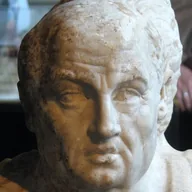
Seneca, Moral Letters to Lucilius 46.2–47.3Translated by Richard M. Gummere (1917)Read the full passage (opens en.wikisource.org)

When, and whose words

Date
c. 62–65 CE. The Letters to Lucilius were written in the last years of Seneca’s life, c. 62–65 CE; this letter does not date itself.
Whose words
His own words, in a letter to Lucilius.
How this post was checked
  • The plain-words line was read against the quote alone by a second, independent pass, which found it adds no claim the quote does not make (2026-10-03).
  • Each claim in the summary was checked by an independent pass against only the material it cites.
  • The quote itself is checked by the build: word for word, once, at the cited section of the stored translation.

See it among its momentsMore from SenecaSee it in the feed