hstry

Seneca on living well, not long

c. 62–65 CE. His own words, in a letter to Lucilius.

Where and when

c. 62–65 CERome and its world

about 1,963 years ago

Explore
Seneca, c. 4 BCE – 65 CE3000 BCE2900 BCE2800 BCE2700 BCE2600 BCE2500 BCE2400 BCE2300 BCE2200 BCE2100 BCE2000 BCE1900 BCE1800 BCE1700 BCE1600 BCE1500 BCE1400 BCE1300 BCE1200 BCE1100 BCE1000 BCE900 BCE800 BCE700 BCE600 BCE500 BCE400 BCE300 BCE200 BCE100 BCE1 CE100 CE200 CE300 CE400 CE500 CE600 CE700 CE800 CE900 CE1000 CE1100 CE1200 CE1300 CE1400 CE1500 CE1600 CE1700 CE1800 CE1900 CE2000 CEGreat Pyramid of Giza built, c. 2600 BCERome founded (traditional date), 753 BCELast western Roman emperor deposed, 476 CEGutenberg's printing press, c. 1440 CEColumbus reaches the Americas, 1492 CEFirst people on the Moon, 1969 CEToday, 2026sometime in these 3 years

Swipe the line. Bars: entries. Dots: events.

Seneca

His own words, in a letter to Lucilius

In plain words, ours

You should not always cling to a life like that. Just being alive is not the good thing; living well is. A wise person lives as long as he should, not as long as he can.

To such a life, as you are aware, one should not always cling. For mere living is not a good, but living well. Accordingly, the wise man will live as long as he ought, not as long as he can.

Seneca, Moral Letters to Lucilius 70.4Translated by Richard M. Gummere (1917)Read the full passage (Seneca, Moral Letters to Lucilius 70.4, opens en.wikisource.org)

What was going on, our summary

In a late letter to Lucilius, Seneca writes about death, comparing life to a voyage that ends in a harbour every ship must reach. In 65 CE, accused of a plot, he was told by Nero to kill himself.

Checked claim by claim against: Nero orders his old tutor Seneca to die, the passage around the quote.

Why it matters

About the event it belongs to: Nero orders his old tutor Seneca to die

Seneca's calm Stoic suicide later became the subject of numerous paintings.

Based on Wikipedia: Seneca the Younger

His stoic and calm suicide has become the subject of numerous paintings.

Wikipedia, Seneca the Younger (opens en.wikipedia.org), as of 2026-09-03. Text CC BY-SA 4.0. Our line is checked against these sentences only.

Related moments

In time order, with this one in its place. Each says why it is here.

  1. 44 BCE, written laterabout 106 years earlier Cicero on what we owe our country Also about how to live well
  2. c. 60–61 CEabout 3 years earlier Boudica leads a British revolt against Rome Same years
  3. c. 62–65 CEThis momentSeneca on living well, not long
  4. c. 62–65 CEDuring it Seneca on the harm of crowds More from Seneca
  5. c. 62–65 CEDuring it Seneca on dying daily More from Seneca
  6. c. 62–65 CEDuring it Seneca on time, the only thing we own More from Seneca
  7. 64 CE1 year later The Great Fire burns much of Rome Same years
  8. by 64 CE1 year later Nero on fire devouring the world, in Suetonius Same years
  9. 65 CEabout 2 years later Nero orders his old tutor Seneca to die The event behind itAlso about death
  10. 66 CEabout 3 years later Judaea rises against Rome Same years
  11. set in 68 CEabout 5 years later Nero's last hours, as Suetonius tells it Also about death
  12. c. 108 CEabout 45 years later Epictetus on facing death without lament Also about how to live well

Just before and after

The text around the quote, word for word from the same translation.

Show the passageHide the passage

Last of all, we begin to sight the general bourne of the race of man. Fools that we are, we believe this bourne to be a dangerous reef; but it is the harbour, where we must some day put in, which we may never refuse to enter; and if a man has reached this harbour in his early years, he has no more right to complain than a sailor who has made a quick voyage. For some sailors, as you know, are tricked and held back by sluggish winds, and grow weary and sick of the slow-moving calm; while others are carried quickly home by steady gales. You may consider that the same thing happens to us: life has carried some men with the greatest rapidity to the harbour, the harbour they were bound to reach even if they tarried on the way, while others it has fretted and harassed.

The quote: To such a life, as you are aware, one should not always cling. For mere living is not a good, but living well. Accordingly, the wise man will live as long as he ought, not as long as he can.

He will mark in what place, with whom, and how he is to conduct his existence, and what he is about to do. He always reflects concerning the quality, and not the quantity, of his life. As soon as there are many events in his life that give him trouble and disturb his peace of mind, he sets himself free. And this privilege is his, not only when the crisis is upon him, but as soon as Fortune seems to be playing him false; then he looks about carefully and sees whether he ought, or ought not, to end his life on that account.

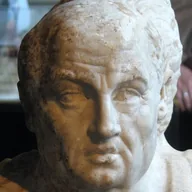
Seneca, Moral Letters to Lucilius 70.2–5Translated by Richard M. Gummere (1917)Read the full passage (opens en.wikisource.org)

When, and whose words

Date
c. 62–65 CE. The Letters to Lucilius were written in the last years of Seneca’s life, c. 62–65 CE; this letter does not date itself.
Whose words
His own words, in a letter to Lucilius.
How this post was checked
  • The plain-words line was read against the quote alone by a second, independent pass, which found it adds no claim the quote does not make (2026-10-03).
  • Each claim in the summary was checked by an independent pass against only the material it cites.
  • The quote itself is checked by the build: word for word, once, at the cited section of the stored translation.

See it among its momentsMore from SenecaSee it in the feed