hstry

Seneca on living each day as a whole life

c. 62–65 CE. His own words, in a letter to Lucilius.

Where and when

c. 62–65 CERome and its world

about 1,963 years ago

Explore
Seneca, c. 4 BCE – 65 CE3000 BCE2900 BCE2800 BCE2700 BCE2600 BCE2500 BCE2400 BCE2300 BCE2200 BCE2100 BCE2000 BCE1900 BCE1800 BCE1700 BCE1600 BCE1500 BCE1400 BCE1300 BCE1200 BCE1100 BCE1000 BCE900 BCE800 BCE700 BCE600 BCE500 BCE400 BCE300 BCE200 BCE100 BCE1 CE100 CE200 CE300 CE400 CE500 CE600 CE700 CE800 CE900 CE1000 CE1100 CE1200 CE1300 CE1400 CE1500 CE1600 CE1700 CE1800 CE1900 CE2000 CEGreat Pyramid of Giza built, c. 2600 BCERome founded (traditional date), 753 BCELast western Roman emperor deposed, 476 CEGutenberg's printing press, c. 1440 CEColumbus reaches the Americas, 1492 CEFirst people on the Moon, 1969 CEToday, 2026sometime in these 3 years

Swipe the line. Bars: entries. Dots: events.

Seneca

His own words, in a letter to Lucilius

In plain words, ours

I try to live each day as if it were a whole life. I do not grab at it as if it were my last, but I keep in mind that it might be.

I am endeavouring to live every day as if it were a complete life. I do not indeed snatch it up as if it were my last; I do regard it, however, as if it might even be my last.

Seneca, Moral Letters to Lucilius 61.1Translated by Richard M. Gummere (1917)Read the full passage (Seneca, Moral Letters to Lucilius 61.1, opens en.wikisource.org)

What was going on, our summary

Seneca writes to Lucilius around 62–65 CE, calling himself old. He says he has stopped wanting what he wanted as a boy, and writes this letter as if death might call him away while he writes. In 65 CE Nero ordered him to kill himself.

Checked claim by claim against: Nero orders his old tutor Seneca to die, the passage around the quote.

Why it matters

About the event it belongs to: Nero orders his old tutor Seneca to die

Seneca's calm Stoic suicide later became the subject of numerous paintings.

Based on Wikipedia: Seneca the Younger

His stoic and calm suicide has become the subject of numerous paintings.

Wikipedia, Seneca the Younger (opens en.wikipedia.org), as of 2026-09-03. Text CC BY-SA 4.0. Our line is checked against these sentences only.

Related moments

In time order, with this one in its place. Each says why it is here.

  1. 44 BCE, written laterabout 106 years earlier Cicero on what we owe our country Also about how to live well
  2. c. 60–61 CEabout 3 years earlier Boudica leads a British revolt against Rome Same years
  3. c. 62–65 CEThis momentSeneca on living each day as a whole life
  4. c. 62–65 CEDuring it Seneca on the harm of crowds More from Seneca
  5. c. 62–65 CEDuring it Seneca on dying daily More from Seneca
  6. c. 62–65 CEDuring it Seneca on time, the only thing we own More from Seneca
  7. 64 CE1 year later The Great Fire burns much of Rome Same years
  8. by 64 CE1 year later Nero on fire devouring the world, in Suetonius Same years
  9. 65 CEabout 2 years later Nero orders his old tutor Seneca to die The event behind it
  10. 66 CEabout 3 years later Judaea rises against Rome Same years
  11. c. 108 CEabout 45 years later Epictetus on facing death without lament Also about how to live well

Just before and after

The text around the quote, word for word from the same translation.

Show the passageHide the passage

Therefore those who, as Sallust puts it, “hearken to their bellies,” should be numbered among the animals, and not among men; and certain men, indeed, should be numbered, not even among the animals, but among the dead. He really lives who is made use of by many; he really lives who makes use of himself. Those men, however, who creep into a hole and grow torpid are no better off in their homes than if they were in their tombs. Right there on the marble lintel of the house of such a man you may inscribe his name, for he has died before he is dead. Farewell. Let us cease to desire that which we have been desiring. I, at least, am doing this: in my old age I have ceased to desire what I desired when a boy. To this single end my days and my nights are passed; this is my task, this the object of my thoughts,—to put an end to my chronic ills.

The quote: I am endeavouring to live every day as if it were a complete life. I do not indeed snatch it up as if it were my last; I do regard it, however, as if it might even be my last.

The present letter is written to you with this in mind,—as if death were about to call me away in the very act of writing. I am ready to depart, and I shall enjoy life just because I am not over-anxious as to the future date of my departure. Before I became old I tried to live well; now that I am old, I shall try to die well; but dying well means dying gladly. See to it that you never do anything unwillingly. That which is bound to be a necessity if you rebel, is not a necessity if you desire it.

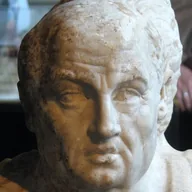
Seneca, Moral Letters to Lucilius 60.4–61.3Translated by Richard M. Gummere (1917)Read the full passage (opens en.wikisource.org)

When, and whose words

Date
c. 62–65 CE. The Letters to Lucilius were written in the last years of Seneca’s life, c. 62–65 CE; this letter does not date itself.
Whose words
His own words, in a letter to Lucilius.
How this post was checked
  • The plain-words line was read against the quote alone by a second, independent pass, which found it adds no claim the quote does not make (2026-10-03).
  • Each claim in the summary was checked by an independent pass against only the material it cites.
  • The quote itself is checked by the build: word for word, once, at the cited section of the stored translation.

See it among its momentsMore from SenecaSee it in the feed