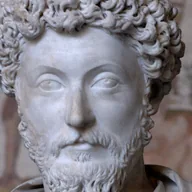
What was going on: Around 98 CE Tacitus sets out to record the life of a man who has died. He recalls the years just past: men killed for praising others, their books burned in the forum, philosophers banished. Now, he says, under Nerva and Trajan, spirit is returning.
Why it matters: The Agricola was Tacitus' first work, published after Domitian was assassinated in AD 96. The scholar Liebeschuetz observes that in it Tacitus addresses the loss of freedom of speech that comes with living under a tyrant.
An earlier age saw total freedom; we saw total slavery, with informers stopping all talk. We would have lost memory too, if forgetting were as easy as silence.
Certainly we showed a magnificent example of patience; as a former age had witnessed the extreme of liberty, so we witnessed the extreme of servitude, when the informer robbed us of the interchange of speech and hearing. We should have lost memory as well as voice, had it been as easy to forget as to keep silence.
His own words. Tacitus, Agricola 2, translated by A. J. Church and W. J. Brodribb (1877)T
What was going on: Tacitus wrote this about 98 CE, remembering Agricola. He says Agricola died before the worst years under Domitian, when the Senate was hemmed in by armed men and noble women were exiled.
Even Nero looked away from the horrors he ordered. Under Domitian the worst part was being watched, knowing even our sighs were written down.
Even Nero turned his eyes away, and did not gaze upon the atrocities which he ordered; with Domitian it was the chief part of our miseries to see and to be seen, to know that our sighs were being recorded
His own words. Tacitus, Agricola 45, translated by A. J. Church and W. J. Brodribb (1877)E
What was going on: A talk by Epictetus at Nicopolis, around 108 CE, as Arrian took it down. Epictetus has been asking why Socrates was dragged to prison and given hemlock by the Athenians, and whether that should make anyone blame God.
Who should we listen to, you or Socrates? He said his accusers could kill him but could not hurt him. And: if God wants it this way, so be it.
Whom shall we listen to, you or him? And what does Socrates say? Anytus and Melitus can kill me, but they cannot hurt me: and further, he says, If it so pleases God, so let it be.
As Arrian recorded it. Epictetus, Discourses 1.29, translated by George Long (1877)
What was going on: Epictetus in Nicopolis, as Arrian took his talks down. He has just told how Lateranus, ordered beheaded by Nero, stretched out his neck again after a feeble first blow.
I have to die, be chained, be sent away. Do I have to moan about it too? Can anyone stop me going with a smile?
I must die. Must I then die lamenting? I must be put in chains. Must I then also lament? I must go into exile. Does any man then hinder me from going with smiles and cheerfulness and contentment?
As Arrian recorded it. Epictetus, Discourses 1.1, translated by George Long (1877)E
What was going on: Epictetus teaching at Nicopolis around 108 CE, as Arrian recorded it. He has just told how Lateranus, ordered beheaded by Nero, stretched out his neck again after a weak first blow, and asks what a person should have ready when facing death, chains or exile.
Why it matters: The Discourses, the record of the talks this comes from, hold that nothing outside us, not even Zeus, can overcome our choice, and they have been influential since they were written.
You will chain me? You can chain my leg. My will, not even Zeus can overpower.
But I will put you in chains. Man, what are you talking about? Me in chains? You may fetter my leg, but my will not even Zeus himself can overpower.
As Arrian recorded it. Epictetus, Discourses 1.1, translated by George Long (1877)
What was going on: Epictetus is speaking at Nicopolis, and Arrian recorded his words. He has been telling his listeners that people should praise God for hands, food, breath and the power to understand.
What else can a lame old man do but sing to God? If I were a nightingale, I would sing like one. But I am a thinking being, so praising God is my job.
For what else can I do, a lame old man, than sing hymns to God? If then I was a nightingale, I would do the part of a nightingale. if I were a swan, I would do like a swan. But now I am a rational creature, and I ought to praise God: this is my work
As Arrian recorded it. Epictetus, Discourses 1.16, translated by George Long (1877)E
What was going on: A talk by Epictetus in Nicopolis, around 108 CE, taken down by Arrian. He tells his hearers to drop the idea that they already know something useful, and to come to philosophy the way they would learn geometry or music.
Every habit grows by doing it: walking by walking, running by running. Want to be a good reader? Read. A writer? Write.
EVERY habit and faculty is maintained and increased by the corresponding actions: the habit of walking by walking, the habit of running by running. If you would be a good reader, read; if a writer, write.
As Arrian recorded it. Epictetus, Discourses 2.18, translated by George Long (1877)E
What was going on: From Epictetus' talks at Nicopolis, as Arrian wrote them down. Just before, he says you are no Hercules able to purge away the wickedness of others: clear away your own sadness, fear, envy and greed.
The first job of anyone doing philosophy is to drop the belief that they already know. You cannot start learning what you think you know.
WHAT is the first business of him who philosophizes? To throw away self-conceit (οἴησις). For it is impossible for a man to begin to learn that which he thinks that he knows.
As Arrian recorded it. Epictetus, Discourses 2.17, translated by George Long (1877)
, Asia Minor
The empire is at its largest when Trajan dies
Trajan conquers Dacia and pushes into Mesopotamia. When he dies, the Roman Empire covers more land than it ever will again.
What was going on: Tacitus begins his history, written around 115–120 CE, with a quick run through Rome's past, from its first kings to Augustus, who took power when the world was worn out by civil strife. Next he says what he means to write and how.
Why it matters: Tacitus' statement of how he means to write history is well known. It comes at the start of the Annals, which modern historians generally consider his magnum opus.
The histories of the emperors from Tiberius to Nero were faked out of fear while they lived, and written in fresh hatred after. I will tell it without anger or favour.
The histories of Tiberius, Caius, Claudius, and Nero, while they were in power, were falsified through terror, and after their death were written under the irritation of a recent hatred. Hence my purpose is to relate a few facts about Augustus—more particularly his last acts, then the reign of Tiberius, and all which follows, without either bitterness or partiality, from any motives to which I am far removed.
His own words. Tacitus, Annals 1.1, translated by A. J. Church and W. J. Brodribb (1876)
, Britain
Hadrian's Wall is begun across northern Britain
The emperor Hadrian has a stone wall built coast to coast across Britain, marking where Roman rule stops.
What was going on: The opening line of Arrian's short digest of Epictetus' teaching at Nicopolis. It dates from no later than about 135 CE. The next line goes on to say that the things in our power are free by nature.
Why it matters: The Handbook opens with this statement, announcing that the real self is concerned with matters under its own control, untouched by outside chance or change.
Some things are up to us and some are not. Our opinions, urges, wants and dislikes are. Our body, property, reputation and position are not.
OF things some are in our power, and others are not. In our power are opinion (ὑπόληψις), movement towards a thing (ὁρμή), desire, aversion (ἔκκλισις, turning from a thing); and in a word, whatever are our own acts: not in our power are the body, property, reputation, offices (magisterial power), and in a word, whatever are not our own acts.
As Arrian recorded it, in his digest of the teaching. Epictetus, Handbook (Enchiridion) 1, translated by George Long (1877)E
What was going on: From Arrian's short digest of what Epictetus taught at Nicopolis. Just before this, Epictetus advises picturing what a trip to the baths will really be like, splashing, shoving and stealing, so that none of it upsets you.
What upsets people is not what happens but what they think about it. Death is not terrible, or Socrates would have found it so. Thinking it terrible is the terrible part.
Men are disturbed not by the things which happen, but by the opinions about the things: for example, death is nothing terrible, for if it were, it would have seemed so to Socrates; for the opinion about death, that it is terrible, is the terrible thing.
As Arrian recorded it, in his digest of the teaching. Epictetus, Handbook (Enchiridion) 5, translated by George Long (1877)E
What was going on: From Arrian's short digest of Epictetus' teaching at Nicopolis. Just before this, Epictetus compares life to a sea voyage: enjoy what you pick up on shore, but be ready to leave it all when the captain calls.
Do not ask for things to happen the way you want. Want them to happen the way they do, and your life will flow calmly.
Seek not that the things which happen should happen as you wish; but wish the things which happen to be as they are, and you will have a tranquil flow of life.
As Arrian recorded it, in his digest of the teaching. Epictetus, Handbook (Enchiridion) 8, translated by George Long (1877)E
What was going on: From Arrian's digest of Epictetus' teaching at Nicopolis. Just before this, Epictetus advises on people who treat you badly: they do what seems right to them, so say to yourself, it seemed so to him.
Everything has a handle you can carry it by and one you cannot. If your brother wrongs you, do not grab the wrong. Grab the fact that he is your brother, raised with you.
Every thing has two handles, the one by which it may be borne, the other by which it may not. If your brother acts unjustly, do not lay hold of the act by that handle wherein he acts unjustly, for this is the handle which cannot be borne: but lay hold of the other, that he is your brother, that he was nurtured with you, and you will lay hold of the thing by that handle by which it can be borne.
As Arrian recorded it, in his digest of the teaching. Epictetus, Handbook (Enchiridion) 43, translated by George Long (1877)
, the Roman Empire
A plague spreads through the empire
Troops returning from the east bring a disease, probably smallpox, that kills millions. Wikipedia cites a line of Marcus' Meditations as an echo of it.
For the destruction of the understanding is a pestilence, much more, indeed, than any such corruption and change of this atmosphere which surrounds us.
What was going on: Marcus Aurelius, keeping a private notebook while at war on the Danube frontier around 170–180 CE, lists what he learned from each of his teachers. Here it is Rusticus, who taught him to write plain letters and to forgive easily.
Why it matters: Rusticus, the teacher Marcus thanks here, would have the strongest influence on him; Fronto saw him as the man who drew Marcus away from oratory.
“He” here is Rusticus.
He taught me to read carefully, not skim, and not to agree too fast with people who talk a lot. And he gave me the discourses of Epictetus from his own collection.
…and to read carefully, and not to be satisfied with a superficial understanding of a book; nor hastily to give my assent to those who talk overmuch; and I am indebted to him for being acquainted with the discourses of Epictetus, which he communicated to me out of his own collection.
His own words, in the Meditations, notes written for himself. Marcus Aurelius, Meditations 1.7, translated by George Long (1862)
What was going on: From the Meditations, the private notebook in Greek that Marcus kept while fighting tribes on the Danube. Here he lists what he learned from people in his life: his grandfather, his father, then his mother.
Why it matters: The Meditations became one of the most important sources for the modern understanding of ancient Stoic philosophy, and many commentators count it among the greatest works of philosophy.
From my mother: devotion and kindness, keeping away from bad deeds and even bad thoughts, and living simply, far from the ways of the rich.
From my mother, piety and beneficence, and abstinence, not only from evil deeds, but even from evil thoughts; and further, simplicity in my way of living, far removed from the habits of the rich.
His own words, in the Meditations, notes written for himself. Marcus Aurelius, Meditations 1.3, translated by George Long (1862)
What was going on: This opens Book 2 of the Meditations, the private notebook Marcus Aurelius kept in Greek while at war on the Danube, c. 170–180 CE. Some books of the notebook end with where he was, such as Carnuntum.
Why it matters: The Meditations became one of the most important sources for the modern understanding of ancient Stoic philosophy, and many commentators count it among the greatest works of philosophy.
Start each morning telling yourself: today I will meet nosy, ungrateful, arrogant, lying, jealous, unfriendly people. They are like that because they do not know good from bad.
Begin the morning by saying to thyself, I shall meet with the busybody, the ungrateful, arrogant, deceitful, envious, unsocial. All these things happen to them by reason of their ignorance of what is good and evil.
His own words, in the Meditations, notes written for himself. Marcus Aurelius, Meditations 2.1, translated by George Long (1862)
What was going on: Marcus Aurelius wrote this in his private notebook at Carnuntum, at the front while fighting the tribes along the Danube. He starts the day bracing himself to meet rude, ungrateful and envious people.
Why it matters: The Meditations became one of the most important sources for the modern understanding of ancient Stoic philosophy, and many commentators count it among the greatest works of philosophy.
We are made to work together, like feet, hands, eyelids, upper and lower teeth. Working against each other goes against nature, and getting annoyed and turning away counts.
For we are made for co-operation, like feet, like hands, like eyelids, like the rows of the upper and lower teeth. To act against one another, then, is contrary to nature; and it is acting against one another to be vexed and to turn away.
His own words, in the Meditations, notes written for himself. Marcus Aurelius, Meditations 2.1, translated by George Long (1862)
What was going on: Marcus Aurelius wrote this in his private notebook at Carnuntum, while fighting the tribes along the Danube around 170–180 CE. Just before, he tells himself to tend the spirit within him and not pry into what others think.
Why it matters: The Meditations became one of the most important sources for the modern understanding of ancient Stoic philosophy, and many commentators count it among the greatest works of philosophy.
Even if you lived thousands of years, you only ever lose the life you are living now. So the longest and the shortest life come to the same.
Though thou shouldest be going to live three thousand years and as many times ten thousand years, still remember that no man loses any other life than this which he now lives, nor lives any other than this which he now loses. The longest and shortest are thus brought to the same.
His own words, in the Meditations, notes written for himself. Marcus Aurelius, Meditations 2.14, translated by George Long (1862)
What was going on:Carnuntum, about 170–180 CE. Marcus is at war along the Danube and writing notes to himself. Just before this, he lists the ways the soul does violence to itself.
Why it matters: The Meditations became one of the most important sources for the modern understanding of ancient Stoic philosophy, and many commentators count it among the greatest works of philosophy.
A human life is a dot in time. Everything in it keeps changing, our senses are dull, the body rots, the mind spins, luck is hard to read and fame is thoughtless.
Of human life the time is a point, and the substance is in a flux, and the perception dull, and the composition of the whole body subject to putrefaction, and the soul a whirl, and fortune hard to divine, and fame a thing devoid of judgment.
His own words, in the Meditations, notes written for himself. Marcus Aurelius, Meditations 2.17, translated by George Long (1862)
What was going on: From the Meditations, the notebook Marcus Aurelius kept for himself around 170-180 CE, much of it on campaign along the Danube. Around this line he tells himself to see the universe as one living being, where all things change and every cause works with every other.
Why it matters: The Meditations became one of the most important sources for the modern understanding of ancient Stoic philosophy, and many commentators count it among the greatest works of philosophy.
Time is a river of events, a rushing one. As soon as something shows up it is swept away, the next thing takes its place, and that goes too.
Time is like a river made up of the events which happen, and a violent stream; for as soon as a thing has been seen, it is carried away, and another comes in its place, and this will be carried away too.
His own words, in the Meditations, notes written for himself. Marcus Aurelius, Meditations 4.43, translated by George Long (1862)
What was going on: From the private notebook the emperor Marcus Aurelius kept while fighting tribes along the Danube. Here he reminds himself that he will soon be gone, like one grain of incense falling on an altar after another.
Why it matters: The Meditations became one of the most important sources for the modern understanding of ancient Stoic philosophy, and many commentators count it among the greatest works of philosophy.
Do not act as if you will live ten thousand years. Death hangs over you. While you are alive and still can, be good.
Do not act as if thou wert going to live ten thousand years. Death hangs over thee. While thou livest, while it is in thy power, be good.
His own words, in the Meditations, notes written for himself. Marcus Aurelius, Meditations 4.17, translated by George Long (1862)
What was going on: A note Marcus Aurelius wrote to himself around 170–180 CE, in the private notebook he kept in the years he was at war on the Danube. Just before, he tells himself to love his craft, however humble. Next he does the same with the times of Trajan.
Why it matters: The Meditations became one of the most important sources for the modern understanding of ancient Stoic philosophy, and many commentators count it among the greatest works of philosophy.
Think back to Vespasian’s time: people marrying, raising kids, getting sick, fighting, feasting, plotting, grumbling, chasing power. All of that life is gone now.
Consider, for example, the times of Vespasian. Thou wilt see all these things, people marrying, bringing up children, sick, dying, warring, feasting, trafficking, cultivating the ground, flattering, obstinately arrogant, suspecting, plotting, wishing for some to die, grumbling about the present, loving, heaping up treasure, desiring consulship, kingly power. Well, then, that life of these people no longer exists at all.
His own words, in the Meditations, notes written for himself. Marcus Aurelius, Meditations 4.32, translated by George Long (1862)
What was going on: From the private notebook Marcus kept around 170-180 CE, much of it while fighting on the Danube. Just before this, he writes that a life is a tiny gap between two endless stretches of time.
Why it matters: The Meditations became one of the most important sources for the modern understanding of ancient Stoic philosophy, and many commentators count it among the greatest works of philosophy.
When you do not want to get up, think: I am getting up to do a human being’s work, what I exist for. Was I made to lie under the covers keeping warm?
In the morning when thou risest unwillingly, let this thought be present,--I am rising to the work of a human being. Why then am I dissatisfied if I am going to do the things for which I exist and for which I was brought into the world? Or have I been made for this, to lie in the bed-clothes and keep myself warm?
His own words, in the Meditations, notes written for himself. Marcus Aurelius, Meditations 5.1, translated by George Long (1862)
What was going on: From the private notebook in Greek that Marcus Aurelius kept while fighting along the Danube. The lines before this tell him to do his duty whether cold or warm, praised or insulted, and to look within.
Why it matters: The Meditations became one of the most important sources for the modern understanding of ancient Stoic philosophy, and many commentators count it among the greatest works of philosophy.
The best way to get back at someone who wronged you is not to become like them.
The best way of avenging thyself is not to become like [the wrong-doer].
His own words, in the Meditations, notes written for himself. Marcus Aurelius, Meditations 6.6, translated by George Long (1862)
, the Danube frontier
Marcus Aurelius dies on campaign
Marcus dies near the Danube front while still at war. His son Commodus becomes sole emperor.