hstry

Marcus Aurelius on the times of Vespasian

c. 170–180 CE. His own words, in the Meditations, notes written for himself.

Where and when

c. 170–180 CERome and its world

about 1,851 years ago

Explore
Marcus Aurelius, 121 – 180 CE3000 BCE2900 BCE2800 BCE2700 BCE2600 BCE2500 BCE2400 BCE2300 BCE2200 BCE2100 BCE2000 BCE1900 BCE1800 BCE1700 BCE1600 BCE1500 BCE1400 BCE1300 BCE1200 BCE1100 BCE1000 BCE900 BCE800 BCE700 BCE600 BCE500 BCE400 BCE300 BCE200 BCE100 BCE1 CE100 CE200 CE300 CE400 CE500 CE600 CE700 CE800 CE900 CE1000 CE1100 CE1200 CE1300 CE1400 CE1500 CE1600 CE1700 CE1800 CE1900 CE2000 CEGreat Pyramid of Giza built, c. 2600 BCERome founded (traditional date), 753 BCELast western Roman emperor deposed, 476 CEGutenberg's printing press, c. 1440 CEColumbus reaches the Americas, 1492 CEFirst people on the Moon, 1969 CEToday, 2026sometime in these 10 years

Swipe the line. Bars: entries. Dots: events.

Marcus Aurelius

His own words, in the Meditations, notes written for himself

In plain words, ours

Think back to Vespasian’s time: people marrying, raising kids, getting sick, fighting, feasting, plotting, grumbling, chasing power. All of that life is gone now.

Consider, for example, the times of Vespasian. Thou wilt see all these things, people marrying, bringing up children, sick, dying, warring, feasting, trafficking, cultivating the ground, flattering, obstinately arrogant, suspecting, plotting, wishing for some to die, grumbling about the present, loving, heaping up treasure, desiring consulship, kingly power. Well, then, that life of these people no longer exists at all.

Marcus Aurelius, Meditations 4.32Translated by George Long (1862)Read the full passage (Marcus Aurelius, Meditations 4.32, opens gutenberg.org)

What was going on, our summary

A note Marcus Aurelius wrote to himself around 170–180 CE, in the private notebook he kept in the years he was at war on the Danube. Just before, he tells himself to love his craft, however humble. Next he does the same with the times of Trajan.

Checked claim by claim against: Marcus Aurelius writes notes to himself at the front, the passage around the quote.

Why it matters

About the event it belongs to: Marcus Aurelius writes notes to himself at the front

The Meditations became one of the most important sources for the modern understanding of ancient Stoic philosophy, and many commentators count it among the greatest works of philosophy.

Based on Wikipedia: Marcus Aurelius

As a philosopher, his work Meditations is one of the most important sources for the modern understanding of ancient Stoic philosophy.

It has been considered by many commentators to be one of the greatest works of philosophy.

Wikipedia, Marcus Aurelius (opens en.wikipedia.org), as of 2026-09-06. Text CC BY-SA 4.0. Our line is checked against these sentences only.

Related moments

In time order, with this one in its place. Each says why it is here.

  1. 170–180 CEDuring it Marcus Aurelius writes notes to himself at the front The event behind it
  2. c. 170–180 CEThis momentMarcus Aurelius on the times of Vespasian
  3. c. 170–180 CEDuring it Marcus Aurelius on how to begin the morning More from Marcus Aurelius
  4. c. 170–180 CEDuring it Marcus Aurelius on what his mother taught More from Marcus Aurelius
  5. c. 170–180 CEDuring it Marcus Aurelius on what Rusticus taught him More from Marcus Aurelius
  6. c. 170–180 CEDuring it Marcus Aurelius on the river of time Same passage
  7. c. 170–180 CEDuring it Marcus Aurelius on being good while alive Same passage
  8. 180 CEabout 5 years later Marcus Aurelius dies on campaign Same years

Just before and after

The text around the quote, word for word from the same translation.

Show the passageHide the passage

He is an abscess on the universe who withdraws and separates himself from the reason of our common nature through being displeased with the things which happen, for the same nature produces this, and has produced thee too: he is a piece rent asunder from the state, who tears, his own soul from that of reasonable animals, which is one. The one is a philosopher without a tunic, and the other without a book: here is another half naked: Bread I have not, he says, and I abide by reason--and I do not get the means of living out of my learning, + and I abide [by my reason]. Love the art, poor as it may be, which thou hast learned, and be content with it; and pass through the rest of life like one who has intrusted to the gods with his whole soul all that he has, making thyself neither the tyrant nor the slave of any man.

The quote: Consider, for example, the times of Vespasian. Thou wilt see all these things, people marrying, bringing up children, sick, dying, warring, feasting, trafficking, cultivating the ground, flattering, obstinately arrogant, suspecting, plotting, wishing for some to die, grumbling about the present, loving, heaping up treasure, desiring consulship, kingly power. Well, then, that life of these people no longer exists at all.

Again, remove to the times of Trajan. Again, all is the same. Their life too is gone. In like manner view also the other epochs of time and of whole nations, and see how many after great efforts soon fell and were resolved into the elements. But chiefly thou shouldst think of those whom thou hast thyself known distracting themselves about idle things, neglecting to do what was in accordance with their proper constitution, and to hold firmly to this and to be content with it. And herein it is necessary to remember that the attention given to everything has its proper value and proportion.

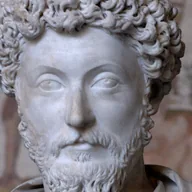
Marcus Aurelius, Meditations 4.29–32Translated by George Long (1862)Read the full passage (opens gutenberg.org)

When, and whose words

Date
c. 170–180 CE. Written late in his life, much of it on campaign; this book does not say where.
Whose words
His own words, in the Meditations, notes written for himself.
How this post was checked
  • The plain-words line was read against the quote alone by a second, independent pass, which found it adds no claim the quote does not make (2026-10-03).
  • Each claim in the summary was checked by an independent pass against only the material it cites.
  • The quote itself is checked by the build: word for word, once, at the cited section of the stored translation.

See it among its momentsMore from Marcus AureliusSee it in the feed