hstry

Marcus Aurelius on the best revenge

c. 170–180 CE. His own words, in the Meditations, notes written for himself.

Where and when

c. 170–180 CERome and its world

about 1,851 years ago

Explore
Marcus Aurelius, 121 – 180 CE3000 BCE2900 BCE2800 BCE2700 BCE2600 BCE2500 BCE2400 BCE2300 BCE2200 BCE2100 BCE2000 BCE1900 BCE1800 BCE1700 BCE1600 BCE1500 BCE1400 BCE1300 BCE1200 BCE1100 BCE1000 BCE900 BCE800 BCE700 BCE600 BCE500 BCE400 BCE300 BCE200 BCE100 BCE1 CE100 CE200 CE300 CE400 CE500 CE600 CE700 CE800 CE900 CE1000 CE1100 CE1200 CE1300 CE1400 CE1500 CE1600 CE1700 CE1800 CE1900 CE2000 CEGreat Pyramid of Giza built, c. 2600 BCERome founded (traditional date), 753 BCELast western Roman emperor deposed, 476 CEGutenberg's printing press, c. 1440 CEColumbus reaches the Americas, 1492 CEFirst people on the Moon, 1969 CEToday, 2026sometime in these 10 years

Swipe the line. Bars: entries. Dots: events.

Marcus Aurelius

His own words, in the Meditations, notes written for himself

In plain words, ours

The best way to get back at someone who wronged you is not to become like them.

The best way of avenging thyself is not to become like [the wrong-doer].

Marcus Aurelius, Meditations 6.6Translated by George Long (1862)Read the full passage (Marcus Aurelius, Meditations 6.6, opens gutenberg.org)

What was going on, our summary

From the private notebook in Greek that Marcus Aurelius kept while fighting along the Danube. The lines before this tell him to do his duty whether cold or warm, praised or insulted, and to look within.

Checked claim by claim against: Marcus Aurelius writes notes to himself at the front, the passage around the quote.

Why it matters

About the event it belongs to: Marcus Aurelius writes notes to himself at the front

The Meditations became one of the most important sources for the modern understanding of ancient Stoic philosophy, and many commentators count it among the greatest works of philosophy.

Based on Wikipedia: Marcus Aurelius

As a philosopher, his work Meditations is one of the most important sources for the modern understanding of ancient Stoic philosophy.

It has been considered by many commentators to be one of the greatest works of philosophy.

Wikipedia, Marcus Aurelius (opens en.wikipedia.org), as of 2026-09-06. Text CC BY-SA 4.0. Our line is checked against these sentences only.

Related moments

In time order, with this one in its place. Each says why it is here.

  1. c. 62–65 CEabout 112 years earlier Seneca on time, the only thing we own Also about how to live well
  2. by c. 135 CEabout 40 years earlier Epictetus on what is in our power Also about how to live well
  3. 170–180 CEDuring it Marcus Aurelius writes notes to himself at the front The event behind it
  4. c. 170–180 CEThis momentMarcus Aurelius on the best revenge
  5. c. 170–180 CEDuring it Marcus Aurelius on how to begin the morning More from Marcus Aurelius
  6. c. 170–180 CEDuring it Marcus Aurelius on what his mother taught More from Marcus Aurelius
  7. c. 170–180 CEDuring it Marcus Aurelius on what Rusticus taught him More from Marcus Aurelius
  8. 180 CEabout 5 years later Marcus Aurelius dies on campaign Same years

Just before and after

The text around the quote, word for word from the same translation.

Show the passageHide the passage

But all things are made and perfected according to this reason. Let it make no difference to thee whether thou art cold or warm, if thou art doing thy duty; and whether thou art drowsy or satisfied with sleep; and whether ill-spoken of or praised; and whether dying or doing something else. For it is one of the acts of life, this act by which we die; it is sufficient then in this act also to do well what we have in hand (vi. 22, 28). Look within. Let neither the peculiar quality of anything nor its value escape thee. All existing things soon change, and they will either be reduced to vapor, if indeed all substance is one, or they will be dispersed. The reason which governs knows what its own disposition is, and what it does, and on what material it works.

The quote: The best way of avenging thyself is not to become like [the wrong-doer].

Take pleasure in one thing and rest in it, in passing from one social act to another social act, thinking of God. The ruling principle is that which rouses and turns itself, and while it makes itself such as it is and such as it wills to be, it also makes everything which happens appear to itself to be such as it wills.

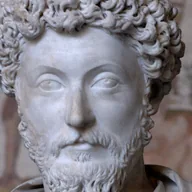
Marcus Aurelius, Meditations 6.1–8Translated by George Long (1862)Read the full passage (opens gutenberg.org)

When, and whose words

Date
c. 170–180 CE. Written late in his life, much of it on campaign; this book does not say where.
Whose words
His own words, in the Meditations, notes written for himself.
How this post was checked
  • The plain-words line was read against the quote alone by a second, independent pass, which found it adds no claim the quote does not make (2026-10-03).
  • Each claim in the summary was checked by an independent pass against only the material it cites.
  • The quote itself is checked by the build: word for word, once, at the cited section of the stored translation.

See it among its momentsMore from Marcus AureliusSee it in the feed