hstry

Diogenes on his exile from Sinope

by 323 BCE. As Diogenes Laertius tells it, centuries later.

Where and when

by 323 BCEAthens and the Greek world

about 2,348 years ago

Explore
Diogenes, c. 412 – 323 BCE3000 BCE2900 BCE2800 BCE2700 BCE2600 BCE2500 BCE2400 BCE2300 BCE2200 BCE2100 BCE2000 BCE1900 BCE1800 BCE1700 BCE1600 BCE1500 BCE1400 BCE1300 BCE1200 BCE1100 BCE1000 BCE900 BCE800 BCE700 BCE600 BCE500 BCE400 BCE300 BCE200 BCE100 BCE1 CE100 CE200 CE300 CE400 CE500 CE600 CE700 CE800 CE900 CE1000 CE1100 CE1200 CE1300 CE1400 CE1500 CE1600 CE1700 CE1800 CE1900 CE2000 CEGreat Pyramid of Giza built, c. 2600 BCERome founded (traditional date), 753 BCELast western Roman emperor deposed, 476 CEGutenberg's printing press, c. 1440 CEColumbus reaches the Americas, 1492 CEFirst people on the Moon, 1969 CEToday, 2026

Swipe the line. Bars: entries. Dots: events.

Diogenes

As Diogenes Laertius tells it, centuries later

In plain words, ours

Mocked for being exiled, he said exile is what made him a philosopher. They banished me? I sentenced them to stay home.

When some one reproached him with his exile, his reply was, Nay, it was through that, you miserable fellow, that I came to be a philosopher. Again, when some one reminded him that the people of Sinope had sentenced him to exile, And I them, said he, to home-staying.

Diogenes Laertius, Lives of Eminent Philosophers 6.49Translated by R. D. Hicks (1925)Read the full passage (Diogenes Laertius, Lives of Eminent Philosophers 6.49, opens scaife.perseus.org)

What was going on, our summary

Diogenes Laertius, writing centuries later, strings together sharp replies by Diogenes the Cynic, who mocked musicians, speakers and athletes, and begged for alms when he was poor.

Checked claim by claim against: the passage around the quote.

Why it matters

His exile marked a turning point for Diogenes, a moment of profound spiritual conversion, and Plutarch too says its hardships made him a philosopher.

Based on Wikipedia: Diogenes

Diogenes's exile marked a turning point and a moment of profound spiritual conversion.

Plutarch notes that the hardships of exile transformed him into a philosopher.

Wikipedia, Diogenes (opens en.wikipedia.org), as of 2026-09-11. Text CC BY-SA 4.0. Our line is checked against these sentences only.

Related moments

In time order, with this one in its place. Each says why it is here.

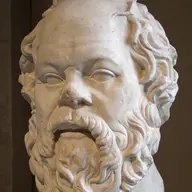
  1. by 399 BCEabout 76 years earlier Socrates on having no wants Also about wealth, poverty and luck
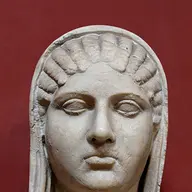
  2. c. 386 BCEabout 63 years earlier Aspasia's speech on wealth and cowardice Also about wealth, poverty and luck
  3. by 348 BCEabout 25 years earlier Diogenes and the plucked chicken Same passage
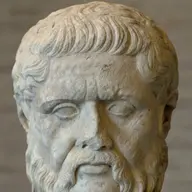
  4. by 348 BCEabout 25 years earlier Plato defines man as a featherless biped Same passage
  5. 323 BCE0.5 years earlier Alexander dies in Babylon Same years
  6. c. 324–321 BCEDuring it Diogenes the Cynic dies in Corinth Same years
  7. by 323 BCEThis momentDiogenes on his exile from Sinope
  8. by 323 BCEBy this year Diogenes throws away his cup More from Diogenes
  9. by 323 BCEBy this year Diogenes searches for a man with a lamp More from Diogenes
  10. by 323 BCEBy this year Diogenes makes a tub his home More from Diogenes
  11. 322 BCE1 year later Aristotle dies at Chalcis Same years

Just before and after

The text around the quote, word for word from the same translation.

Show the passageHide the passage

The musician who was always deserted by his audience he greeted with a Hail chanticleer, and when asked why he so addressed him, replied, Because your song makes every one get up. A young man was delivering a set speech, when Diogenes, having filled the front fold of his dress with lupins, began to eat them, standing right opposite to him. Having thus drawn off the attention of the assemblage, he said he was greatly surprised that they should desert the orator to look at himself. A very superstitious person addressed him thus, With one blow I will break your head. And I, said Diogenes, by a sneeze from the left will make you tremble. Hegesias having asked him to lend him one of his writings, he said, You are a simpleton, Hegesias; you do not choose painted figs, but real ones; and yet you pass over the true training and would apply yourself to written rules.

The quote: When some one reproached him with his exile, his reply was, Nay, it was through that, you miserable fellow, that I came to be a philosopher. Again, when some one reminded him that the people of Sinope had sentenced him to exile, And I them, said he, to home-staying.

Once he saw an Olympic victor tending sheep and thus accosted him: Too quickly, my good friend, have you left Olympia for Nemea. Being asked why athletes are so stupid, his answer was, Because they are built up of pork and beef. He once begged alms of a statue, and, when asked why he did so, replied, To get practice in being refused. In asking alms —as he did at first by reason of his poverty— he used this form: If you have already given to anyone else, give to me also; if not, begin with me.

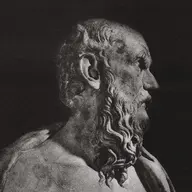
Diogenes Laertius, Lives of Eminent Philosophers 6.48–49Translated by R. D. Hicks (1925)Read the full passage (opens scaife.perseus.org)

When, and whose words

Date
by 323 BCE. Undated; before Diogenes' death (323 BCE, as commonly given). Diogenes Laertius wrote around the 3rd century CE.
Whose words
As Diogenes Laertius tells it, centuries later.
How this post was checked
  • The plain-words line was read against the quote alone by a second, independent pass, which found it adds no claim the quote does not make (2026-10-03).
  • Each claim in the summary was checked by an independent pass against only the material it cites.
  • The quote itself is checked by the build: word for word, once, at the cited section of the stored translation.

See it among its momentsMore from DiogenesSee it in the feed