hstry

Caesar puts the republic's dignity before life

49 BCE, Italy. His own words, giving his own message to Pompeius.

Where and when

49 BCEItaly

2,074 years ago

Explore
Julius Caesar, 100 – 44 BCE3000 BCE2900 BCE2800 BCE2700 BCE2600 BCE2500 BCE2400 BCE2300 BCE2200 BCE2100 BCE2000 BCE1900 BCE1800 BCE1700 BCE1600 BCE1500 BCE1400 BCE1300 BCE1200 BCE1100 BCE1000 BCE900 BCE800 BCE700 BCE600 BCE500 BCE400 BCE300 BCE200 BCE100 BCE1 CE100 CE200 CE300 CE400 CE500 CE600 CE700 CE800 CE900 CE1000 CE1100 CE1200 CE1300 CE1400 CE1500 CE1600 CE1700 CE1800 CE1900 CE2000 CEGreat Pyramid of Giza built, c. 2600 BCERome founded (traditional date), 753 BCELast western Roman emperor deposed, 476 CEGutenberg's printing press, c. 1440 CEColumbus reaches the Americas, 1492 CEFirst people on the Moon, 1969 CEToday, 2026

Swipe the line. Bars: entries. Dots: events.

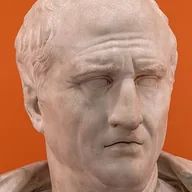
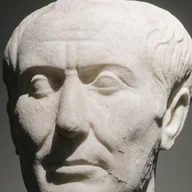
Julius Caesar

, ItalyHis own words, giving his own message to Pompeius

In plain words, ours

I have always put the honour of the state first, above my own life. I was angry that my enemies were snatching back what the people had granted me.

As for myself, he said, I have always reckoned the dignity of the republic of first importance and preferable to life. I was indignant that a benefit conferred on me by the Roman people was being insolently wrested from me by my enemies, and that, robbed of my six months’ command, I was being dragged back to the city, when the people had directed that I should be allowed to be a candidate in absence at the next election.

Caesar, The Civil War 1.9Translated by A. G. Peskett (1914)Read the full passage (Caesar, The Civil War 1.9, opens scaife.perseus.org)

What was going on, our summary

49 BCE: civil war has begun between Caesar and Pompey's side. Go-betweens such as the praetor Roscius bring Caesar Pompey's proposals, and Caesar asks them to carry his reply back. This is Caesar's own account.

Checked claim by claim against: Caesar crosses the Rubicon with his army, the passage around the quote.

Why it matters

About the event it belongs to: Caesar crosses the Rubicon with his army

The crossing set off a civil war that eventually made Caesar dictator for life. It also gave us the idiom crossing the Rubicon, meaning passing the point of no return.

Based on Wikipedia: Crossing the Rubicon

The crossing precipitated a civil war, which eventually led to Caesar becoming dictator for life (dictator perpetuo).

The phrase "crossing the Rubicon" is an idiom meaning "passing the point of no return".

Wikipedia, Crossing the Rubicon (opens en.wikipedia.org), as of 2026-08-19. Text CC BY-SA 4.0. Our line is checked against these sentences only.

Related moments

In time order, with this one in its place. Each says why it is here.

  1. 59 BCE10 years earlier Cato dragged to prison, as Plutarch tells it Also about democracy and government
  2. 52 BCE3 years earlier Vercingetorix surrenders to Caesar at Alesia Same years
  3. 49 BCESame year Caesar crosses the Rubicon with his army The event behind it
  4. 49 BCEThis momentCaesar puts the republic's dignity before life
  5. 49 BCESame year Caesar crosses the Rubicon, as Plutarch tells it More from Julius Caesar
  6. 49 BCESame year Caesar at the Rubicon, as Suetonius tells it More from Julius Caesar
  7. 48 BCE1 year later Caesar defeats Pompey at Pharsalus Same years
  8. 48–47 BCE1 year later Caesar takes Cleopatra's side in Egypt Same years
  9. 48 BCE1 year later Caesar on his speech before Pharsalus More from Julius Caesar
  10. 46 BCE3 years later Cato kills himself rather than accept Caesar's pardon Same years
  11. 44 BCE, written later5 years later Cicero on arms yielding to the toga Also about democracy and government
  12. 44 BCE, written later5 years later Cicero on his forced leisure Also in Italy
  13. 43 BCE6 years later Cicero is killed on Antony's orders Also in Italy
  14. 43 BCE6 years later The death of Cicero, as Plutarch tells it Also in Italy

Just before and after

The text around the quote, word for word from the same translation.

Show the passageHide the passage

He adds a few other remarks of this kind, at the same lime making excuses for Pompeius. The praetor Roscius lays substantially the same proposals before Caesar, and in the same language, and makes it clear that he received them from Pompeius. Though these proceedings seemed to have no effect in lessening the sense of wrong, nevertheless now that he had found suitable persons to convey his wishes to Pompeius he makes a request of each of them that, as they had brought him the messages of Pompeius, they should not object to convey his demands in reply, in the hope that by a little trouble they might be able to put an end to serious disputes and free the whole of Italy from alarm.

The quote: As for myself, he said, I have always reckoned the dignity of the republic of first importance and preferable to life. I was indignant that a benefit conferred on me by the Roman people was being insolently wrested from me by my enemies, and that, robbed of my six months’ command, I was being dragged back to the city, when the people had directed that I should be allowed to be a candidate in absence at the next election.

Nevertheless, for the sake of the state I have borne with equanimity this infringement of my prerogative; when I sent a dispatch to the senate proposing that all should give up arms failed to obtain even this request. Levies are being held throughout Italy, two legions which had been filched from me under the pretence of a Parthian war are being held back, the state is in arms. To what does all this tend but to my own ruin? Still Lam_prepared to resort to anything, to submit to anything, for the sake of the commonwealth..

Caesar, The Civil War 1.8–9Translated by A. G. Peskett (1914)Read the full passage (opens scaife.perseus.org)

When, and whose words

Date
49 BCE. The opening weeks of the civil war, early 49 BCE.
Whose words
His own words, giving his own message to Pompeius.
How this post was checked
  • The plain-words line was read against the quote alone by a second, independent pass, which found it adds no claim the quote does not make (2026-10-03).
  • Each claim in the summary was checked by an independent pass against only the material it cites.
  • The quote itself is checked by the build: word for word, once, at the cited section of the stored translation.

See it among its momentsMore from Julius CaesarSee it in the feed