hstry

Caesar on his speech before Pharsalus

48 BCE, Pharsalus. His own words, writing of himself as 'Caesar'.

Where and when

48 BCEPharsalus

2,073 years ago

Explore
Julius Caesar, 100 – 44 BCE3000 BCE2900 BCE2800 BCE2700 BCE2600 BCE2500 BCE2400 BCE2300 BCE2200 BCE2100 BCE2000 BCE1900 BCE1800 BCE1700 BCE1600 BCE1500 BCE1400 BCE1300 BCE1200 BCE1100 BCE1000 BCE900 BCE800 BCE700 BCE600 BCE500 BCE400 BCE300 BCE200 BCE100 BCE1 CE100 CE200 CE300 CE400 CE500 CE600 CE700 CE800 CE900 CE1000 CE1100 CE1200 CE1300 CE1400 CE1500 CE1600 CE1700 CE1800 CE1900 CE2000 CEGreat Pyramid of Giza built, c. 2600 BCERome founded (traditional date), 753 BCELast western Roman emperor deposed, 476 CEGutenberg's printing press, c. 1440 CEColumbus reaches the Americas, 1492 CEFirst people on the Moon, 1969 CEToday, 2026

Swipe the line. Bars: entries. Dots: events.

Julius Caesar

, PharsalusHis own words, writing of himself as 'Caesar'

In plain words, ours

I told my men I never wanted to waste their blood. They were eager to fight, and I had the trumpet sound the attack.

He had never, he said, wished to squander the blood of his soldiers or to deprive the republic of either of its armies. After delivering this speech, the soldiers clamouring for action and burning with zeal for the fight, he gave the signal with a trumpet.

Caesar, The Civil War 3.90Translated by A. G. Peskett (1914)Read the full passage (Caesar, The Civil War 3.90, opens scaife.perseus.org)

What was going on, our summary

Pharsalus, 48 BCE, just before Caesar's army fights Pompey's. Caesar, writing about himself, says he reminded his men how hard he had tried to make peace. Then a veteran centurion, Crastinus, called on his old comrades to follow him into battle.

Checked claim by claim against: Caesar defeats Pompey at Pharsalus, the passage around the quote.

Why it matters

About the event it belongs to: Caesar defeats Pompey at Pharsalus

It was the decisive battle of Caesar's civil war. The historian Paul K. Davis writes that the victory took Caesar to the pinnacle of power, effectively ending the Republic.

Based on Wikipedia: Battle of Pharsalus

The Battle of Pharsalus was the decisive battle of Caesar's Civil War

Paul K. Davis wrote that "Caesar's victory took him to the pinnacle of power, effectively ending the Republic."

Wikipedia, Battle of Pharsalus (opens en.wikipedia.org), as of 2026-08-20. Text CC BY-SA 4.0. Our line is checked against these sentences only.

Related moments

In time order, with this one in its place. Each says why it is here.

  1. c. 50 BCEabout 2 years earlier Cato warns the Senate about Caesar, in Plutarch Same years
  2. 49 BCE1 year earlier Caesar crosses the Rubicon with his army Same years
  3. 49 BCE1 year earlier Caesar puts the republic's dignity before life More from Julius Caesar
  4. 49 BCE1 year earlier Caesar at the Rubicon, as Suetonius tells it More from Julius Caesar
  5. 48 BCESame year Caesar defeats Pompey at Pharsalus The event behind itAlso in PharsalusAlso about war and empire
  6. 48–47 BCEBegins this year Caesar takes Cleopatra's side in Egypt Also about war and empire
  7. 48 BCEThis momentCaesar on his speech before Pharsalus
  8. 48 BCESame year Caesar on Pompey's killing in Egypt More from Julius Caesar
  9. 46 BCE2 years later Cato kills himself rather than accept Caesar's pardon Same years

Just before and after

The text around the quote, word for word from the same translation.

Show the passageHide the passage

At the same time he commanded the third line and the whole army not to join battle without orders from himself, saying that when he wished this to be done he would give the signal with a flag. When, according to the custom of war, he was exhorting his army to battle, and setting forth his unbroken record of kindness to his men, he particularly reminded them that he could call his troops to witness with what zeal he had sought peace, what negotiations he had conducted through Vatinius in conferences and through Aulus Clodius with Scipio, how at Oricum he had urged Libo about the sending of envoys.

The quote: He had never, he said, wished to squander the blood of his soldiers or to deprive the republic of either of its armies. After delivering this speech, the soldiers clamouring for action and burning with zeal for the fight, he gave the signal with a trumpet.

There was in Caesar’s army a reservist, G. Crastinus, who in the previous year had served under him as first centurion in the Tenth Legion, a man of remarkable valour. On the signal being given: Follow me, said he,you who have been my comrades, and give your commander your wonted loyal service. This one battle alone remains; when it is over he will recover his dignity and we our liberty. At the same time, looking at Caesar, he says: To-day, General, I will give you occasion to thank me alive or dead.

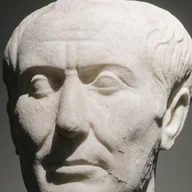
Caesar, The Civil War 3.89–91Translated by A. G. Peskett (1914)Read the full passage (opens scaife.perseus.org)

When, and whose words

Date
48 BCE. The battle of Pharsalus, August 48 BCE.
Whose words
His own words, writing of himself as 'Caesar'.
How this post was checked
  • The plain-words line was read against the quote alone by a second, independent pass, which found it adds no claim the quote does not make (2026-10-03).
  • Each claim in the summary was checked by an independent pass against only the material it cites.
  • The quote itself is checked by the build: word for word, once, at the cited section of the stored translation.

See it among its momentsMore from Julius CaesarSee it in the feed