hstry

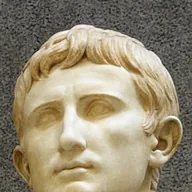
Augustus on his deathbed, in Suetonius

set in 14 CE, Campania. As Suetonius tells it, over a century later.

Where and when

set in 14 CECampania

2,012 years ago

Explore
Augustus, 63 BCE – 14 CE3000 BCE2900 BCE2800 BCE2700 BCE2600 BCE2500 BCE2400 BCE2300 BCE2200 BCE2100 BCE2000 BCE1900 BCE1800 BCE1700 BCE1600 BCE1500 BCE1400 BCE1300 BCE1200 BCE1100 BCE1000 BCE900 BCE800 BCE700 BCE600 BCE500 BCE400 BCE300 BCE200 BCE100 BCE1 CE100 CE200 CE300 CE400 CE500 CE600 CE700 CE800 CE900 CE1000 CE1100 CE1200 CE1300 CE1400 CE1500 CE1600 CE1700 CE1800 CE1900 CE2000 CEGreat Pyramid of Giza built, c. 2600 BCERome founded (traditional date), 753 BCELast western Roman emperor deposed, 476 CEGutenberg's printing press, c. 1440 CEColumbus reaches the Americas, 1492 CEFirst people on the Moon, 1969 CEToday, 2026

Swipe the line. Bars: entries. Dots: events.

Augustus

, CampaniaAs Suetonius tells it, over a century later

In plain words, ours

Did I play my part in life well? If so, clap for the actor, and do it gladly.

Then asking his friends who were admitted into the room, “Do ye think that I have acted my part on the stage of life well?” he immediately subjoined, Ei de pan echei kalos, to paignio Dote kroton, kai pantes umeis meta charas ktupaesate. If all be right, with joy your voices raise, In loud applauses to the actor’s praise.

Suetonius, Life of Augustus 99Translated by Alexander Thomson, revised by T. Forester (1889)Read the full passage (Suetonius, Life of Augustus 99, opens gutenberg.org)

What was going on, our summary

Nola, 14 CE, the day Augustus died, as Suetonius tells it over a century later. Ill, he had stopped at Nola after games at Naples and talked privately with Tiberius. That day he asked for a mirror and had his hair combed before his friends came in.

Checked claim by claim against: Augustus dies at Nola after 41 years in power, the passage around the quote.

Why it matters

The question whether he had played his part well is remembered as Augustus's famous last words.

Based on Wikipedia: Augustus

Augustus's famous last words were, "Have I played the part well? Then applaud as I exit" (Acta est fabula, plaudite).

Wikipedia, Augustus (opens en.wikipedia.org), as of 2026-09-25. Text CC BY-SA 4.0. Our line is checked against these sentences only.

Related moments

In time order, with this one in its place. Each says why it is here.

  1. 14 CESame year Augustus dies at Nola after 41 years in power The event behind itAlso in Campania
  2. 14 CESame year Tiberius succeeds Augustus Same years
  3. set in 14 CEThis momentAugustus on his deathbed, in Suetonius
  4. by 14 CEBy this year Augustus' brick and marble boast, in Suetonius More from Augustus
  5. by 14 CEBy this year Augustus' golden hook, as Suetonius tells it More from Augustus
  6. by 14 CEBy this year Augustus on hastening slowly, in Suetonius More from Augustus
  7. set in 14 CESame year Augustus' last words, as Suetonius tells it Same passage
  8. set in 14 CESame year Tacitus on Augustus' peace stained with blood Same years

Just before and after

The text around the quote, word for word from the same translation.

Show the passageHide the passage

The latter replying, that, whoever might be the author, they were excellent verses, he set up a great laugh, and fell into an extraordinary vein of jesting upon it. Soon afterwards, passing over to Naples, although at that time greatly disordered in his bowels by the frequent returns of his disease, he sat out the exhibition of the gymnastic games which were performed in his honour every five years, and proceeded with Tiberius to the place intended. But on his return, his disorder increasing, he stopped at Nola, sent for Tiberius back again, and had a long discourse with him in private; after which, he gave no further attention to business of any importance. Upon the day of his death, he now and then enquired, if there was any disturbance in the town on his account; and calling for a mirror, he ordered his hair to be combed, and his shrunk cheeks to be adjusted.

The quote: Then asking his friends who were admitted into the room, “Do ye think that I have acted my part on the stage of life well?” he immediately subjoined, Ei de pan echei kalos, to paignio Dote kroton, kai pantes umeis meta charas ktupaesate. If all be right, with joy your voices raise, In loud applauses to the actor’s praise.

After which, having dismissed them all, whilst he was inquiring of some persons who were just arrived from Rome, concerning Drusus’s daughter, who was in a bad state of health, he expired suddenly, amidst the kisses of Livia, and with these words: “Livia! live mindful of our union; and now, farewell!” dying a very easy death, and such as he himself had always wished for. For as often as he heard that any person had died quickly and without pain, he wished for himself and his friends the like euthanasian (an easy death), for that was the word he made use of.

Suetonius, Life of Augustus 98–99Translated by Alexander Thomson, revised by T. Forester (1889)Read the full passage (opens gutenberg.org)

When, and whose words

Date
set in 14 CE. Set on the day of his death, 19 August 14 CE (Suetonius, Augustus 100). Suetonius wrote c. 120 CE.
Whose words
As Suetonius tells it, over a century later.
How this post was checked
  • The plain-words line was read against the quote alone by a second, independent pass, which found it adds no claim the quote does not make (2026-10-03).
  • Each claim in the summary was checked by an independent pass against only the material it cites.
  • The quote itself is checked by the build: word for word, once, at the cited section of the stored translation.

See it among its momentsMore from AugustusSee it in the feed