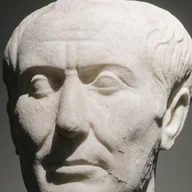
What was going on:Alesia, 52 BCE: Caesar has the Gallic leader Vercingetorix shut inside this hill town. The Gauls inside decide that everyone too old or sick to fight must leave, while a Gallic relief army arrives and camps on a hill nearby. Caesar tells it himself.
Why it matters:Alesia marked the end of Gallic independence in what is now France and Belgium. It is considered one of Caesar's greatest military achievements and a classic example of siege warfare.
The townspeople were sent out with their wives and children. Weeping, they begged the soldiers to take them as slaves and feed them. I posted guards and refused them.
The Mandubii, who had admitted them into the town, are compelled to go forth with their wives and children. When these came to the Roman fortifications, weeping, they begged of the soldiers by every entreaty to receive them as slaves and relieve them with food. But Caesar, placing guards on the rampart, forbade them to be admitted.
His own words, writing of himself as 'Caesar'. Caesar, The Gallic War 7.78, translated by W. A. McDevitte and W. S. Bohn (1869)
What was going on:Alesia, 52 BCE. Caesar's army has beaten off the Gauls, who flee their camp. Caesar writes that the next day Vercingetorix told his council he would let them hand him to the Romans, dead or alive, and envoys were sent to Caesar.
Why it matters:Alesia marked the end of Gallic independence in what is now France and Belgium. It is considered one of Caesar's greatest military achievements and a classic example of siege warfare.
They sent envoys to me. I ordered their weapons and leaders handed over, sat in front of my camp, and they gave up Vercingetorix.
Embassadors are sent to Caesar on this subject. He orders their arms to be surrendered, and their chieftains delivered up. He seated himself at the head of the lines in front of the camp, the Gallic chieftains are brought before him. They surrender Vercingetorix, and lay down their arms.
His own words, writing of himself as 'Caesar'. Caesar, The Gallic War 7.89, translated by W. A. McDevitte and W. S. Bohn (1869)