hstry

Alexander on being Diogenes

c. 336 BCE, Corinth. As Plutarch tells it, centuries later.

Where and when

c. 336 BCECorinth

about 2,361 years ago

Explore
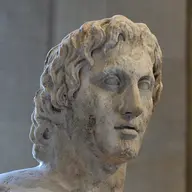
Alexander, 356 – 323 BCE3000 BCE2900 BCE2800 BCE2700 BCE2600 BCE2500 BCE2400 BCE2300 BCE2200 BCE2100 BCE2000 BCE1900 BCE1800 BCE1700 BCE1600 BCE1500 BCE1400 BCE1300 BCE1200 BCE1100 BCE1000 BCE900 BCE800 BCE700 BCE600 BCE500 BCE400 BCE300 BCE200 BCE100 BCE1 CE100 CE200 CE300 CE400 CE500 CE600 CE700 CE800 CE900 CE1000 CE1100 CE1200 CE1300 CE1400 CE1500 CE1600 CE1700 CE1800 CE1900 CE2000 CEGreat Pyramid of Giza built, c. 2600 BCERome founded (traditional date), 753 BCELast western Roman emperor deposed, 476 CEGutenberg's printing press, c. 1440 CEColumbus reaches the Americas, 1492 CEFirst people on the Moon, 1969 CEToday, 2026

Swipe the line. Bars: entries. Dots: events.

Alexander

, CorinthAs Plutarch tells it, centuries later

In plain words, ours

His men were laughing at the philosopher. Alexander said: if I weren't Alexander, I would be Diogenes.

…he said to his followers, who were laughing and jesting about the philosopher as they went away, But verily, if I were not Alexander, I would be Diogenes.

Plutarch, Life of Alexander 14.3Translated by Bernadotte Perrin (1919)Read the full passage (Plutarch, Life of Alexander 14.3, opens scaife.perseus.org)

What was going on, our summary

As Plutarch tells it, centuries later, Alexander went to see Diogenes in Corinth when the philosopher did not come to congratulate him. He found him lying in the sun, asked if he wanted anything, and was told to stand out of his sun.

Checked claim by claim against: the passage around the quote.

Related moments

In time order, with this one in its place. Each says why it is here.

  1. c. 350–336 BCEDuring it Young Alexander on his father's victories More from Alexander
  2. 338 BCEabout 2 years earlier Philip of Macedon defeats Athens and Thebes at Chaeronea Same years
  3. 336 BCEAbout the same year Alexander becomes king of Macedon at twenty Same years
  4. c. 336 BCEThis momentAlexander on being Diogenes
  5. c. 336 BCEAbout the same year Alexander visits Diogenes Same passageMore from Alexander
  6. c. 336 BCEAbout the same year Diogenes asks Alexander to step out of his sun Same passageAlso in Corinth
  7. 335/334 BCE1 year later Aristotle opens his school at the Lyceum Same years
  8. 334–323 BCEabout 7 years later Alexander writes to Aristotle More from Alexander
  9. c. 324–321 BCEabout 13 years later Diogenes the Cynic dies in Corinth Also in Corinth

Just before and after

The text around the quote, word for word from the same translation.

Show the passageHide the passage

Thereupon many statesmen and philosophers came to him with their congratulations, and he expected that Diogenes of Sinope also, who was tarrying in Corinth, would do likewise. But since that philosopher took not the slightest notice of Alexander, and continued to enjoy his leisure in the suburb Craneion, Alexander went in person to see him; and he found him lying in the sun. Diogenes raised himself up a little when he saw so many persons coming towards him, and fixed his eyes upon Alexander. And when that monarch addressed him with greetings, and asked if he wanted anything, Yes, said Diogenes, stand a little out of my sun. It is said that Alexander was so struck by this, and admired so much the haughtiness and grandeur of the man who had nothing but scorn for him, that

The quote: he said to his followers, who were laughing and jesting about the philosopher as they went away, But verily, if I were not Alexander, I would be Diogenes.

And now, wishing to consult the god concerning the expedition against Asia, he went to Delphi; and since he chanced to come on one of the inauspicious days, when it is not lawful to deliver oracles, in the first place he sent a summons to the prophetess. And when she refused to perform her office and cited the law in her excuse, he went up himself and tried to drag her to the temple, whereupon, as if overcome by his ardour, she said: Thou art invincible, my son! On hearing this, Alexander said he desired no further prophecy, but had from her the oracle which he wanted.

Plutarch, Life of Alexander 14.1–4Translated by Bernadotte Perrin (1919)Read the full passage (opens scaife.perseus.org)

When, and whose words

Date
c. 336 BCE. Same visit at Corinth, just after Alexander was chosen leader against Persia (336/335 BCE); Plutarch introduces it with It is said.
Whose words
As Plutarch tells it, centuries later.
How this post was checked
  • The plain-words line was read against the quote alone by a second, independent pass, which found it adds no claim the quote does not make (2026-10-03).
  • Each claim in the summary was checked by an independent pass against only the material it cites.
  • The quote itself is checked by the build: word for word, once, at the cited section of the stored translation.

See it among its momentsMore from AlexanderSee it in the feed