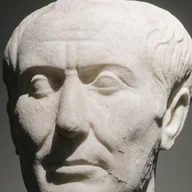
49–44 BCE: Caesar, civil war and the Ides of March
, Pharsalus
Caesar defeats Pompey at Pharsalus
In Greece, Caesar's smaller army routs Pompey's. Pompey flees to Egypt. Plutarch says Caesar groaned at the dead and blamed his enemies.
They would have it so; they brought me to such a pass that if I, Caius Caesar, after waging successfully the greatest wars, had dismissed my forces, I should have been condemned in their courts.
What was going on:Pharsalus, 48 BCE, just before Caesar's army fights Pompey's. Caesar, writing about himself, says he reminded his men how hard he had tried to make peace. Then a veteran centurion, Crastinus, called on his old comrades to follow him into battle.
Why it matters: It was the decisive battle of Caesar's civil war. The historian Paul K. Davis writes that the victory took Caesar to the pinnacle of power, effectively ending the Republic.
I told my men I never wanted to waste their blood. They were eager to fight, and I had the trumpet sound the attack.
He had never, he said, wished to squander the blood of his soldiers or to deprive the republic of either of its armies. After delivering this speech, the soldiers clamouring for action and burning with zeal for the fight, he gave the signal with a trumpet.
His own words, writing of himself as 'Caesar'. Caesar, The Civil War 3.90, translated by A. G. Peskett (1914)