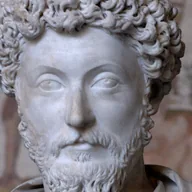
What was going on: This opens Book 2 of the Meditations, the private notebook Marcus Aurelius kept in Greek while at war on the Danube, c. 170–180 CE. Some books of the notebook end with where he was, such as Carnuntum.
Why it matters: The Meditations became one of the most important sources for the modern understanding of ancient Stoic philosophy, and many commentators count it among the greatest works of philosophy.
Start each morning telling yourself: today I will meet nosy, ungrateful, arrogant, lying, jealous, unfriendly people. They are like that because they do not know good from bad.
Begin the morning by saying to thyself, I shall meet with the busybody, the ungrateful, arrogant, deceitful, envious, unsocial. All these things happen to them by reason of their ignorance of what is good and evil.
His own words, in the Meditations, notes written for himself. Marcus Aurelius, Meditations 2.1, translated by George Long (1862)
What was going on: Marcus Aurelius wrote this in his private notebook at Carnuntum, at the front while fighting the tribes along the Danube. He starts the day bracing himself to meet rude, ungrateful and envious people.
Why it matters: The Meditations became one of the most important sources for the modern understanding of ancient Stoic philosophy, and many commentators count it among the greatest works of philosophy.
We are made to work together, like feet, hands, eyelids, upper and lower teeth. Working against each other goes against nature, and getting annoyed and turning away counts.
For we are made for co-operation, like feet, like hands, like eyelids, like the rows of the upper and lower teeth. To act against one another, then, is contrary to nature; and it is acting against one another to be vexed and to turn away.
His own words, in the Meditations, notes written for himself. Marcus Aurelius, Meditations 2.1, translated by George Long (1862)
What was going on: Marcus Aurelius wrote this in his private notebook at Carnuntum, while fighting the tribes along the Danube around 170–180 CE. Just before, he tells himself to tend the spirit within him and not pry into what others think.
Why it matters: The Meditations became one of the most important sources for the modern understanding of ancient Stoic philosophy, and many commentators count it among the greatest works of philosophy.
Even if you lived thousands of years, you only ever lose the life you are living now. So the longest and the shortest life come to the same.
Though thou shouldest be going to live three thousand years and as many times ten thousand years, still remember that no man loses any other life than this which he now lives, nor lives any other than this which he now loses. The longest and shortest are thus brought to the same.
His own words, in the Meditations, notes written for himself. Marcus Aurelius, Meditations 2.14, translated by George Long (1862)
What was going on:Carnuntum, about 170–180 CE. Marcus is at war along the Danube and writing notes to himself. Just before this, he lists the ways the soul does violence to itself.
Why it matters: The Meditations became one of the most important sources for the modern understanding of ancient Stoic philosophy, and many commentators count it among the greatest works of philosophy.
A human life is a dot in time. Everything in it keeps changing, our senses are dull, the body rots, the mind spins, luck is hard to read and fame is thoughtless.
Of human life the time is a point, and the substance is in a flux, and the perception dull, and the composition of the whole body subject to putrefaction, and the soul a whirl, and fortune hard to divine, and fame a thing devoid of judgment.
His own words, in the Meditations, notes written for himself. Marcus Aurelius, Meditations 2.17, translated by George Long (1862)