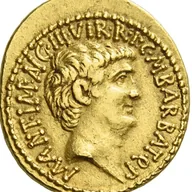
Octavian's fleet beats Antony and Cleopatra at Actium
Off the west coast of Greece, Octavian's navy under Agrippa defeats Antony and Cleopatra, who escape to Egypt.
But at Actium his fleet held out for a long time against Caesar, and only after it had been most severely damaged by the high sea which rose against it did it reluctantly, and at the tenth hour, give up the struggle.
What was going on: As Plutarch tells it, over a century later: in the sea battle at Actium in 31 BCE, Cleopatra's ship sailed away, and Antony left the men fighting for him to chase her in a small galley. Octavian's fleet won the battle.
Why it matters: Octavian's victory at Actium, consolidating his power over every Roman institution, marked Rome's transition from republic to empire.
He was taken aboard her ship, but they did not see each other. He sat alone at the front in silence, holding his head in his hands.
Cleopatra recognized him and raised a signal on her ship; so Antony came up and was taken on board, but he neither saw her nor was seen by her. Instead, he went forward alone to the prow and sat down by himself in silence, holding his head in both hands.
Plutarch, describing him, over a century later. Plutarch, Life of Antony 67.1, translated by Bernadotte Perrin (1920)